Liu Yan, Wang Shu-Qing, Long Yue-Hong, Chen Su, Li Yu-Feng, Zhang Jing-Hua
College of Life Science, North China University of Science and Technology, Tangshan, 063000, China.
Cancer Institute, Tangshan People's Hospital, Tangshan, 063001, China.
Oncotarget. 2016 Aug 16;7(33):53153-53164. doi: 10.18632/oncotarget.10625.
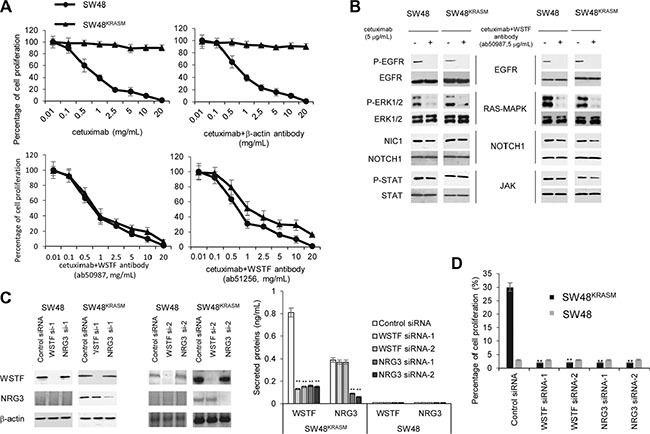
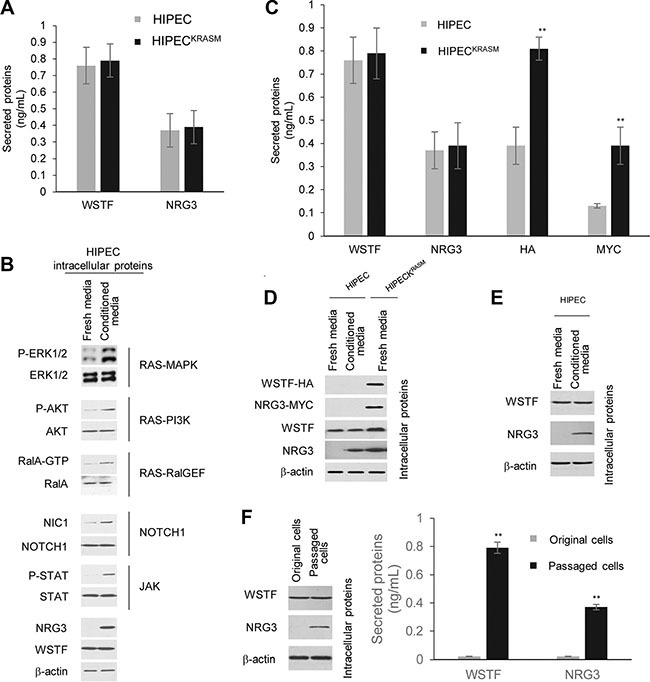
It remains unclear how the signals of mutant KRASG12 in the transformed cells spread to the surrounding non-mutated cells and changes the microenvironment to promote tumor formation. We identified that Williams-Beuren syndrome transcription factor (WSTF), a non-secretory protein, was released in complex with secretory protein-neuregulin-3 (NRG3). The KRASG12 mutant activates the transcription of NRG3. The WSTF/NRG3 in extracellular space could activate oncogenic pathways in normal colon cells carrying wild type KRAS and endow them with the ability to express NRG3 and release WSTF/NRG3. Extracellular WSTF/NRG3 promotes the formation of colon tumors. Blockade of extracellular WSTF could restore cetuximab sensitivity of colon cancer cells with mutant KRAS. The appearance of WSTF/NRG3 in serum and urine correlates with a colon tumor carrying a KRASG12 mutant. In summary, our demonstration provides a new pathway to our understanding of the biological development of complex diseases.
目前尚不清楚转化细胞中突变型KRASG12的信号如何传播到周围未突变的细胞,并改变微环境以促进肿瘤形成。我们发现威廉姆斯-贝伦综合征转录因子(WSTF),一种非分泌蛋白,与分泌蛋白神经调节蛋白-3(NRG3)形成复合物释放。KRASG12突变体激活NRG3的转录。细胞外空间中的WSTF/NRG3可激活携带野生型KRAS的正常结肠细胞中的致癌途径,并赋予它们表达NRG3和释放WSTF/NRG3的能力。细胞外WSTF/NRG3促进结肠肿瘤的形成。阻断细胞外WSTF可恢复携带突变型KRAS的结肠癌细胞对西妥昔单抗的敏感性。血清和尿液中WSTF/NRG3的出现与携带KRASG12突变体的结肠肿瘤相关。总之,我们的论证为理解复杂疾病的生物学发展提供了一条新途径。