Durand Sébastien, Cougot Nicolas, Mahuteau-Betzer Florence, Nguyen Chi-Hung, Grierson David S, Bertrand Edouard, Tazi Jamal, Lejeune Fabrice
Centre National de la Recherche Scientifique, Institut de Génétique Moléculaire de Montpellier, Université de Montpellier, Montpellier F-34293, France.
J Cell Biol. 2007 Sep 24;178(7):1145-60. doi: 10.1083/jcb.200611086.
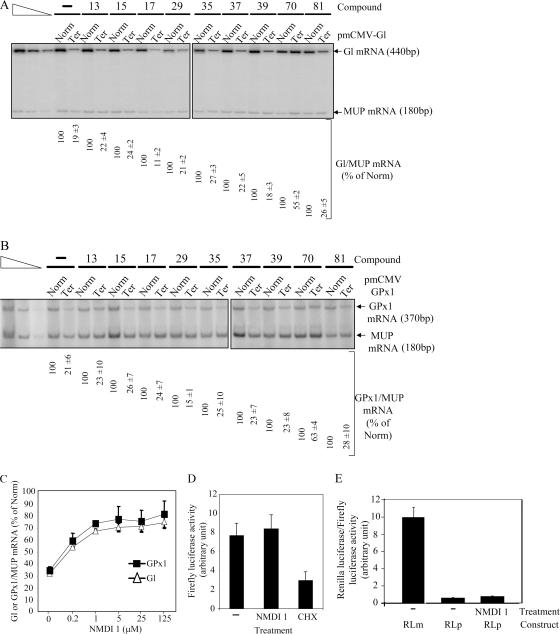
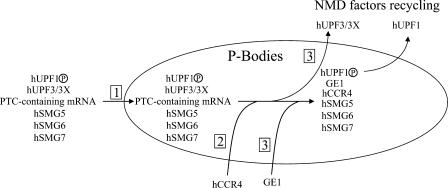
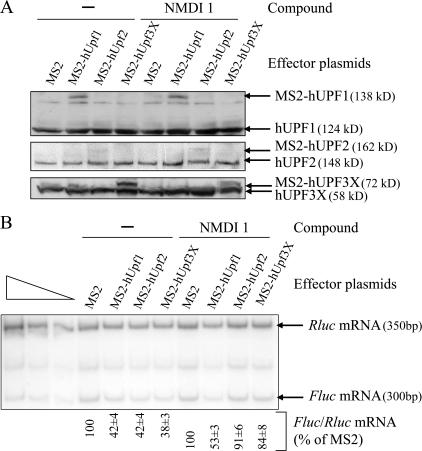
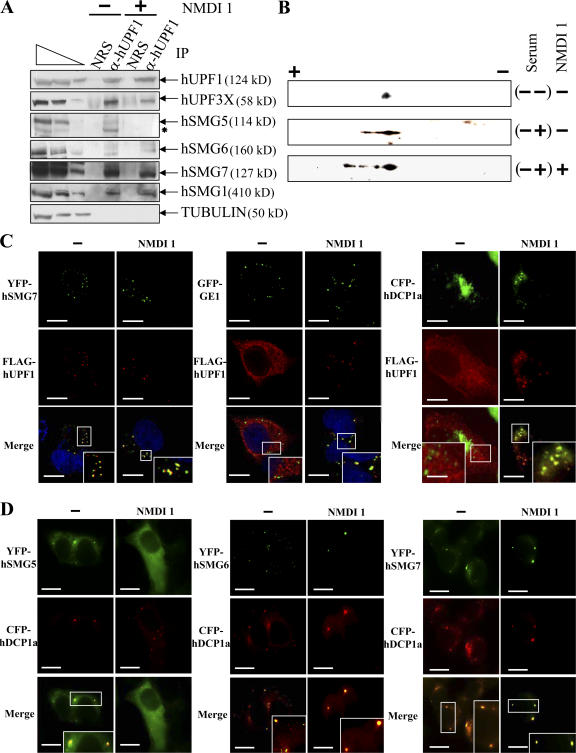
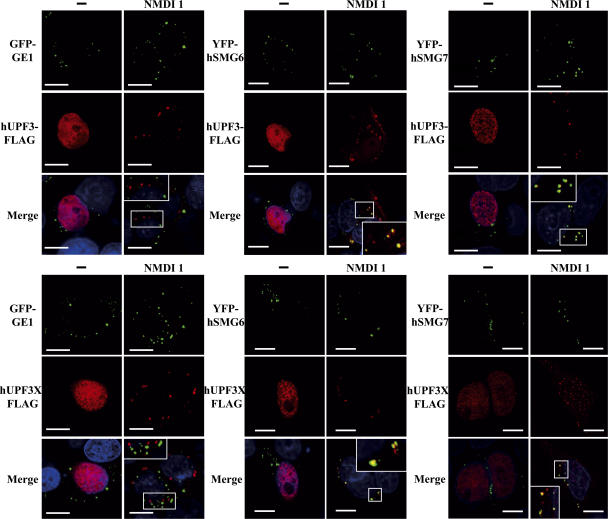
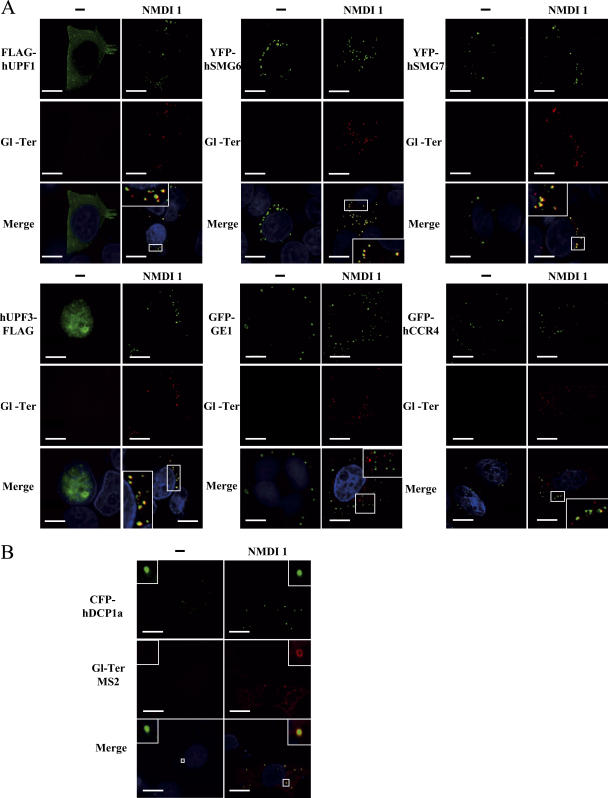
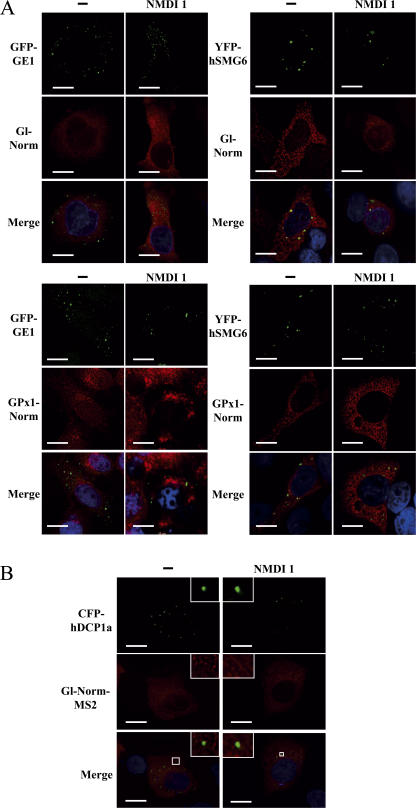
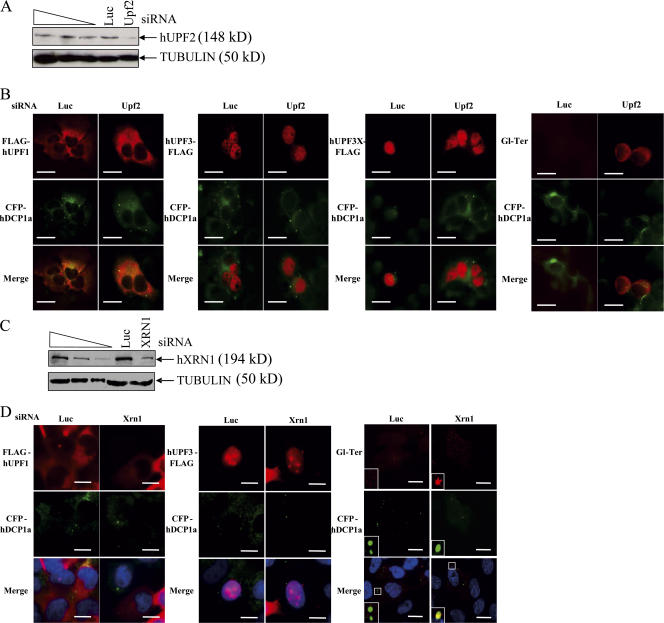
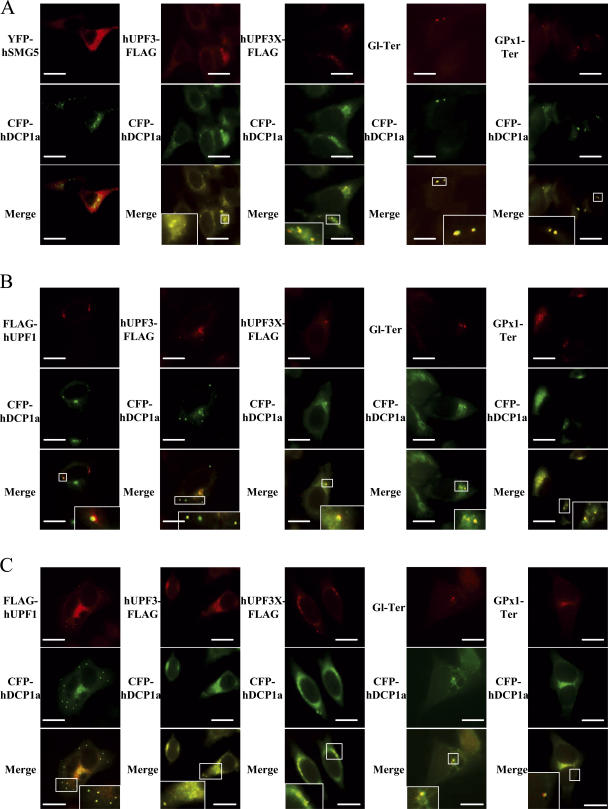
In mammals, nonsense-mediated mRNA decay (NMD) is a quality-control mechanism that degrades mRNA harboring a premature termination codon to prevent the synthesis of truncated proteins. To gain insight into the NMD mechanism, we identified NMD inhibitor 1 (NMDI 1) as a small molecule inhibitor of the NMD pathway. We characterized the mode of action of this compound and demonstrated that it acts upstream of hUPF1. NMDI 1 induced the loss of interactions between hSMG5 and hUPF1 and the stabilization of hyperphosphorylated isoforms of hUPF1. Incubation of cells with NMDI 1 allowed us to demonstrate that NMD factors and mRNAs subject to NMD transit through processing bodies (P-bodies), as is the case in yeast. The results suggest a model in which mRNA and NMD factors are sequentially recruited to P-bodies.
在哺乳动物中,无义介导的mRNA降解(NMD)是一种质量控制机制,可降解带有提前终止密码子的mRNA,以防止截短蛋白的合成。为深入了解NMD机制,我们鉴定出NMD抑制剂1(NMDI 1)作为NMD途径的小分子抑制剂。我们表征了该化合物的作用模式,并证明它作用于hUPF1的上游。NMDI 1诱导hSMG5与hUPF1之间相互作用的丧失以及hUPF1超磷酸化异构体的稳定。用NMDI 1孵育细胞使我们能够证明,与酵母中的情况一样,NMD因子和受NMD作用的mRNA通过加工小体(P小体)转运。结果提示了一种模型,即mRNA和NMD因子被依次招募到P小体中。