Koopal Sonja, Furuhjelm Johanna H, Järviluoma Annika, Jäämaa Sari, Pyakurel Pawan, Pussinen Christel, Wirzenius Maria, Biberfeld Peter, Alitalo Kari, Laiho Marikki, Ojala Päivi M
Genome-Scale Biology Program and Institute of Biomedicine, Biomedicum Helsinki, University of Helsinki, Finland.
PLoS Pathog. 2007 Sep 7;3(9):1348-60. doi: 10.1371/journal.ppat.0030140.
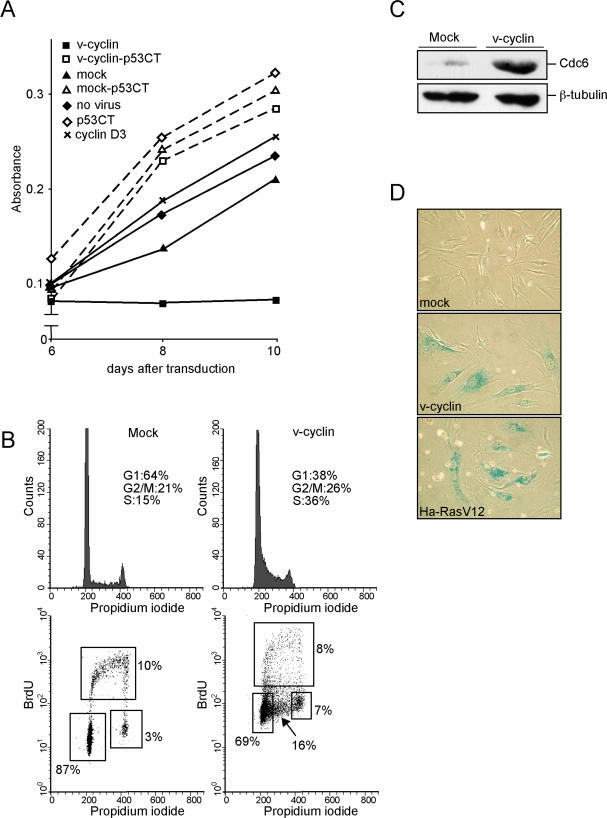
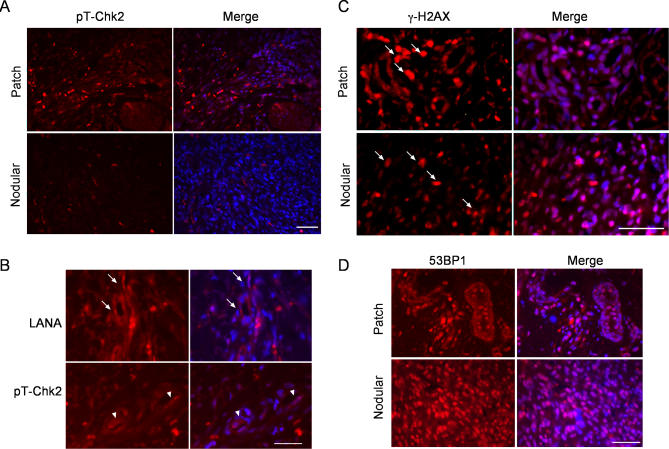
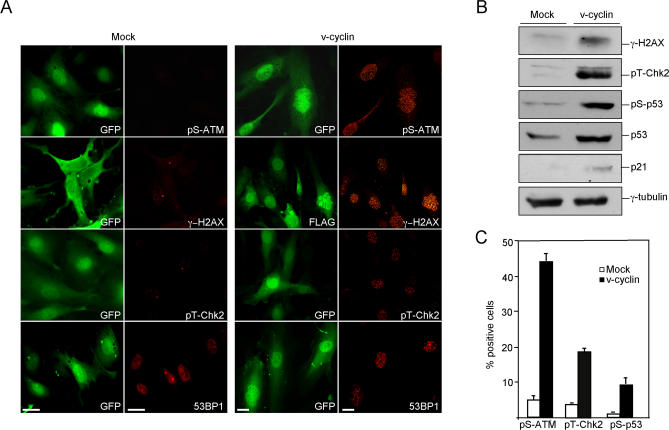
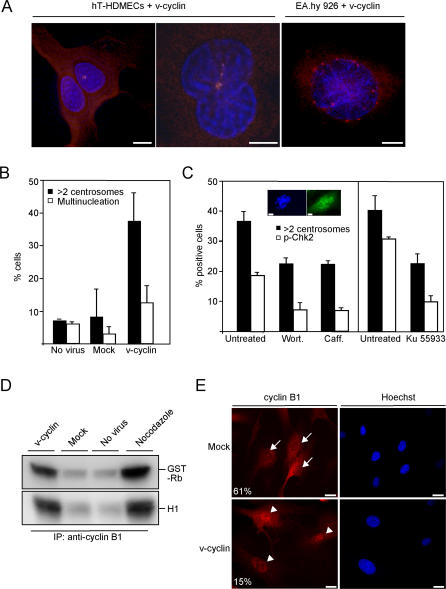
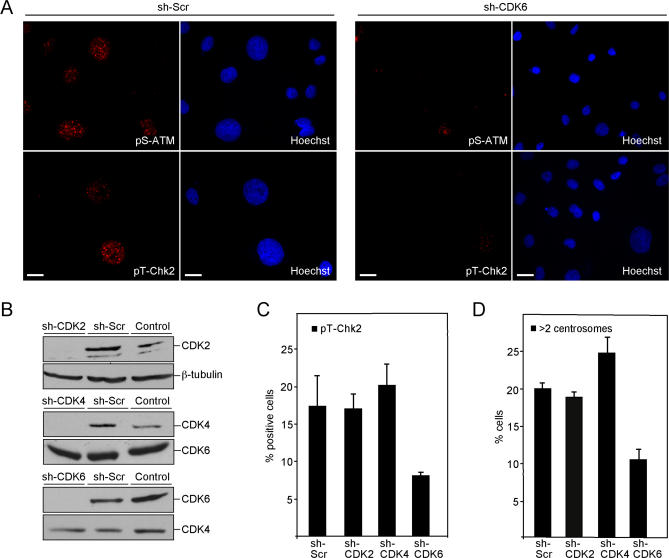
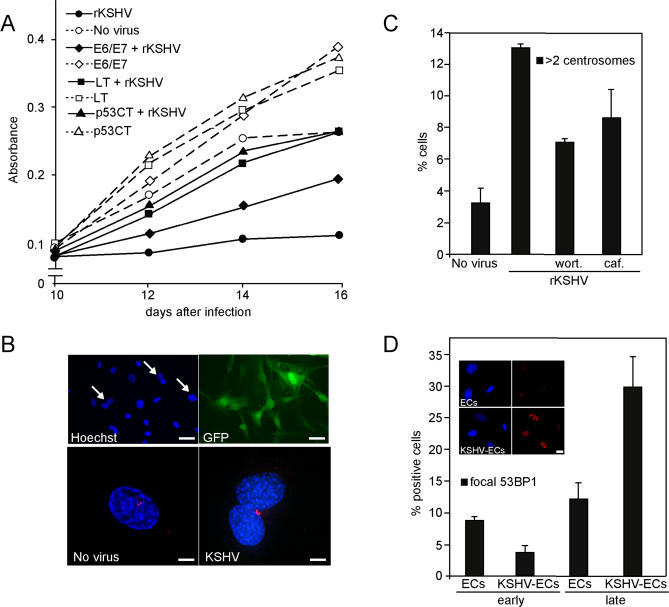
Kaposi sarcoma is a tumor consisting of Kaposi sarcoma herpesvirus (KSHV)-infected tumor cells that express endothelial cell (EC) markers and viral genes like v-cyclin, vFLIP, and LANA. Despite a strong link between KSHV infection and certain neoplasms, de novo virus infection of human primary cells does not readily lead to cellular transformation. We have studied the consequences of expression of v-cyclin in primary and immortalized human dermal microvascular ECs. We show that v-cyclin, which is a homolog of cellular D-type cyclins, induces replicative stress in ECs, which leads to senescence and activation of the DNA damage response. We find that antiproliferative checkpoints are activated upon KSHV infection of ECs, and in early-stage but not late-stage lesions of clinical Kaposi sarcoma specimens. These are some of the first results suggesting that DNA damage checkpoint response also functions as an anticancer barrier in virally induced cancers.
卡波西肉瘤是一种由感染卡波西肉瘤疱疹病毒(KSHV)的肿瘤细胞组成的肿瘤,这些肿瘤细胞表达内皮细胞(EC)标志物以及诸如v - 细胞周期蛋白、vFLIP和LANA等病毒基因。尽管KSHV感染与某些肿瘤之间存在紧密联系,但人类原代细胞的新生病毒感染并不容易导致细胞转化。我们研究了v - 细胞周期蛋白在原代和永生化人真皮微血管内皮细胞中表达的后果。我们发现,作为细胞D型细胞周期蛋白同源物的v - 细胞周期蛋白在ECs中诱导复制应激,进而导致衰老和DNA损伤反应的激活。我们发现,在ECs感染KSHV后以及临床卡波西肉瘤标本的早期而非晚期病变中,抗增殖检查点被激活。这些是首批结果中的一部分,表明DNA损伤检查点反应在病毒诱导的癌症中也作为一种抗癌屏障发挥作用。