Black Dalliah, Lyman Suzanne, Qian Ting, Lemasters John J, Rippe Richard A, Nitta Takashi, Kim Jae-Sung, Behrns Kevin E
Department of Surgery, 4024 Burnett Womack Building, CB 7050, University of North Carolina at Chapel Hill, Chapel Hill, NC, USA.
Biochimie. 2007 Dec;89(12):1464-73. doi: 10.1016/j.biochi.2007.09.001. Epub 2007 Sep 11.
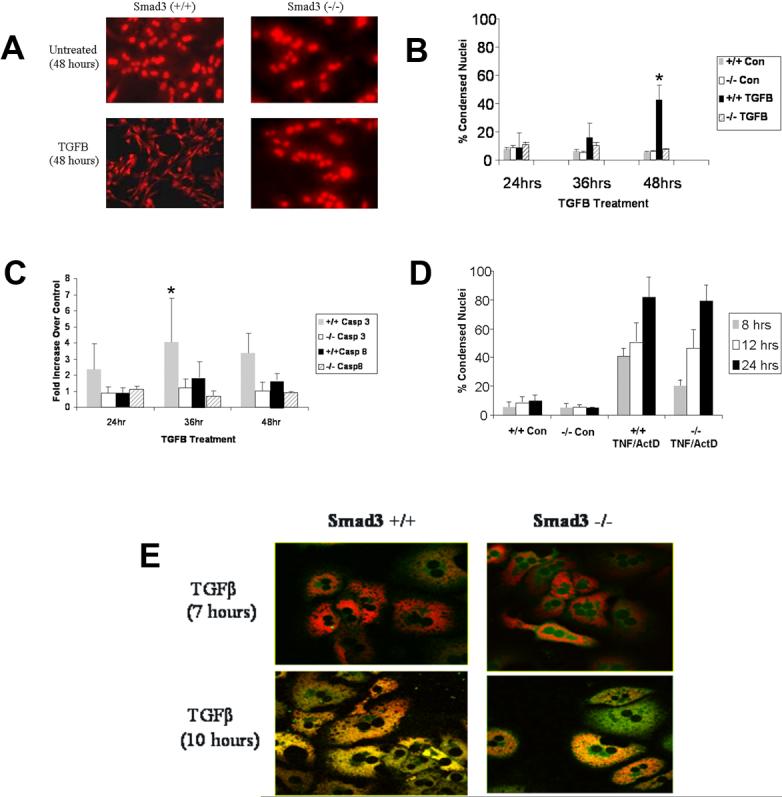
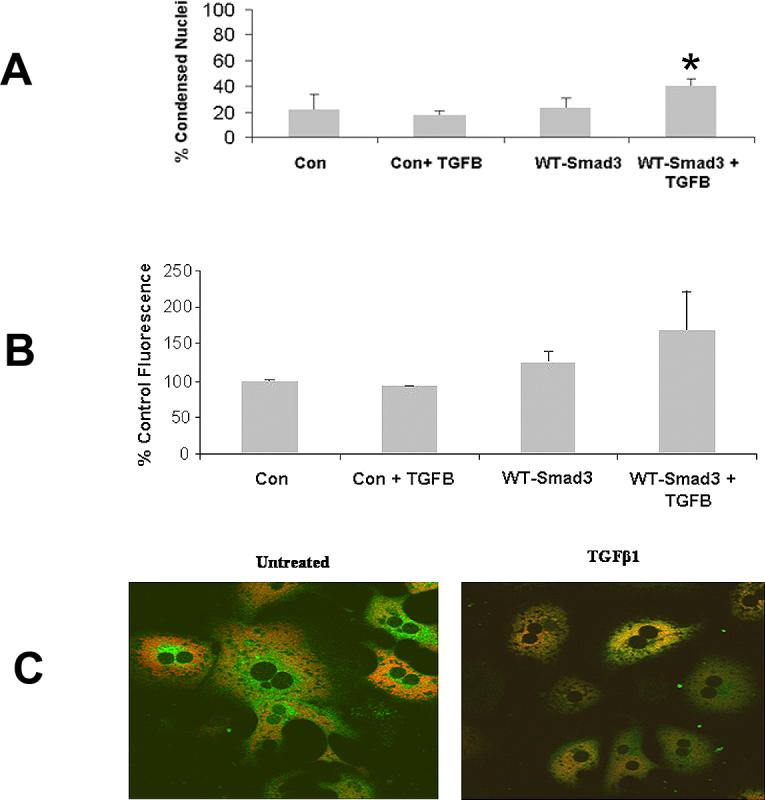
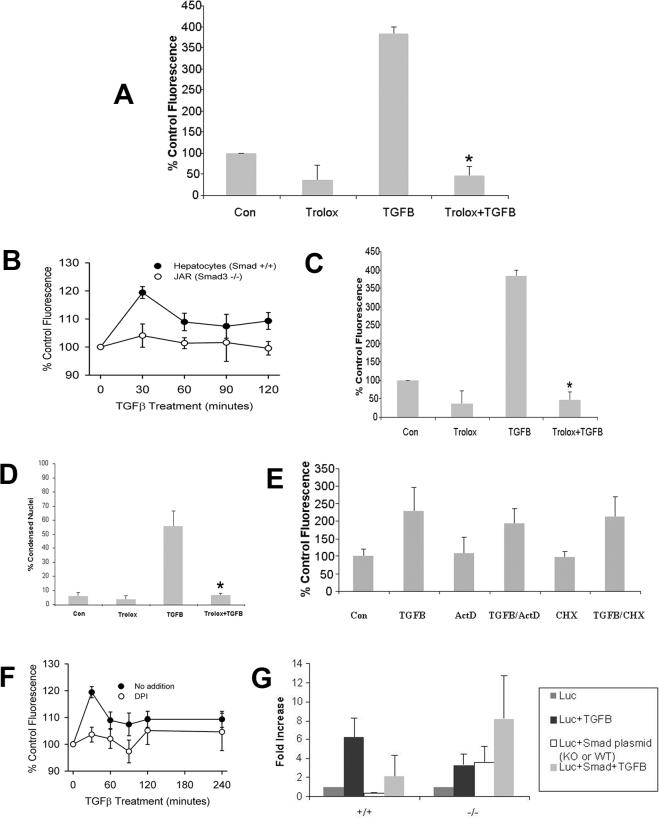
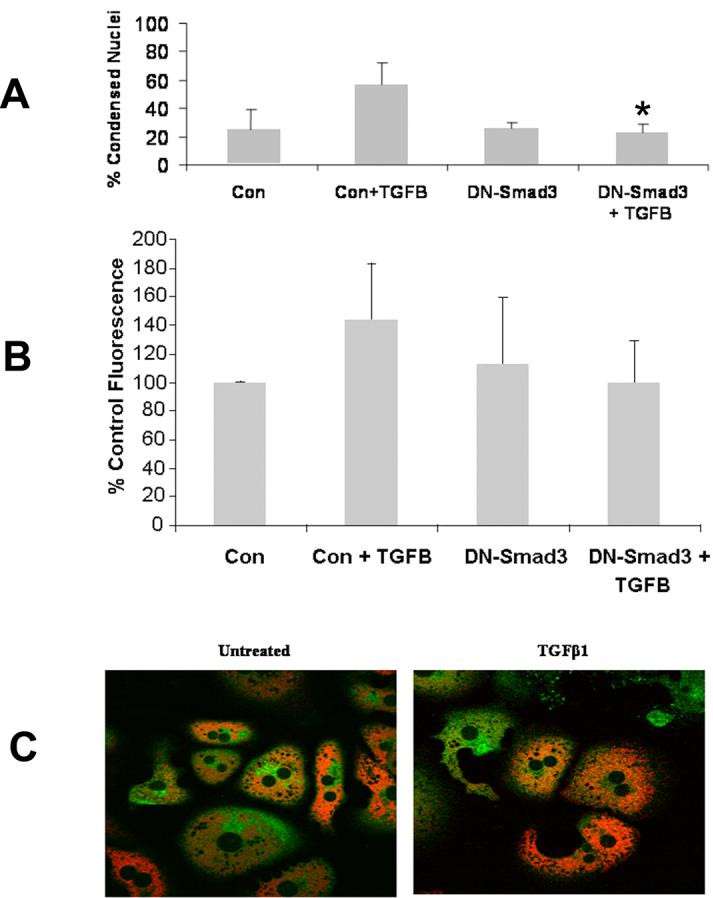
TGFbeta induces hepatocyte apoptosis via reactive oxygen species (ROS) generation, the mitochondrial permeability transition (MPT), and caspase activation. The role of the Smad pathway in these events is unknown. In this study primary hepatocytes were isolated from Smad3 wild-type (+/+) and knockout (-/-) mice, and were treated with TGFbeta (5ng/ml) and/or trolox (2mM). ROS generation, MPT, TGFbeta-dependent transcription, and apoptosis were assessed in the presence or absence of Smad3 wild-type (WT) and dominant-negative (DN) plasmids. With TGFbeta treatment, Smad3 (-/-) hepatocytes did not generate ROS activity, exhibit MPT, activate caspases, or undergo apoptosis when compared to Smad 3 (+/+) hepatocytes. Similarly, transfection of Smad3 (+/+) hepatocytes with DN-Smad3 inhibited TGFbeta-mediated transcription, ROS generation, MPT, and apoptosis. However, Smad3 (-/-) cells transfected with WT-Smad3 and treated with TGFbeta demonstrated increased transcriptional activity, the MPT, and TGFbeta-induced apoptosis. TGFbeta-mediated ROS generation occurred through an NADPH-like oxidase pathway since diphenyleneiodonium chloride inhibited ROS induction. In conclusion, TGFbeta-induced hepatocyte apoptosis occurs through Smad3 dependent activation of ROS with subsequent activation of the MPT and caspases.
转化生长因子β(TGFβ)通过活性氧(ROS)生成、线粒体通透性转换(MPT)和半胱天冬酶激活诱导肝细胞凋亡。Smad信号通路在这些事件中的作用尚不清楚。在本研究中,从Smad3野生型(+/+)和基因敲除(-/-)小鼠中分离出原代肝细胞,并用TGFβ(5ng/ml)和/或生育三烯酚(2mM)进行处理。在存在或不存在Smad3野生型(WT)和显性负性(DN)质粒的情况下,评估ROS生成、MPT、TGFβ依赖性转录和细胞凋亡。与Smad 3(+/+)肝细胞相比,用TGFβ处理时,Smad3(-/-)肝细胞不产生ROS活性、不表现出MPT、不激活半胱天冬酶或发生凋亡。同样,用DN-Smad3转染Smad3(+/+)肝细胞可抑制TGFβ介导的转录、ROS生成、MPT和细胞凋亡。然而,用WT-Smad3转染并经TGFβ处理的Smad3(-/-)细胞表现出转录活性增加、MPT增加以及TGFβ诱导的细胞凋亡增加。由于二亚苯基碘鎓氯化物抑制ROS诱导,TGFβ介导的ROS生成通过类似NADPH的氧化酶途径发生。总之,TGFβ诱导的肝细胞凋亡通过Smad3依赖性激活ROS随后激活MPT和半胱天冬酶而发生。