Gungor Medine Zeynep, Uysal Merve, Senturk Serif
Izmir Biomedicine and Genome Center, Izmir 35340, Turkey.
Department of Genome Sciences and Molecular Biotechnology, Izmir International Biomedicine and Genome Institute, Dokuz Eylul University, Izmir 35340, Turkey.
Cancers (Basel). 2022 Feb 14;14(4):940. doi: 10.3390/cancers14040940.
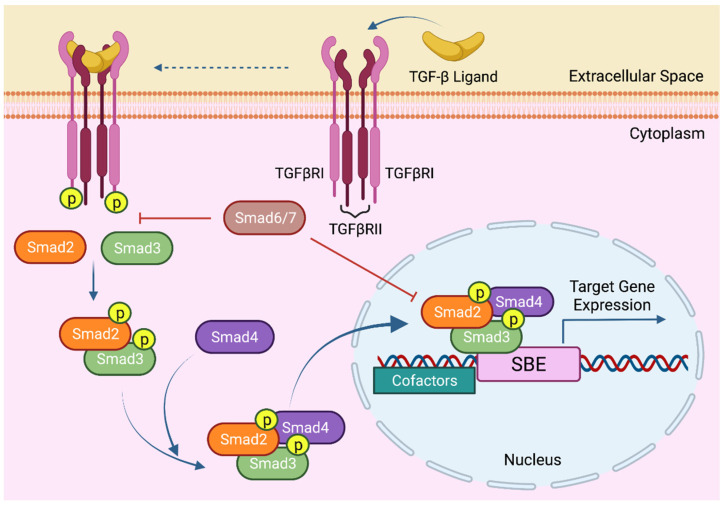
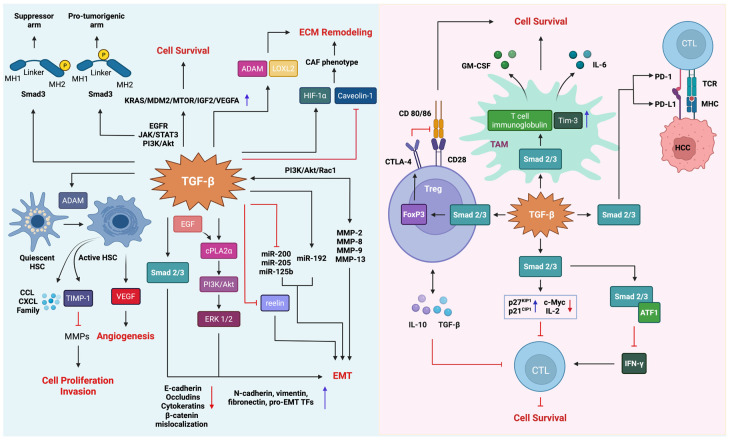
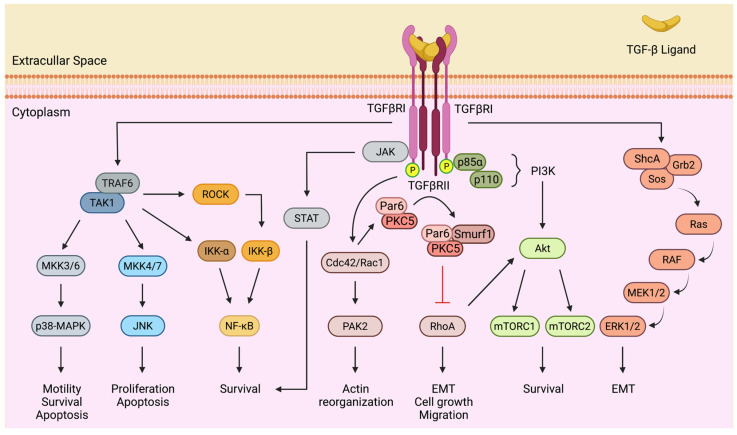
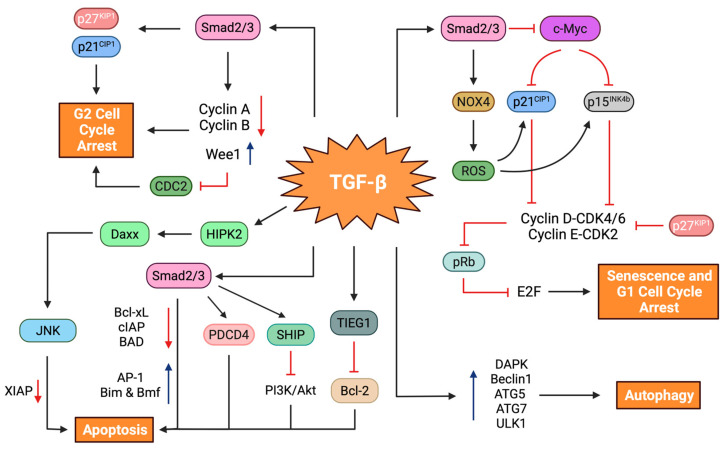
Hepatocellular carcinoma (HCC) is associated with genetic and nongenetic aberrations that impact multiple genes and pathways, including the frequently dysregulated transforming growth factor β (TGF-β) signaling pathway. The regulatory cytokine TGF-β and its signaling effectors govern a broad spectrum of spatiotemporally regulated molecular and cellular responses, yet paradoxically have dual and opposing roles in HCC progression. In the early stages of tumorigenesis, TGF-β signaling enforces profound tumor-suppressive effects, primarily by inducing cell cycle arrest, cellular senescence, autophagy, and apoptosis. However, as the tumor advances in malignant progression, TGF-β functionally switches to a pro-tumorigenic signal, eliciting aggressive tumor traits, such as epithelial-mesenchymal transition, tumor microenvironment remodeling, and immune evasion of cancer cells. On this account, the inhibition of TGF-β signaling is recognized as a promising therapeutic strategy for advanced HCC. In this review, we evaluate the functions and mechanisms of TGF-β signaling and relate its complex and pleiotropic biology to HCC pathophysiology, attempting to provide a detailed perspective on the molecular determinants underlying its functional diversion. We also address the therapeutic implications of the dichotomous nature of TGF-β signaling and highlight the rationale for targeting this pathway for HCC treatment, alone or in combination with other agents.
肝细胞癌(HCC)与影响多个基因和信号通路的遗传和非遗传异常有关,包括频繁失调的转化生长因子β(TGF-β)信号通路。调节性细胞因子TGF-β及其信号效应分子调控着广泛的时空调节的分子和细胞反应,但矛盾的是,它们在HCC进展中具有双重且相反的作用。在肿瘤发生的早期阶段,TGF-β信号传导发挥着深刻的肿瘤抑制作用,主要通过诱导细胞周期停滞、细胞衰老、自噬和凋亡来实现。然而,随着肿瘤在恶性进展中发展,TGF-β在功能上转变为促肿瘤信号,引发侵袭性肿瘤特征,如上皮-间质转化、肿瘤微环境重塑和癌细胞的免疫逃逸。鉴于此,抑制TGF-β信号传导被认为是晚期HCC的一种有前景的治疗策略。在这篇综述中,我们评估了TGF-β信号传导的功能和机制,并将其复杂且多效性的生物学特性与HCC病理生理学联系起来,试图就其功能转变背后的分子决定因素提供详细的观点。我们还讨论了TGF-β信号传导二分性的治疗意义,并强调针对该通路进行HCC治疗(单独或与其他药物联合)的理论依据。