Walley Justin W, Coughlan Sean, Hudson Matthew E, Covington Michael F, Kaspi Roy, Banu Gopalan, Harmer Stacey L, Dehesh Katayoon
Section of Plant Biology, University of California Davis, Davis, California, USA.
PLoS Genet. 2007 Oct;3(10):1800-12. doi: 10.1371/journal.pgen.0030172. Epub 2007 Aug 24.
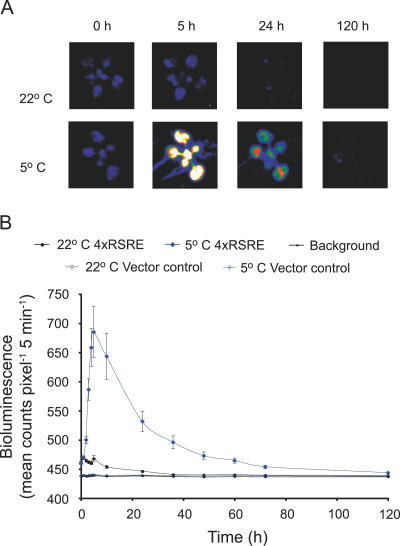
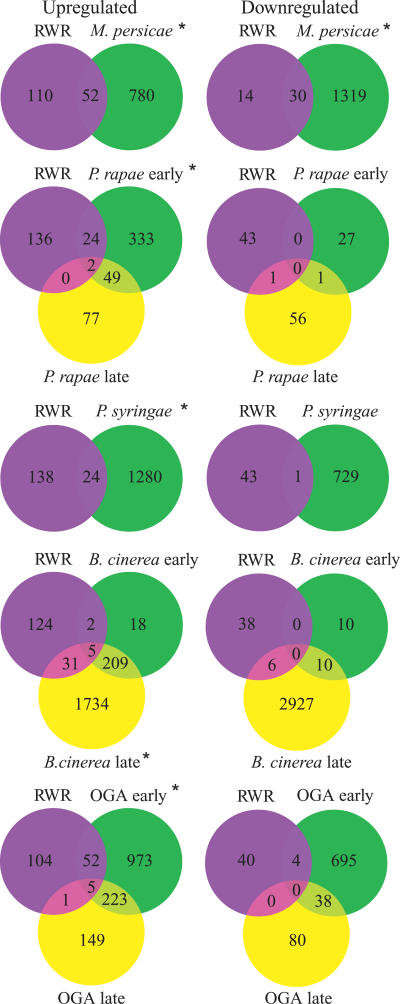
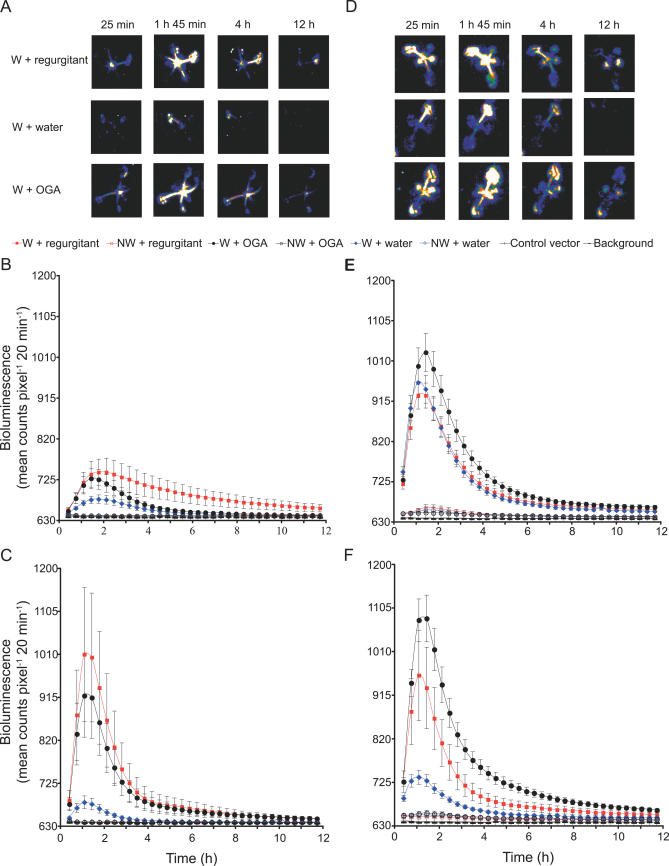
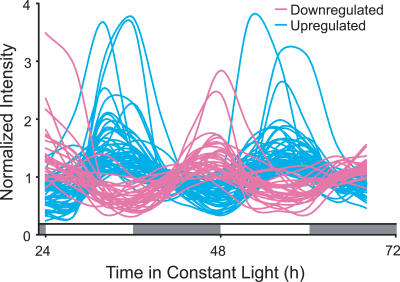
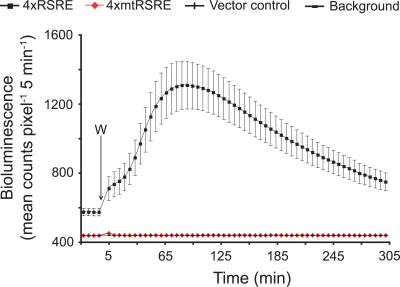
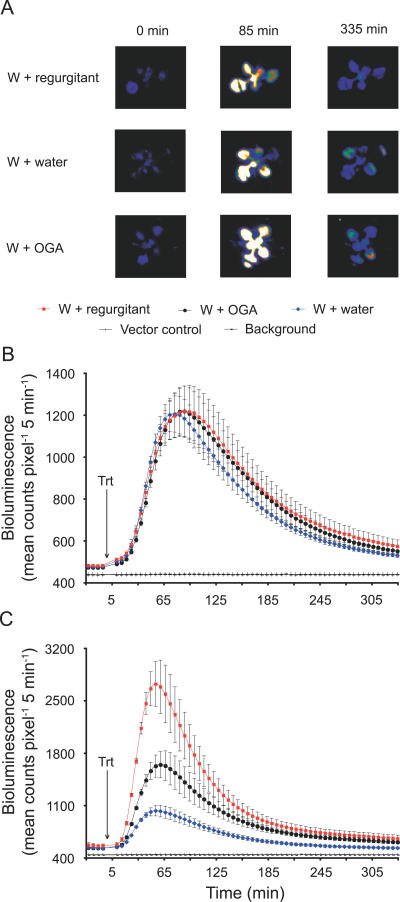
Plants are continuously exposed to a myriad of abiotic and biotic stresses. However, the molecular mechanisms by which these stress signals are perceived and transduced are poorly understood. To begin to identify primary stress signal transduction components, we have focused on genes that respond rapidly (within 5 min) to stress signals. Because it has been hypothesized that detection of physical stress is a mechanism common to mounting a response against a broad range of environmental stresses, we have utilized mechanical wounding as the stress stimulus and performed whole genome microarray analysis of Arabidopsis thaliana leaf tissue. This led to the identification of a number of rapid wound responsive (RWR) genes. Comparison of RWR genes with published abiotic and biotic stress microarray datasets demonstrates a large overlap across a wide range of environmental stresses. Interestingly, RWR genes also exhibit a striking level and pattern of circadian regulation, with induced and repressed genes displaying antiphasic rhythms. Using bioinformatic analysis, we identified a novel motif overrepresented in the promoters of RWR genes, herein designated as the Rapid Stress Response Element (RSRE). We demonstrate in transgenic plants that multimerized RSREs are sufficient to confer a rapid response to both biotic and abiotic stresses in vivo, thereby establishing the functional involvement of this motif in primary transcriptional stress responses. Collectively, our data provide evidence for a novel cis-element that is distributed across the promoters of an array of diverse stress-responsive genes, poised to respond immediately and coordinately to stress signals. This structure suggests that plants may have a transcriptional network resembling the general stress signaling pathway in yeast and that the RSRE element may provide the key to this coordinate regulation.
植物不断受到无数非生物和生物胁迫。然而,这些胁迫信号被感知和转导的分子机制却知之甚少。为了开始鉴定主要的胁迫信号转导成分,我们聚焦于那些对胁迫信号快速响应(5分钟内)的基因。由于据推测,物理胁迫的检测是针对广泛环境胁迫产生响应的一种常见机制,我们利用机械损伤作为胁迫刺激,并对拟南芥叶组织进行了全基因组微阵列分析。这导致鉴定出了一些快速伤口响应(RWR)基因。将RWR基因与已发表的非生物和生物胁迫微阵列数据集进行比较,结果表明在广泛的环境胁迫中存在大量重叠。有趣的是,RWR基因还表现出显著的昼夜节律调控水平和模式,诱导和抑制的基因呈现反相节律。通过生物信息学分析,我们在RWR基因的启动子中鉴定出一个过度富集的新基序,在此称为快速胁迫响应元件(RSRE)。我们在转基因植物中证明,多聚化的RSRE足以在体内赋予对生物和非生物胁迫的快速响应,从而确立了该基序在初级转录胁迫响应中的功能参与。总体而言,我们的数据为一种新的顺式元件提供了证据,该元件分布在一系列不同胁迫响应基因的启动子中,随时准备对胁迫信号立即做出协调响应。这种结构表明,植物可能有一个类似于酵母中一般胁迫信号通路的转录网络,并且RSRE元件可能是这种协调调控的关键。