Chen Chi, Fuhrken Peter G, Huang Li Ting, Apostolidis Pani, Wang Min, Paredes Carlos J, Miller William M, Papoutsakis Eleftherios T
Interdepartmental Biological Sciences Program, Northwestern University, Evanston, IL, USA.
BMC Genomics. 2007 Oct 22;8:384. doi: 10.1186/1471-2164-8-384.
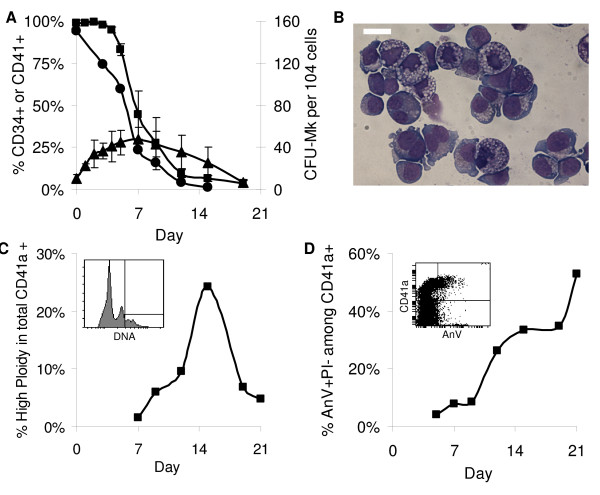
The differentiation of hematopoietic stem cells into platelet-forming megakaryocytes is of fundamental importance to hemostasis. Constitutive apoptosis is an integral, yet poorly understood, facet of megakaryocytic (Mk) differentiation. Understanding Mk apoptosis could lead to advances in the treatment of Mk and platelet disorders.
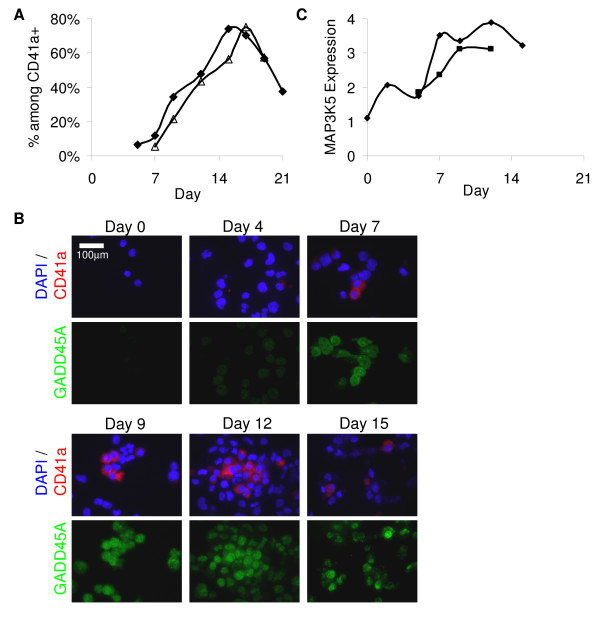
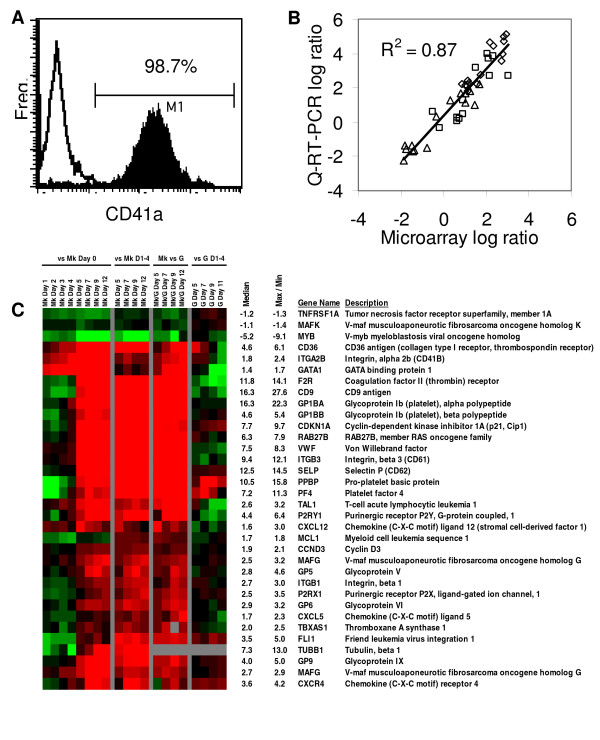
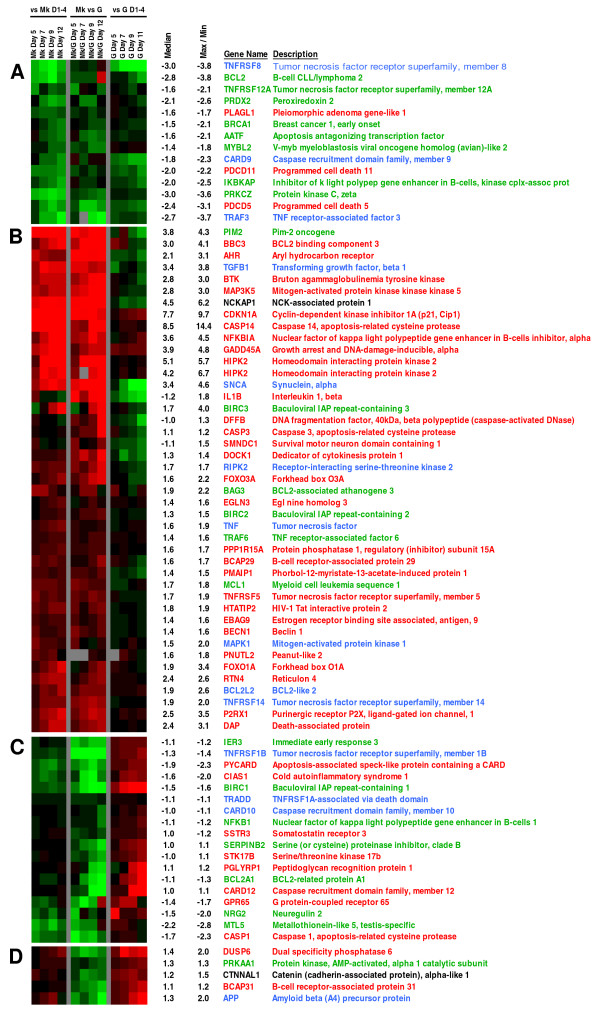
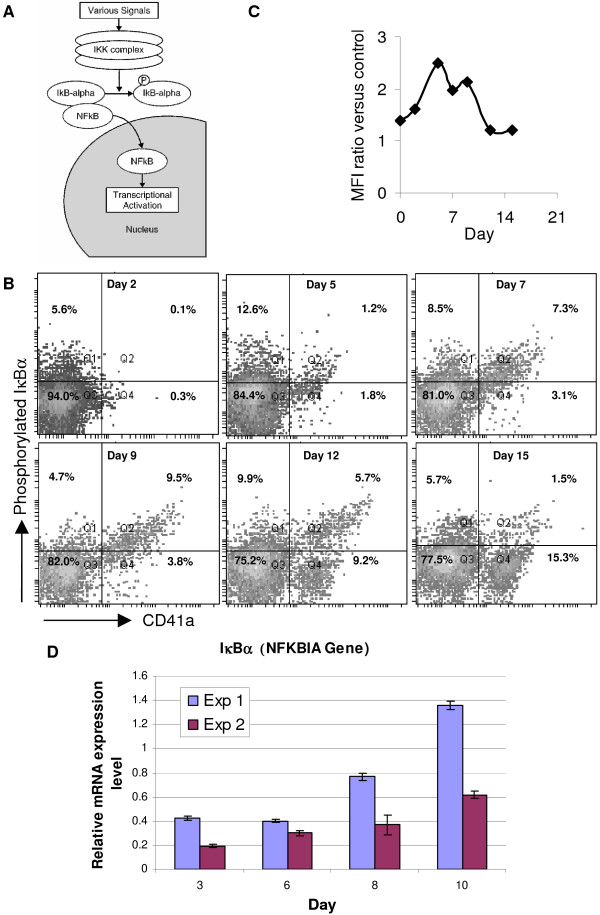
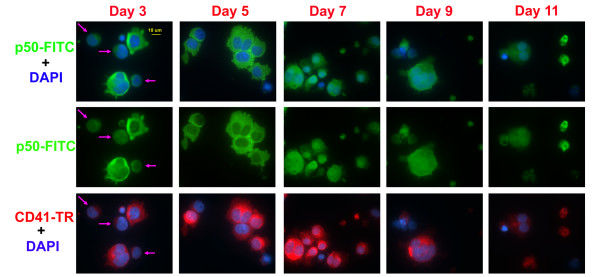
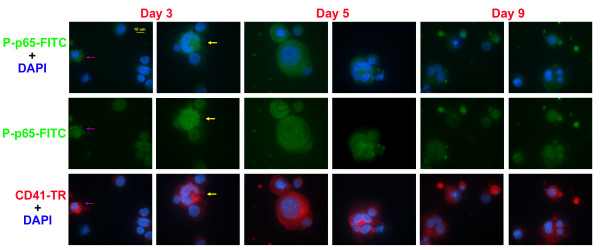
We used a Gene-ontology-driven microarray-based transcriptional analysis coupled with protein-level and activity assays to identify genes and pathways involved in Mk apoptosis. Peripheral blood CD34+ hematopoietic progenitor cells were induced to either Mk differentiation or, as a negative control without observable apoptosis, granulocytic differentiation. Temporal gene-expression data were analyzed by a combination of intra- and inter-culture comparisons in order to identify Mk-associated genes. This novel approach was first applied to a curated set of general Mk-related genes in order to assess their dynamic transcriptional regulation. When applied to all apoptosis associated genes, it revealed a decrease in NF-kappaB signaling, which was explored using phosphorylation assays for IkappaBalpha and p65 (RELA). Up-regulation was noted among several pro-apoptotic genes not previously associated with Mk apoptosis such as components of the p53 regulon and TNF signaling. Protein-level analyses probed the involvement of the p53-regulated GADD45A, and the apoptosis signal-regulating kinase 1 (ASK1). Down-regulation of anti-apoptotic genes, including several of the Bcl-2 family, was also detected.
Our comparative approach to analyzing dynamic large-scale transcriptional data, which was validated using a known set of Mk genes, robustly identified candidate Mk apoptosis genes. This led to novel insights into the molecular mechanisms regulating apoptosis in Mk cells.
造血干细胞分化为生成血小板的巨核细胞对止血至关重要。组成性凋亡是巨核细胞(Mk)分化不可或缺但却了解甚少的一个方面。了解Mk凋亡可能会推动Mk和血小板疾病治疗的进展。
我们使用基于基因本体驱动的微阵列转录分析,并结合蛋白质水平和活性测定,来鉴定参与Mk凋亡的基因和通路。将外周血CD34+造血祖细胞诱导分化为Mk,或者作为无明显凋亡的阴性对照诱导分化为粒细胞。通过培养内和培养间比较相结合的方式分析时间基因表达数据,以鉴定与Mk相关的基因。这种新方法首先应用于一组经过整理的一般Mk相关基因,以评估它们的动态转录调控。当应用于所有凋亡相关基因时,它揭示了NF-κB信号传导的减少,这通过对IkappaBalpha和p65(RELA)的磷酸化测定进行了探究。在一些先前未与Mk凋亡相关的促凋亡基因中发现了上调,例如p53调控子的成分和TNF信号传导。蛋白质水平分析探究了p53调控的GADD45A和凋亡信号调节激酶1(ASK1)的参与情况。还检测到抗凋亡基因的下调,包括几个Bcl-2家族成员。
我们分析动态大规模转录数据的比较方法,使用一组已知的Mk基因进行了验证,有力地鉴定了候选Mk凋亡基因。这为调节Mk细胞凋亡的分子机制带来了新的见解。