Vonica Alin, Gumbiner Barry M
The Laboratory of Vertebrate Embryology, The Rockefeller University, P.O. Box 32, 1230 York Avenue, New York, NY 10021, USA.
Dev Biol. 2007 Dec 1;312(1):90-102. doi: 10.1016/j.ydbio.2007.09.039. Epub 2007 Oct 2.
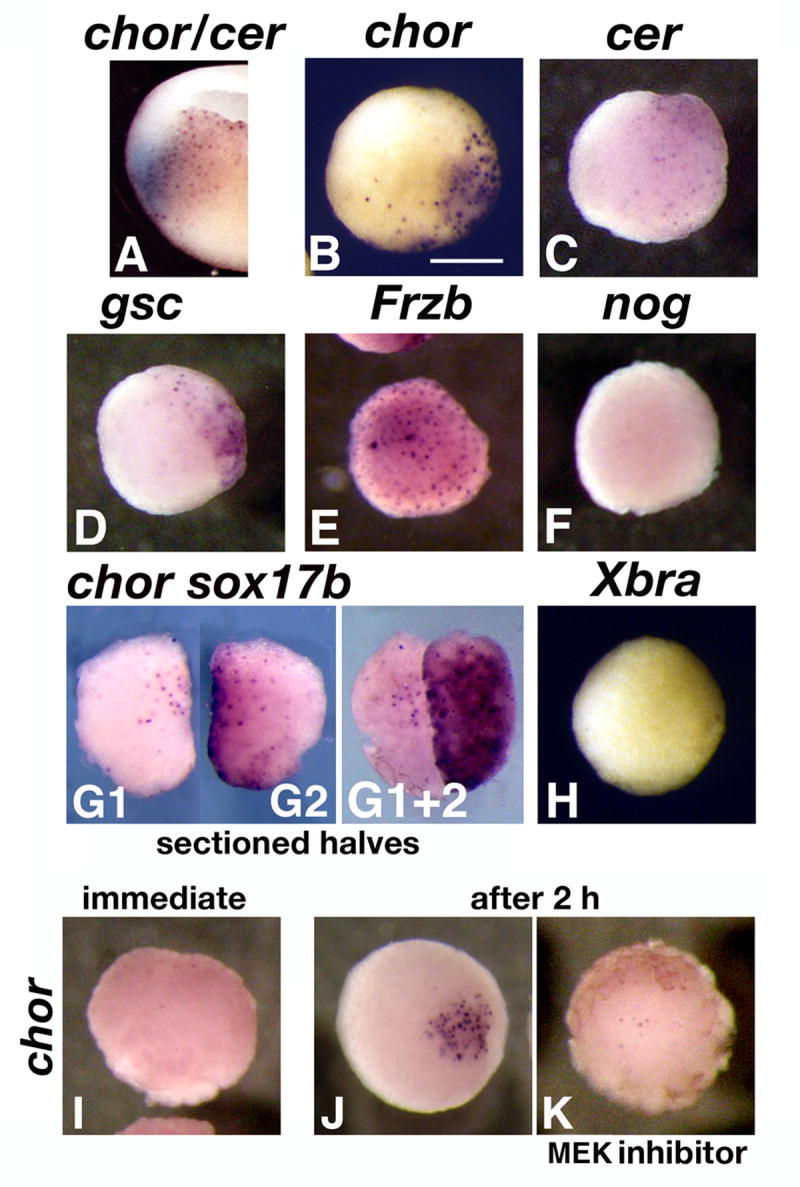
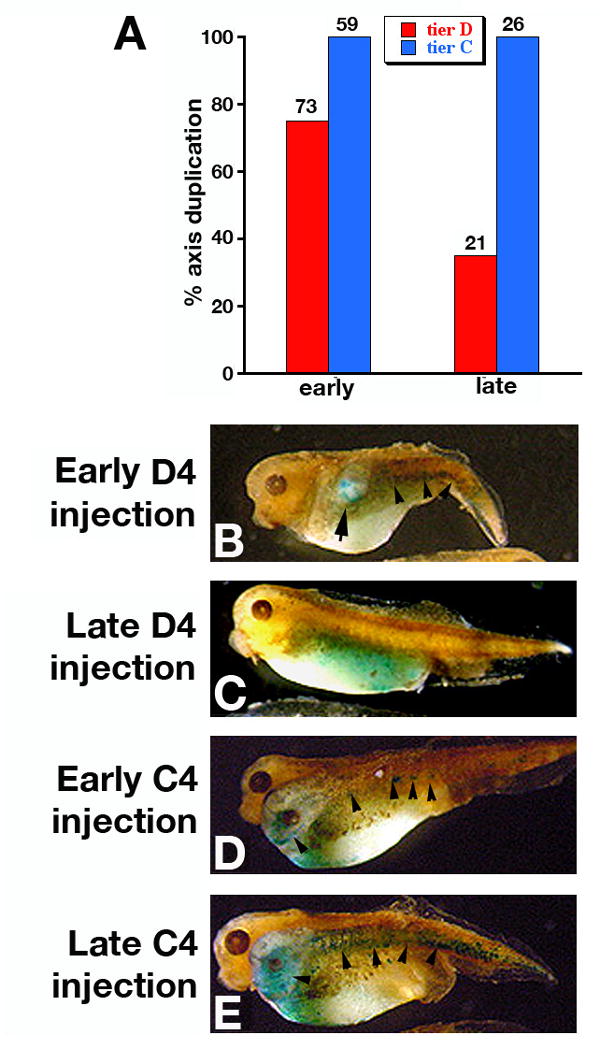
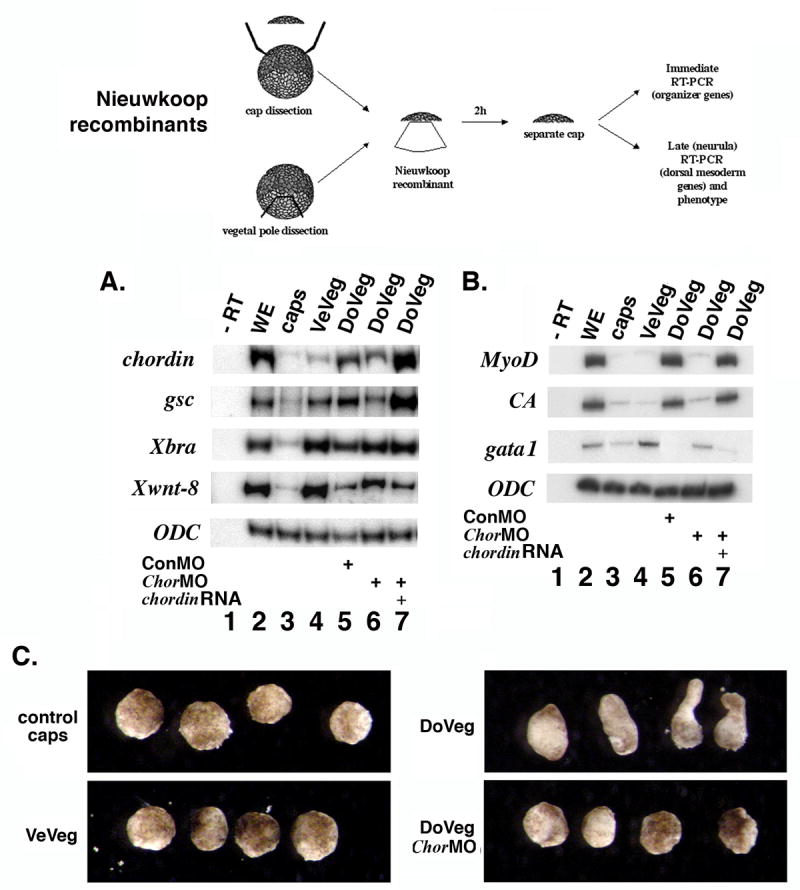
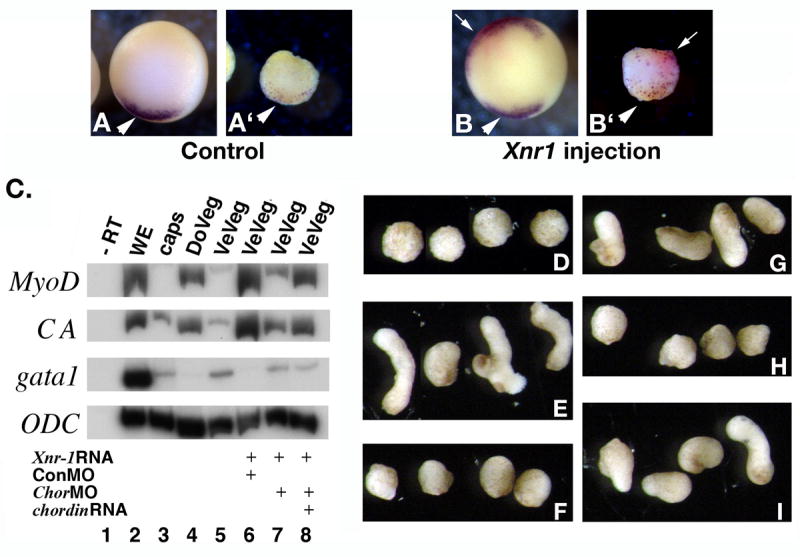
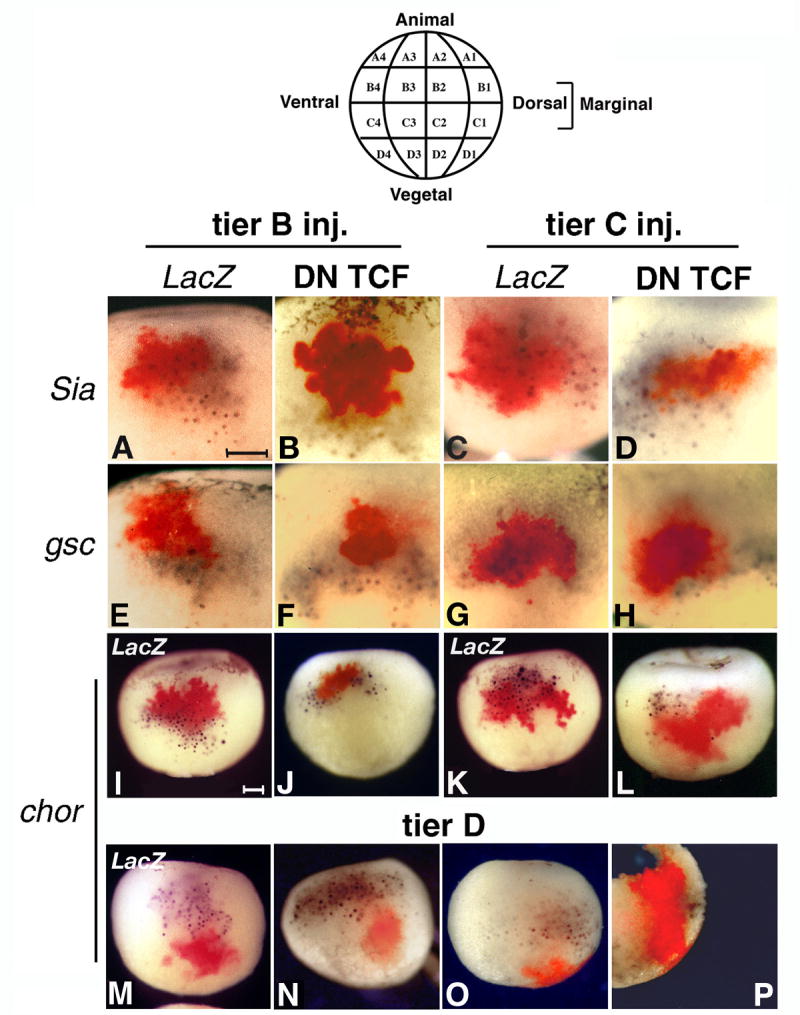
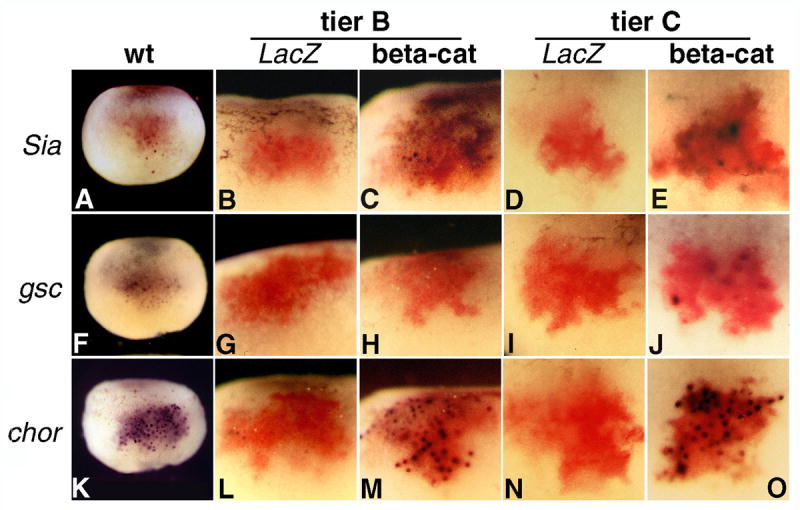
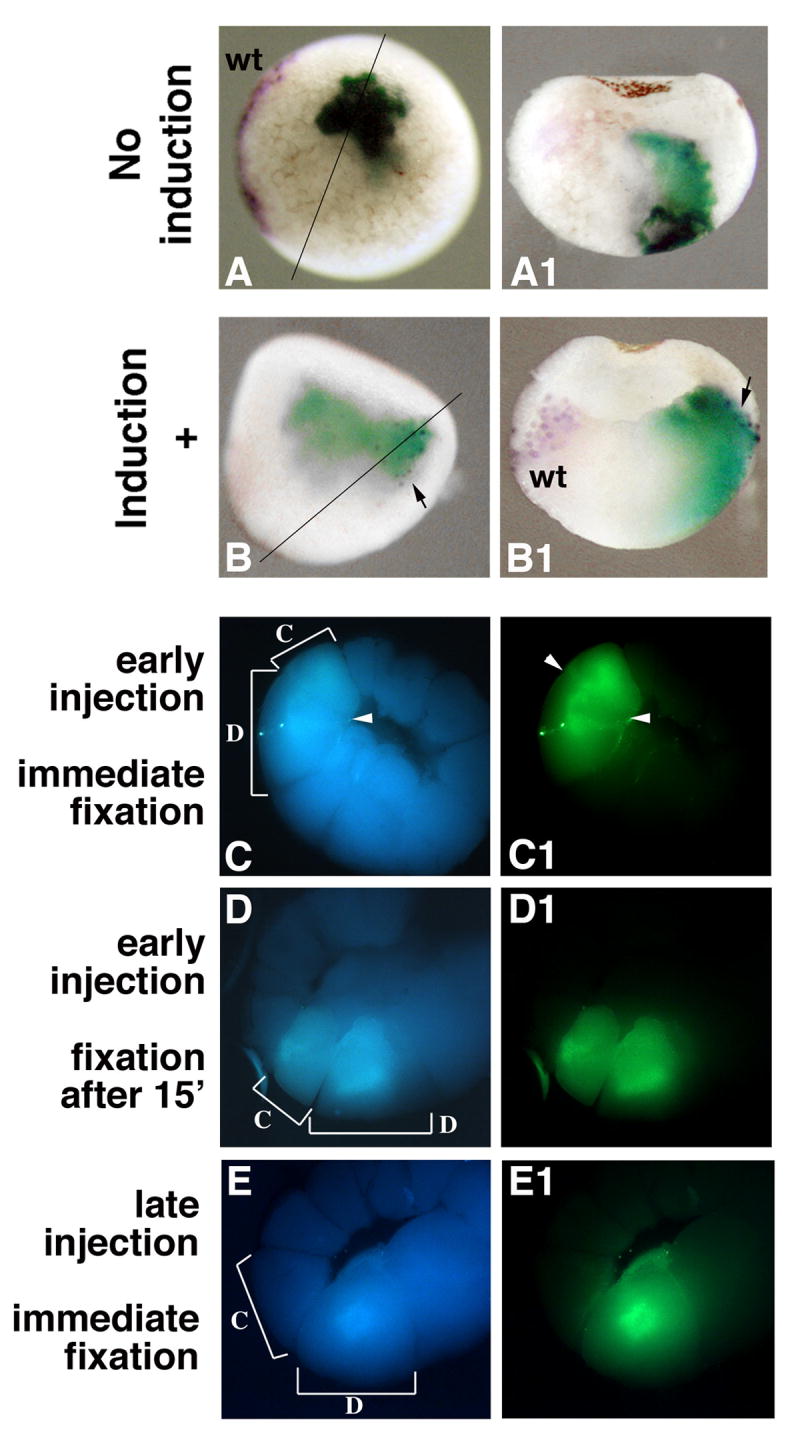
In Xenopus embryos, the dorso-ventral and antero-posterior axes are established by the Spemann-Mangold organizer. According to the prevalent model of early development, the organizer is induced by the dorsalizing Nieuwkoop signal, which is secreted by the Nieuwkoop center. Formation of the center requires the maternal Wnt pathway, which is active on the dorsal side of embryos. Nevertheless, the molecular nature of the Nieuwkoop signal remains unclear. Since the Nieuwkoop center and the organizer both produce dorsalizing signals in vitro, we asked if they might share molecular components. We find that vegetal explants, the source of Nieuwkoop signal in recombination assays, express a number of organizer genes. The product of one of these genes, chordin, is required for signaling, suggesting that the organizer and the center share at least some molecular components. Furthermore, experiments with whole embryos show that maternal Wnt activity is required in the organizer just as it is needed in the Nieuwkoop center in vitro. We conclude that the maternal Wnt pathway generates the Nieuwkoop center in vitro and the organizer in vivo by activating a common set of genes, without the need of an intermediary signaling step.
在非洲爪蟾胚胎中,背腹轴和前后轴是由施佩曼-曼戈尔德组织者建立的。根据早期发育的普遍模型,组织者是由背化的nieuwkoop信号诱导的,该信号由nieuwkoop中心分泌。中心的形成需要母体Wnt信号通路,该通路在胚胎的背侧活跃。然而,nieuwkoop信号的分子本质仍不清楚。由于nieuwkoop中心和组织者在体外都产生背化信号,我们询问它们是否可能共享分子成分。我们发现,在重组实验中作为nieuwkoop信号来源的植物外植体表达了许多组织者基因。其中一个基因的产物——脊索蛋白,是信号传导所必需的,这表明组织者和中心至少共享一些分子成分。此外,对完整胚胎的实验表明,母体Wnt活性在组织者中是必需的,就像它在体外的nieuwkoop中心中所需要的一样。我们得出结论,母体Wnt信号通路通过激活一组共同的基因在体外产生nieuwkoop中心,在体内产生组织者,而无需中间信号传导步骤。