Reddy B Mohan, Langstieh B T, Kumar Vikrant, Nagaraja T, Reddy A N S, Meka Aruna, Reddy A G, Thangaraj K, Singh Lalji
Biological Anthropology Unit, Indian Statistical Institute, Hyderabad, India.
PLoS One. 2007 Nov 7;2(11):e1141. doi: 10.1371/journal.pone.0001141.
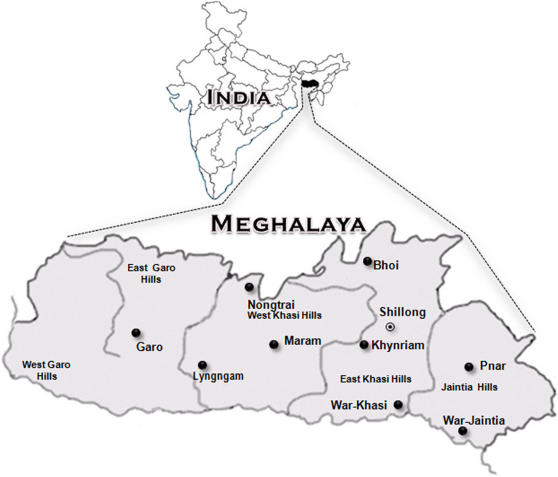
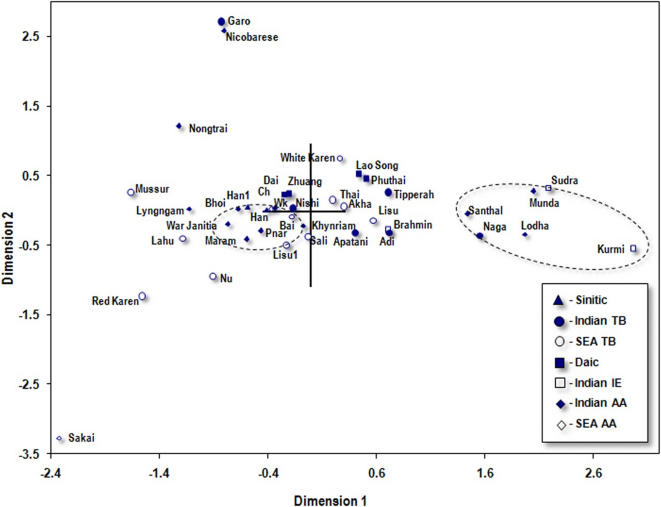
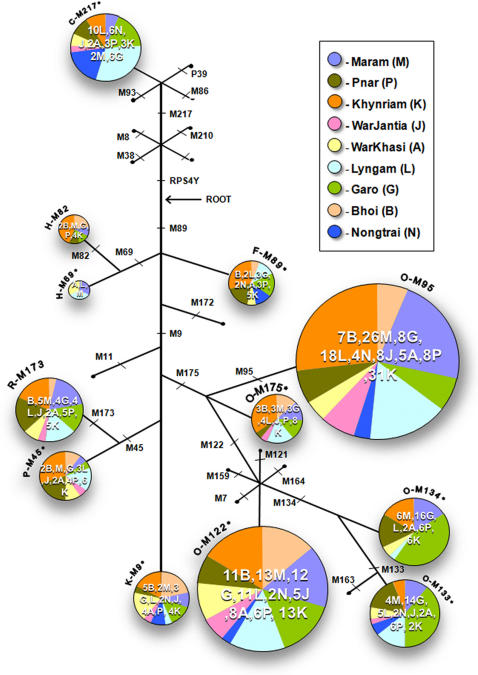
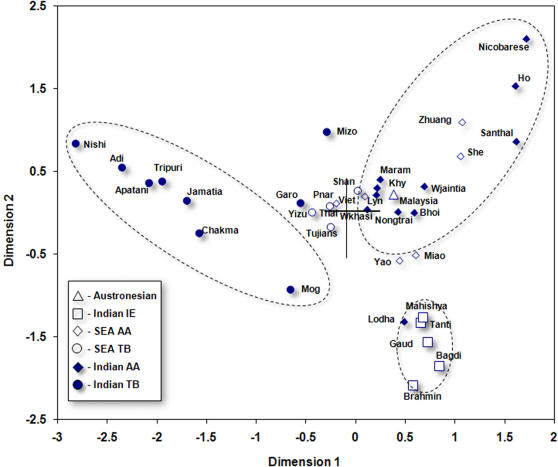
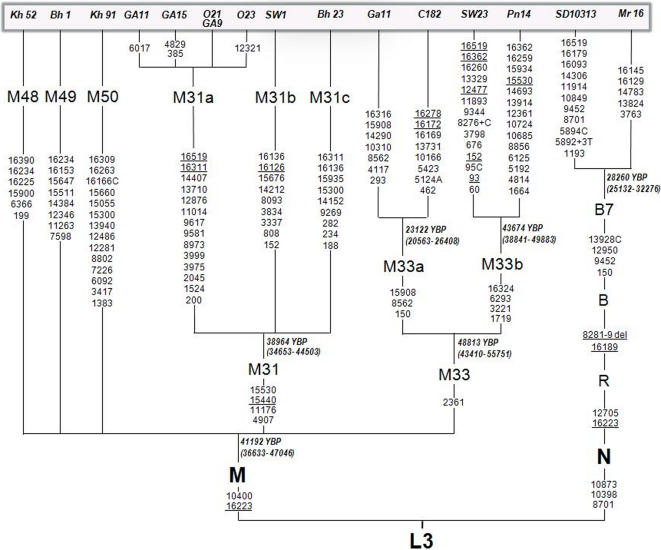
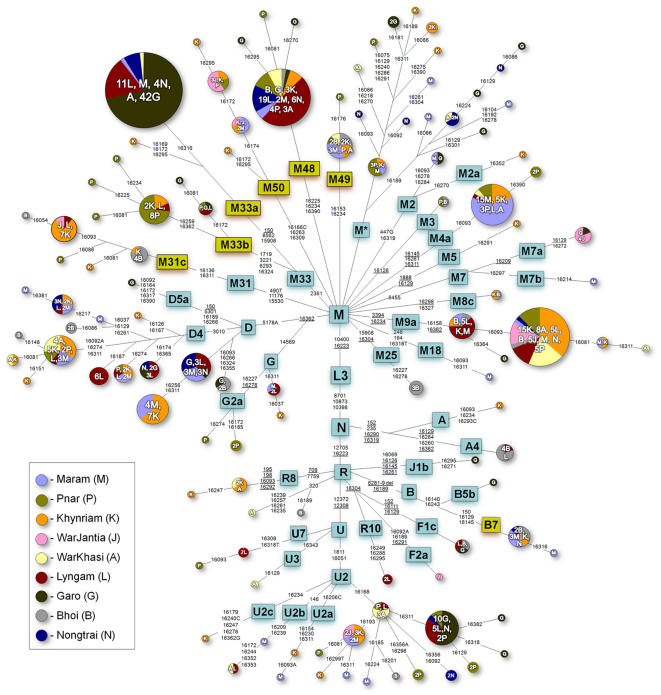
Northeast India, the only region which currently forms a land bridge between the Indian subcontinent and Southeast Asia, has been proposed as an important corridor for the initial peopling of East Asia. Given that the Austro-Asiatic linguistic family is considered to be the oldest and spoken by certain tribes in India, Northeast India and entire Southeast Asia, we expect that populations of this family from Northeast India should provide the signatures of genetic link between Indian and Southeast Asian populations. In order to test this hypothesis, we analyzed mtDNA and Y-Chromosome SNP and STR data of the eight groups of the Austro-Asiatic Khasi from Northeast India and the neighboring Garo and compared with that of other relevant Asian populations. The results suggest that the Austro-Asiatic Khasi tribes of Northeast India represent a genetic continuity between the populations of South and Southeast Asia, thereby advocating that northeast India could have been a major corridor for the movement of populations from India to East/Southeast Asia.
印度东北部是目前印度次大陆与东南亚之间唯一形成陆桥的地区,有人提出它是东亚最初人类迁徙的重要通道。鉴于南亚语系被认为是最古老的语系,且印度、印度东北部和整个东南亚的某些部落都使用该语系,我们预计来自印度东北部的该语系人群应能提供印度和东南亚人群之间基因联系的特征。为了验证这一假设,我们分析了来自印度东北部的南亚语系卡西族八组人群以及邻近的加罗族的线粒体DNA和Y染色体单核苷酸多态性及短串联重复序列数据,并与其他相关亚洲人群的数据进行了比较。结果表明,印度东北部的南亚语系卡西族部落代表了南亚和东南亚人群之间的基因连续性,从而表明印度东北部可能是人群从印度向东亚/东南亚迁徙的主要通道。