Zeglis Brian M, Pierre Valerie C, Barton Jacqueline K
Division of Chemistry and Chemical Engineering, California Institute of Technology, Pasadena CA 91125, USA.
Chem Commun (Camb). 2007 Nov 28(44):4565-79. doi: 10.1039/b710949k. Epub 2007 Sep 20.
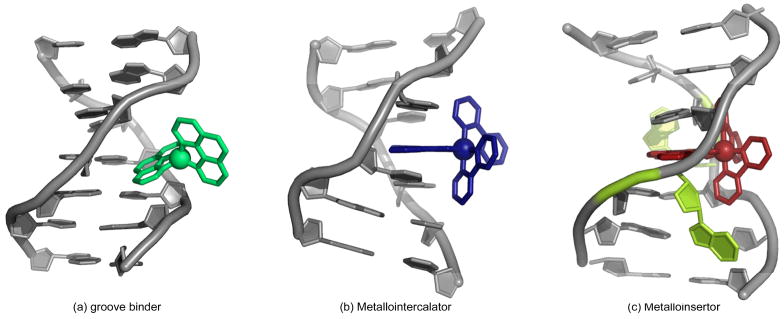
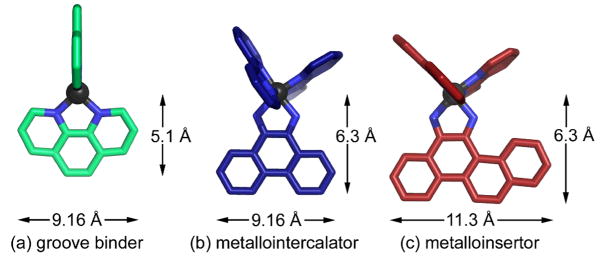
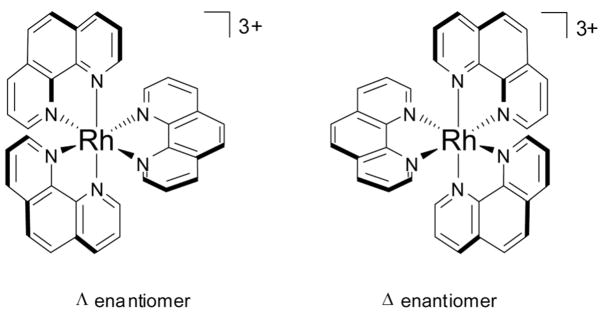
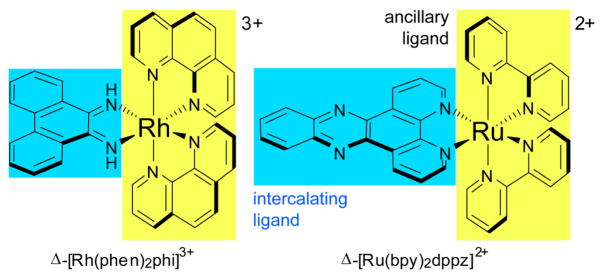
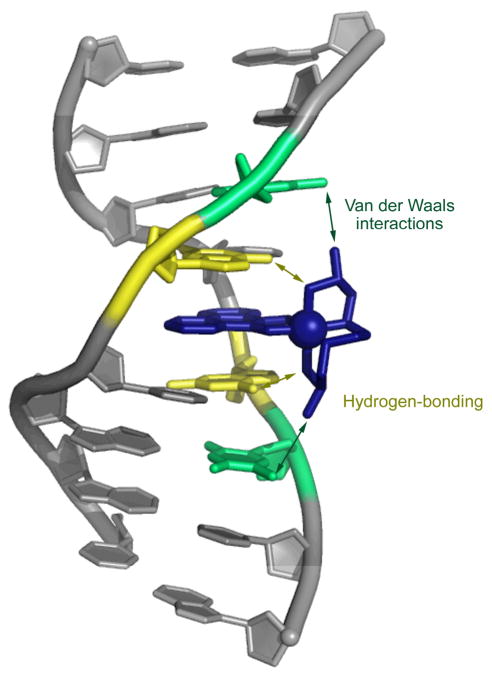
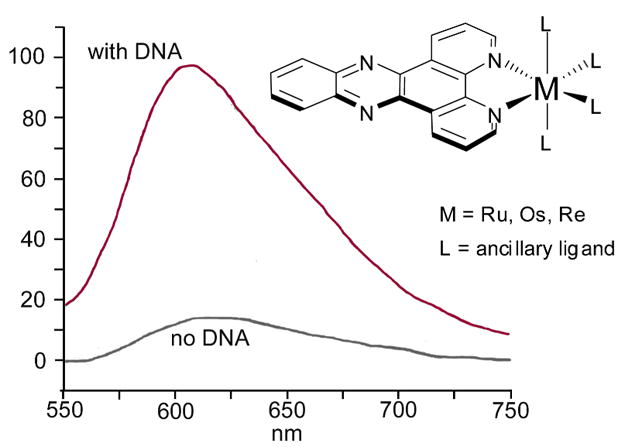
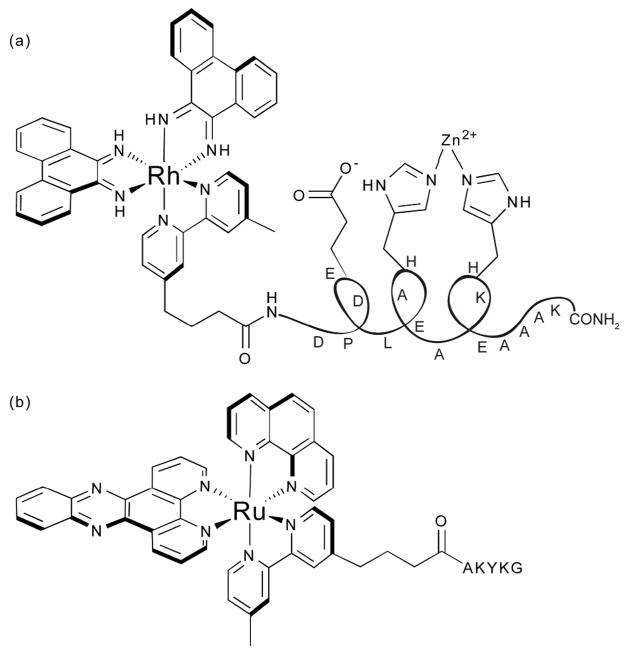
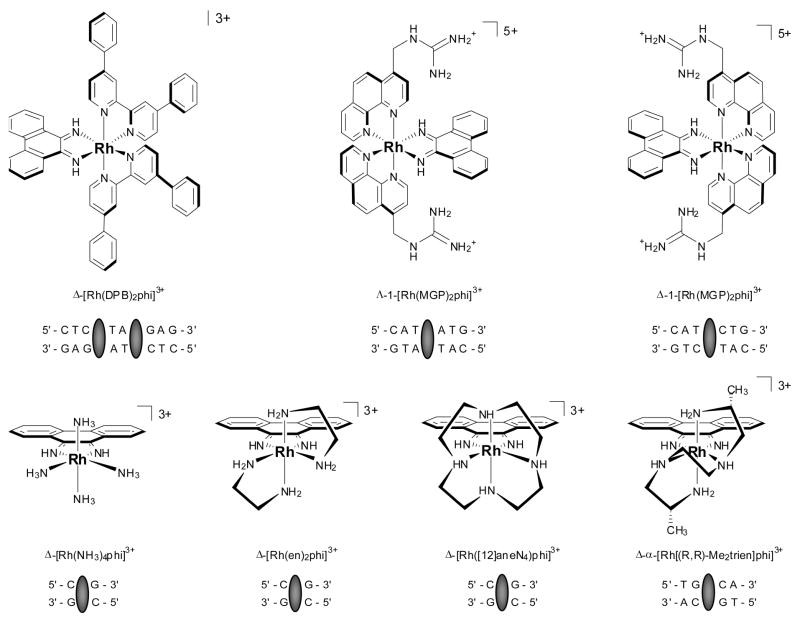
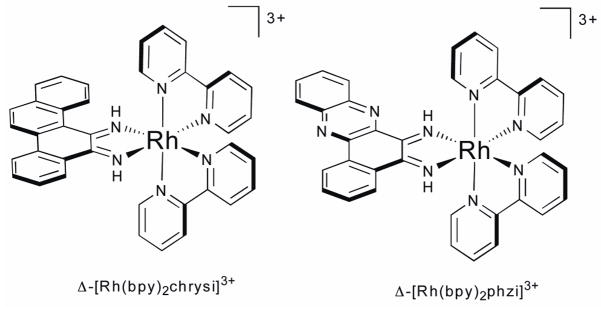
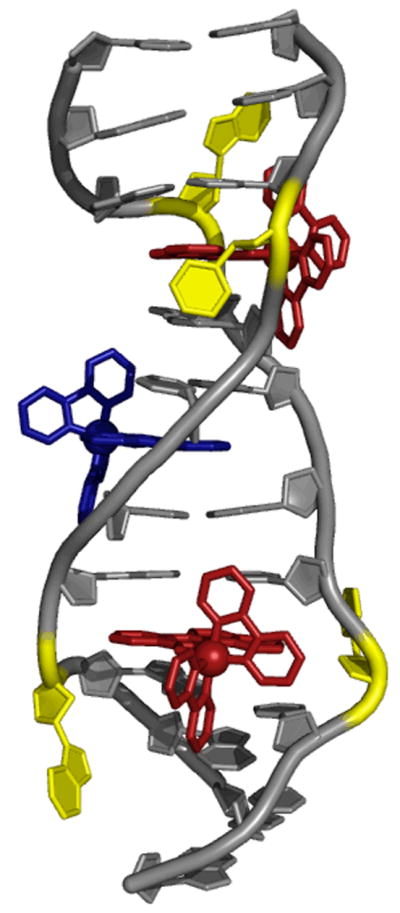
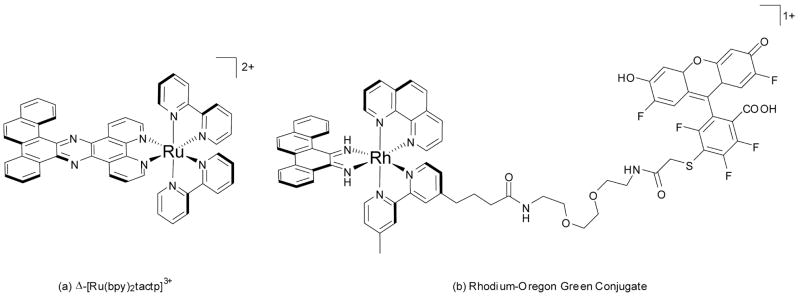
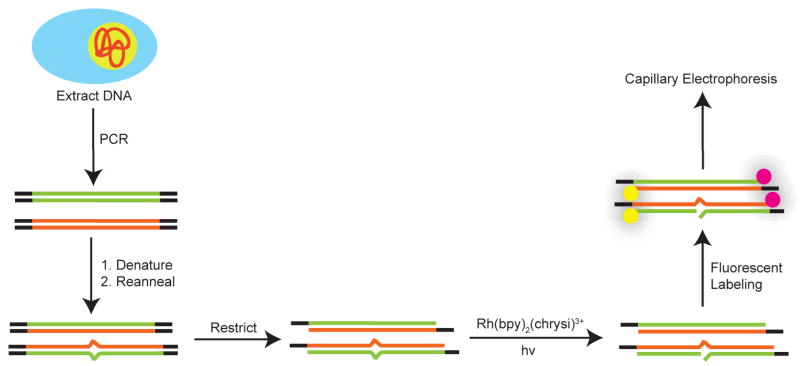
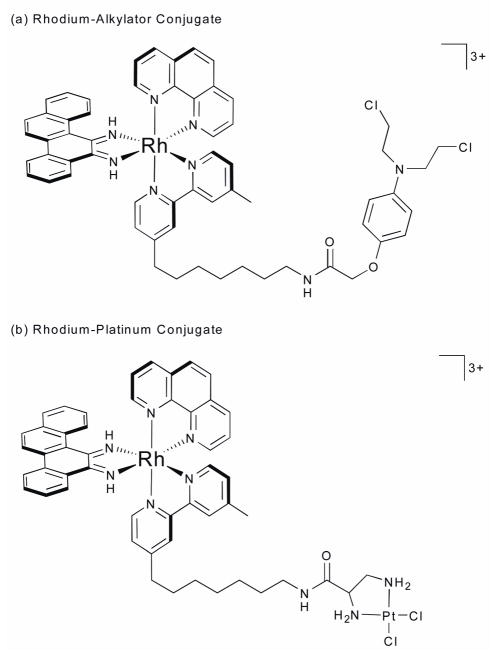
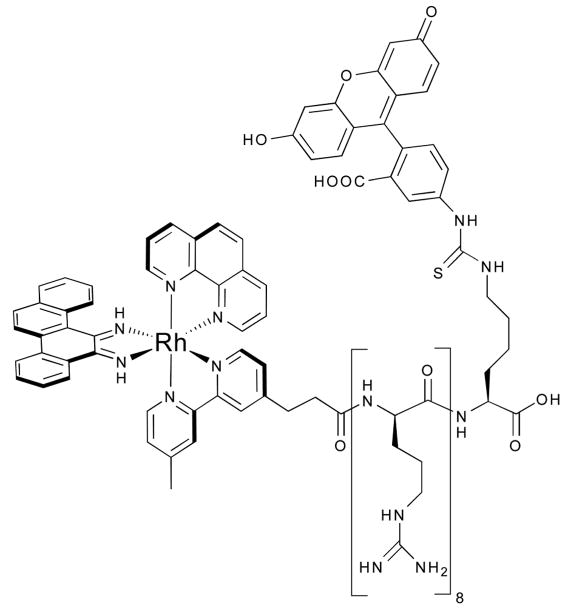
Since the elucidation of the structure of double helical DNA, the construction of small molecules that recognize and react at specific DNA sites has been an area of considerable interest. In particular, the study of transition metal complexes that bind DNA with specificity has been a burgeoning field. This growth has been due in large part to the useful properties of metal complexes, which possess a wide array of photophysical attributes and allow for the modular assembly of an ensemble of recognition elements. Here we review recent experiments in our laboratory aimed at the design and study of octahedral metal complexes that bind DNA non-covalently and target reactions to specific sites. Emphasis is placed both on the variety of methods employed to confer site-specificity and upon the many applications for these complexes. Particular attention is given to the family of complexes recently designed that target single base mismatches in duplex DNA through metallo-insertion.
自从双螺旋DNA结构被阐明以来,构建能够在特定DNA位点识别并发生反应的小分子一直是一个备受关注的领域。特别是,对能特异性结合DNA的过渡金属配合物的研究已成为一个蓬勃发展的领域。这种发展在很大程度上归因于金属配合物的有用特性,它们具有广泛的光物理属性,并允许对一系列识别元件进行模块化组装。在此,我们综述了我们实验室最近进行的旨在设计和研究非共价结合DNA并将反应靶向特定位点的八面体金属配合物的实验。重点既放在用于赋予位点特异性的各种方法上,也放在这些配合物的众多应用上。特别关注最近设计的通过金属插入靶向双链DNA中单碱基错配的配合物家族。