Shrivastav Anuraag, Varma Shailly, Saxena Anurag, DeCoteau John, Sharma Rajendra K
Department of Pathology and Laboratory Medicine, College of Medicine, University of Saskatchewan, Saskatoon, Canada S7N 5E5.
J Transl Med. 2007 Nov 16;5:58. doi: 10.1186/1479-5876-5-58.
Colon cancer is the second leading cause of cancer deaths in the western world. If detected early, colorectal cancer is one of the most treatable forms of cancer. Unfortunately, very few people are screened. N-myristoyltransferase (NMT) catalyzes myristoylation of various proteins including oncoproteins. We have demonstrated earlier the alteration of NMT activity during the progression of colorectal cancer and established NMT as a putative therapeutic target for cancer.
Peripheral blood samples and bone marrow were collected from the colon cancer patients and azoxymethane induced colonic tumor rats and their controls respectively. NMT activity and expression was determined as reported earlier. Immunohistochemical studies were carried out using standard procedures.
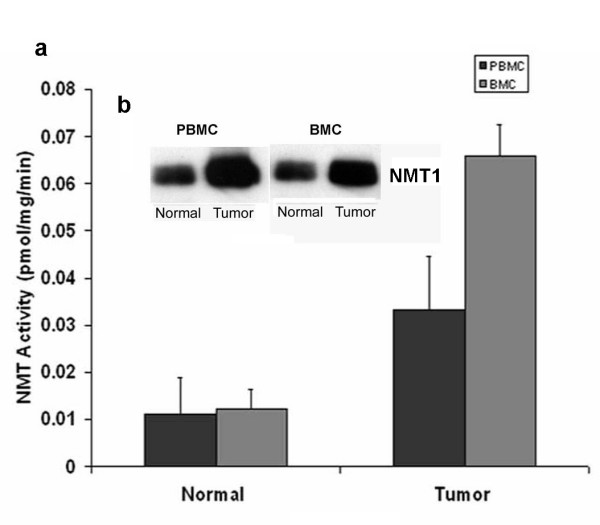
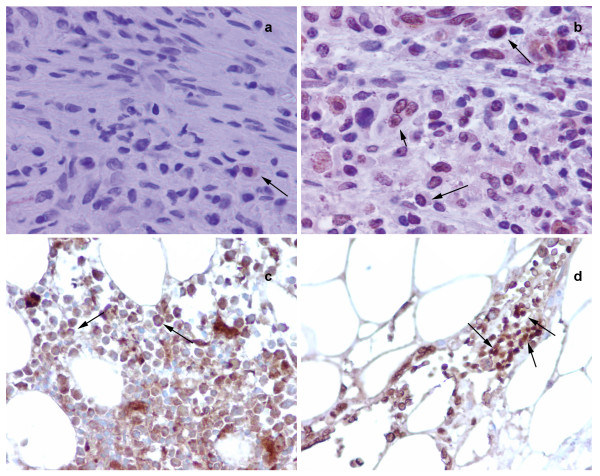
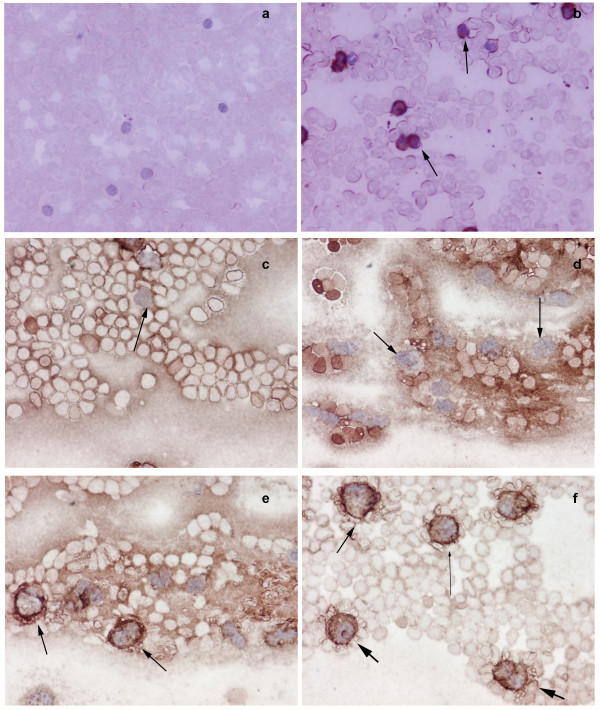
In this study we demonstrate for the first time altered expression and localization of NMT in the peripheral blood and bone marrow in colon cancer patients. Immunohistochemical analysis revealed weak to negative staining for NMT in peripheral blood mononuclear cells (PBMC) of controls, whereas strong positivity was observed in PBMC colon cancer patients. In addition, we observed that NMT was localized mostly in the nuclei of the bone marrow (BM) mononuclear cells of the colon cancer patients, whereas NMT remained cytoplasmic in the control bone marrow specimens.
The strikingly different NMT expression offers the basis of a potential adjunct investigative tool for screening or diagnosis of patients at risk for or suspected of having colon cancer. Furthermore, altered localization of NMT in BM of tumor bearing hosts may serve as an added investigative tool for the diagnostic purpose.
在西方世界,结肠癌是癌症死亡的第二大主要原因。如果能早期发现,结直肠癌是最可治疗的癌症形式之一。不幸的是,很少有人接受筛查。N-肉豆蔻酰转移酶(NMT)催化包括癌蛋白在内的各种蛋白质的肉豆蔻酰化。我们之前已经证明了在结直肠癌进展过程中NMT活性的改变,并将NMT确立为癌症的一个假定治疗靶点。
分别从结肠癌患者、氧化偶氮甲烷诱导的结肠肿瘤大鼠及其对照组采集外周血样本和骨髓。按照之前报道的方法测定NMT活性和表达。采用标准程序进行免疫组织化学研究。
在本研究中,我们首次证明了结肠癌患者外周血和骨髓中NMT的表达和定位发生了改变。免疫组织化学分析显示,对照组外周血单个核细胞(PBMC)中NMT染色呈弱阳性至阴性,而结肠癌患者的PBMC中则观察到强阳性。此外,我们观察到NMT主要定位于结肠癌患者骨髓(BM)单个核细胞的细胞核中,而在对照骨髓标本中NMT仍位于细胞质中。
NMT表达的显著差异为筛查或诊断有患结肠癌风险或疑似患结肠癌的患者提供了一种潜在辅助检测工具的基础。此外,肿瘤宿主骨髓中NMT定位的改变可作为一种额外的用于诊断目的的检测工具。