Pilati Stefania, Perazzolli Michele, Malossini Andrea, Cestaro Alessandro, Demattè Lorenzo, Fontana Paolo, Dal Ri Antonio, Viola Roberto, Velasco Riccardo, Moser Claudio
Department of Genetics and Molecular Biology; IASMA Research Center, Via E, Mach 1, 38010 S, Michele a/Adige (TN), Italy.
BMC Genomics. 2007 Nov 22;8:428. doi: 10.1186/1471-2164-8-428.
Grapevine (Vitis species) is among the most important fruit crops in terms of cultivated area and economic impact. Despite this relevance, little is known about the transcriptional changes and the regulatory circuits underlying the biochemical and physical changes occurring during berry development.
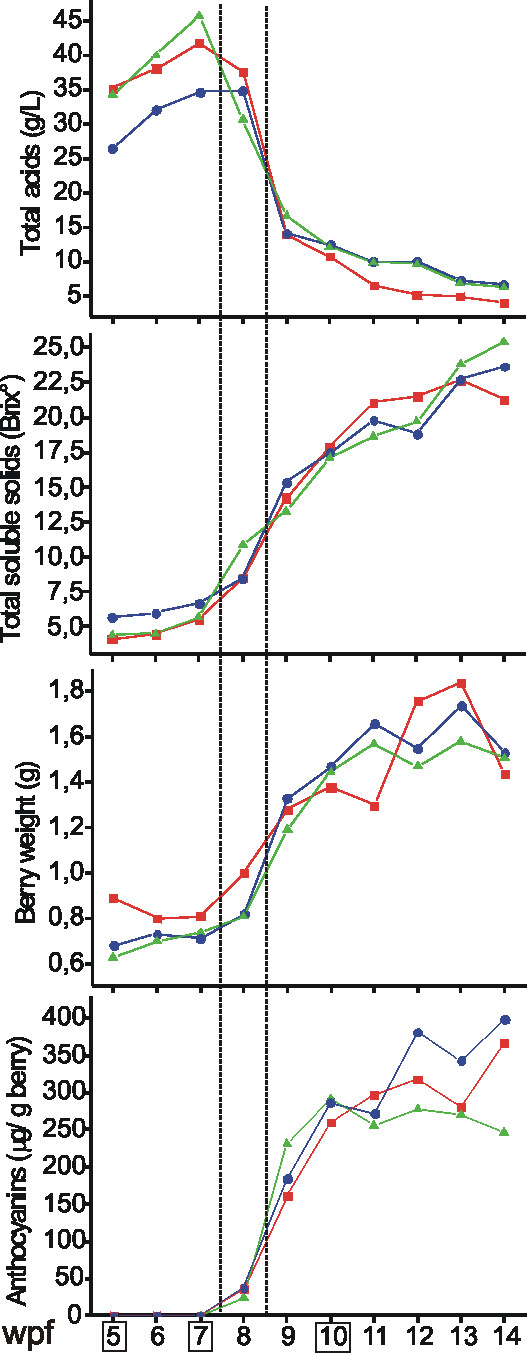
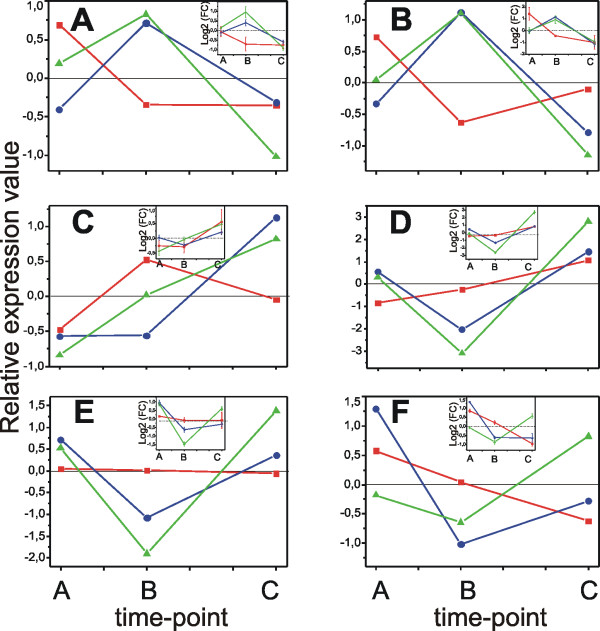
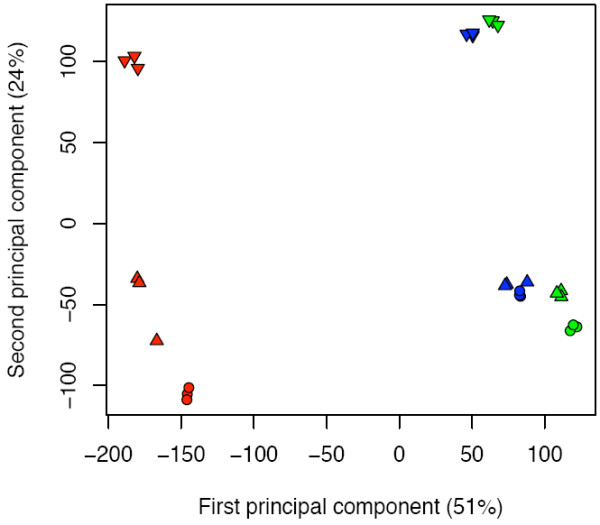
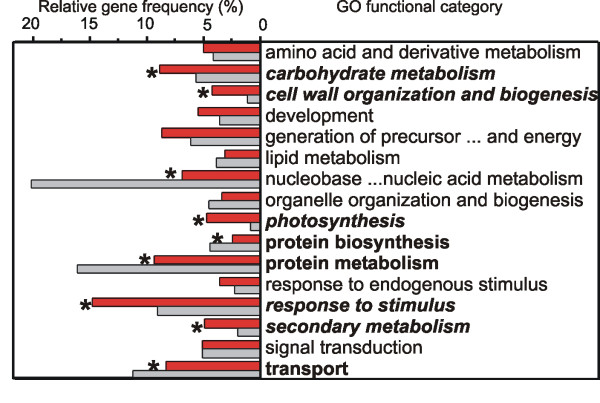
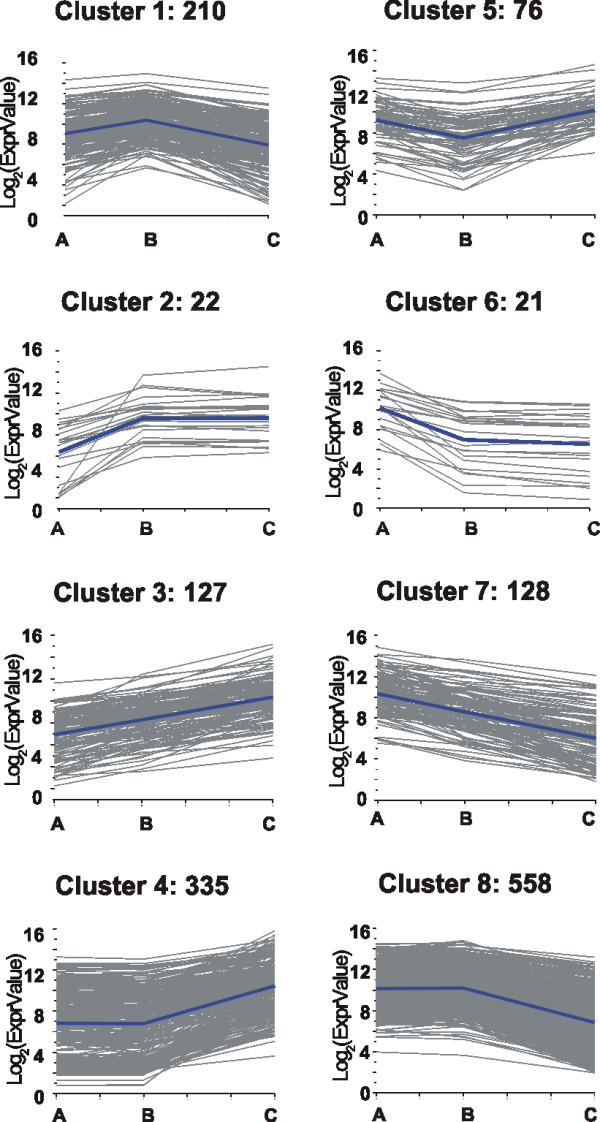
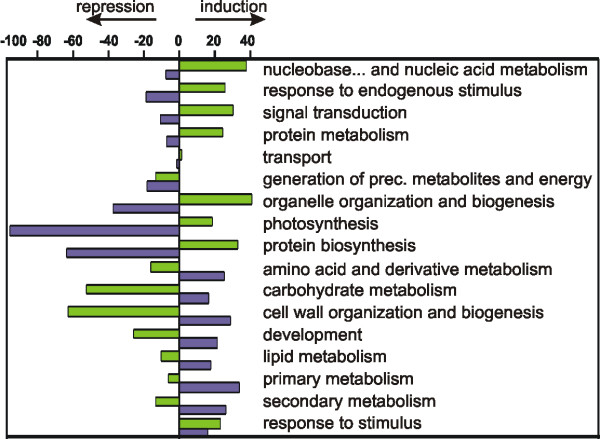
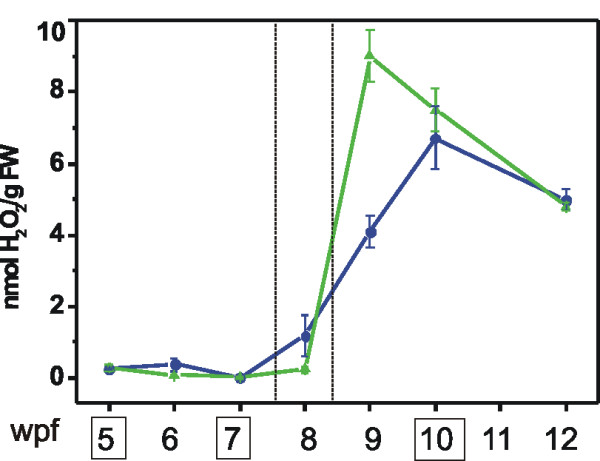
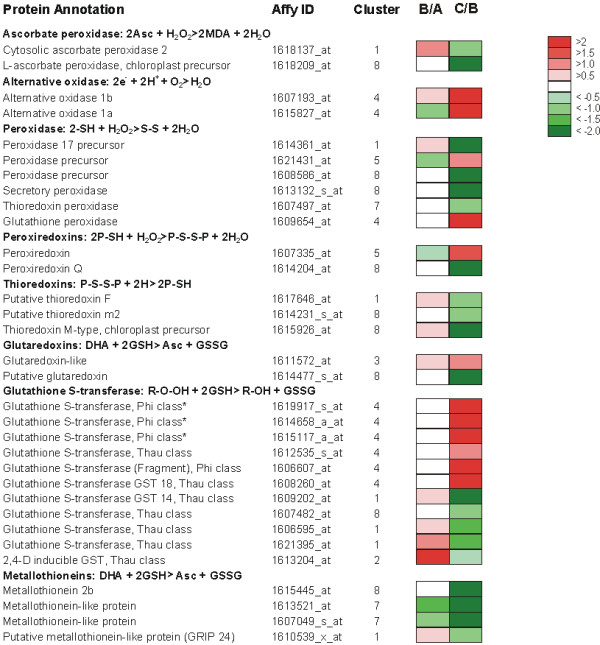
Fruit ripening in the non-climacteric crop species Vitis vinifera L. has been investigated at the transcriptional level by the use of the Affymetrix Vitis GeneChip which contains approximately 14,500 unigenes. Gene expression data obtained from berries sampled before and after véraison in three growing years, were analyzed to identify genes specifically involved in fruit ripening and to investigate seasonal influences on the process. From these analyses a core set of 1477 genes was found which was similarly modulated in all seasons. We were able to separate ripening specific isoforms within gene families and to identify ripening related genes which appeared strongly regulated also by the seasonal weather conditions. Transcripts annotation by Gene Ontology vocabulary revealed five overrepresented functional categories of which cell wall organization and biogenesis, carbohydrate and secondary metabolisms and stress response were specifically induced during the ripening phase, while photosynthesis was strongly repressed. About 19% of the core gene set was characterized by genes involved in regulatory processes, such as transcription factors and transcripts related to hormonal metabolism and signal transduction. Auxin, ethylene and light emerged as the main stimuli influencing berry development. In addition, an oxidative burst, previously not detected in grapevine, characterized by rapid accumulation of H2O2 starting from véraison and by the modulation of many ROS scavenging enzymes, was observed.
The time-course gene expression analysis of grapevine berry development has identified the occurrence of two well distinct phases along the process. The pre-véraison phase represents a reprogramming stage of the cellular metabolism, characterized by the expression of numerous genes involved in hormonal signalling and transcriptional regulation. The post-véraison phase is characterized by the onset of a ripening-specialized metabolism responsible for the phenotypic traits of the ripe berry. Between the two phases, at véraison, an oxidative burst and the concurrent modulation of the anti-oxidative enzymatic network was observed. The large number of regulatory genes we have identified represents a powerful new resource for dissecting the mechanisms of fruit ripening control in non-climacteric plants.
就种植面积和经济影响而言,葡萄(葡萄属物种)是最重要的水果作物之一。尽管具有这种重要性,但对于浆果发育过程中发生的生化和物理变化背后的转录变化及调控回路,我们了解甚少。
利用包含约14,500个单基因的Affymetrix葡萄基因芯片,在转录水平上研究了非跃变型作物葡萄(Vitis vinifera L.)的果实成熟过程。分析了从三个生长年份中在转色期之前和之后采集的浆果获得的基因表达数据,以鉴定果实成熟过程中特异性参与的基因,并研究季节对该过程的影响。通过这些分析,发现了一组1477个核心基因,它们在所有季节中受到类似的调控。我们能够区分基因家族内的成熟特异性异构体,并鉴定出也受季节性天气条件强烈调控的成熟相关基因。通过基因本体论词汇对转录本进行注释,揭示了五个过度富集的功能类别,其中细胞壁组织与生物合成、碳水化合物和次生代谢以及应激反应在成熟阶段被特异性诱导,而光合作用则受到强烈抑制。约19%的核心基因集由参与调控过程的基因表征,例如转录因子以及与激素代谢和信号转导相关的转录本。生长素、乙烯和光成为影响浆果发育的主要刺激因素。此外,观察到一种此前在葡萄中未检测到的氧化爆发,其特征是从转色期开始H2O2迅速积累,并伴随着许多活性氧清除酶的调控。
葡萄浆果发育的时间进程基因表达分析确定了该过程中存在两个截然不同的阶段。转色前期代表细胞代谢的重编程阶段,其特征是表达大量参与激素信号传导和转录调控的基因。转色后期的特征是开始了负责成熟浆果表型特征的成熟特异性代谢。在这两个阶段之间,在转色期观察到氧化爆发以及抗氧化酶网络的同时调控。我们鉴定出的大量调控基因代表了剖析非跃变型植物果实成熟控制机制的强大新资源。