Departamento de Genética Molecular de Plantas, Centro Nacional de Biotecnología (CNB), Consejo Superior de Investigaciones Científicas (CSIC), Madrid, Spain.
PLoS One. 2012;7(6):e39547. doi: 10.1371/journal.pone.0039547. Epub 2012 Jun 29.
Ripening of fleshy fruit is a complex developmental process involving the differentiation of tissues with separate functions. During grapevine berry ripening important processes contributing to table and wine grape quality take place, some of them flesh- or skin-specific. In this study, transcriptional profiles throughout flesh and skin ripening were followed during two different seasons in a table grape cultivar 'Muscat Hamburg' to determine tissue-specific as well as common developmental programs.
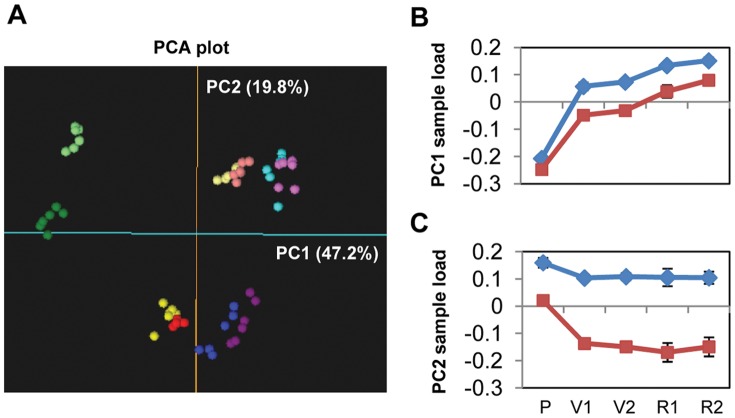
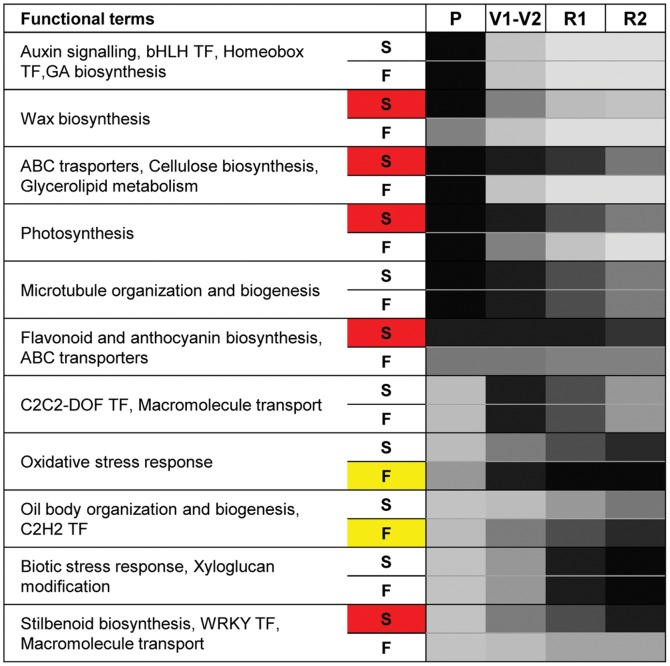
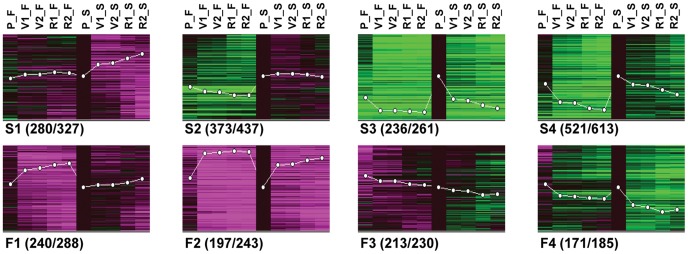
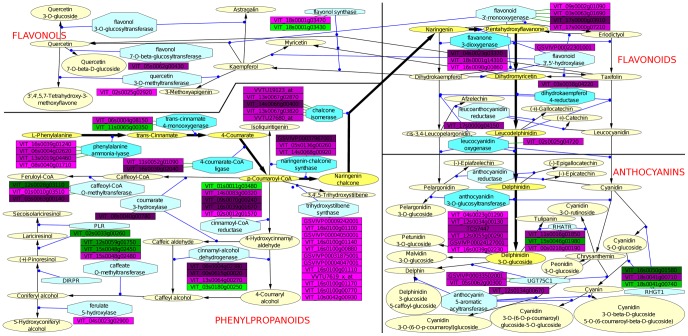
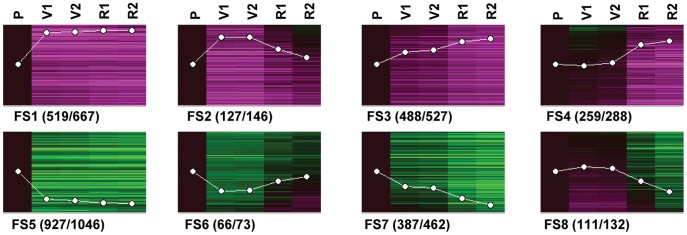
METHODOLOGY/PRINCIPAL FINDINGS: Using an updated GrapeGen Affymetrix GeneChip® annotation based on grapevine 12×v1 gene predictions, 2188 differentially accumulated transcripts between flesh and skin and 2839 transcripts differentially accumulated throughout ripening in the same manner in both tissues were identified. Transcriptional profiles were dominated by changes at the beginning of veraison which affect both pericarp tissues, although frequently delayed or with lower intensity in the skin than in the flesh. Functional enrichment analysis identified the decay on biosynthetic processes, photosynthesis and transport as a major part of the program delayed in the skin. In addition, a higher number of functional categories, including several related to macromolecule transport and phenylpropanoid and lipid biosynthesis, were over-represented in transcripts accumulated to higher levels in the skin. Functional enrichment also indicated auxin, gibberellins and bHLH transcription factors to take part in the regulation of pre-veraison processes in the pericarp, whereas WRKY and C2H2 family transcription factors seems to more specifically participate in the regulation of skin and flesh ripening, respectively.
CONCLUSIONS/SIGNIFICANCE: A transcriptomic analysis indicates that a large part of the ripening program is shared by both pericarp tissues despite some components are delayed in the skin. In addition, important tissue differences are present from early stages prior to the ripening onset including tissue-specific regulators. Altogether, these findings provide key elements to understand berry ripening and its differential regulation in flesh and skin.
肉质果实的成熟是一个复杂的发育过程,涉及具有不同功能的组织的分化。在葡萄浆果成熟过程中,会发生一些对酿酒和鲜食葡萄品质有重要贡献的过程,其中一些过程是果肉或果皮特有的。在这项研究中,我们在两个不同的季节里,以鲜食葡萄品种“Muscat Hamburg”为研究对象,跟踪果肉和果皮成熟过程中的转录谱,以确定组织特异性和共同的发育程序。
方法/主要发现:利用基于葡萄 12×v1 基因预测的更新后的 GrapeGen Affymetrix GeneChip®注释,在这两个组织中,我们分别鉴定出 2188 个果肉和果皮之间差异积累的转录本,以及 2839 个在整个成熟过程中以相同方式差异积累的转录本。转录谱主要由转色开始时的变化所主导,这些变化影响了两个果皮组织,但在果皮中的发生时间通常比在果肉中晚,或强度较低。功能富集分析发现,生物合成过程、光合作用和运输的衰减是果皮中延迟的主要部分。此外,在果皮中积累水平较高的转录本中,有更多的功能类别被过度表示,包括与大分子运输和苯丙烷和脂质生物合成相关的几个类别。功能富集还表明,生长素、赤霉素和 bHLH 转录因子参与果皮中成熟前过程的调控,而 WRKY 和 C2H2 家族转录因子似乎分别更特异性地参与果皮和果肉成熟的调控。
结论/意义:转录组分析表明,尽管一些成分在果皮中延迟,但大部分成熟程序是由两个果皮组织共享的。此外,在成熟开始前的早期阶段就存在重要的组织差异,包括组织特异性调节剂。总之,这些发现为理解浆果成熟及其在果肉和果皮中的差异调控提供了关键要素。