Montuschi Paolo
Department of Pharmacology, Faculty of Medicine, Catholic University of the Sacred Heart, Rome, Italy.
Int J Chron Obstruct Pulmon Dis. 2006;1(4):409-23. doi: 10.2147/copd.2006.1.4.409.
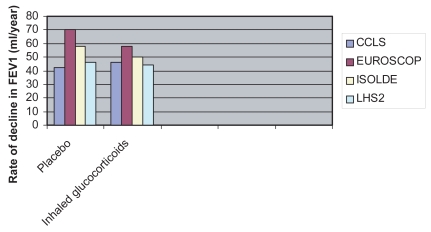
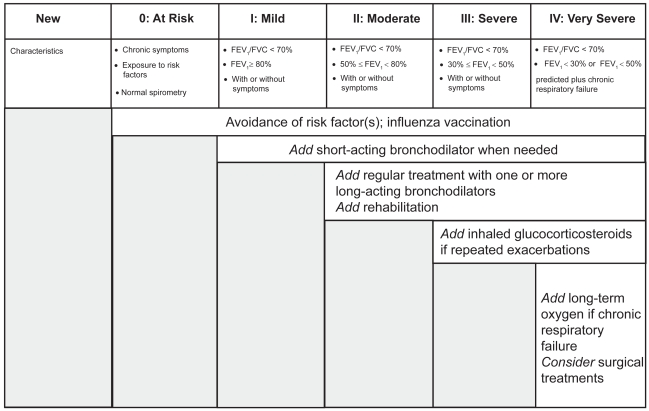
None of the drugs currently available for chronic obstructive pulmonary disease (COPD) are able to reduce the progressive decline in lung function which is the hallmark of this disease. Smoking cessation is the only intervention that has proved effective. The current pharmacological treatment of COPD is symptomatic and is mainly based on bronchodilators, such as selective beta2-adrenergic agonists (short- and long-acting), anticholinergics, theophylline, or a combination of these drugs. Glucocorticoids are not generally recommended for patients with stable mild to moderate COPD due to their lack of efficacy, side effects, and high costs. However, glucocorticoids are recommended for severe COPD and frequent exacerbations of COPD. New pharmacological strategies for COPD need to be developed because the current treatment is inadequate.
目前可用于慢性阻塞性肺疾病(COPD)的药物均无法减缓肺功能的进行性下降,而这正是该疾病的标志性特征。戒烟是唯一已被证明有效的干预措施。COPD目前的药物治疗主要是对症治疗,主要基于支气管扩张剂,如选择性β2肾上腺素能激动剂(短效和长效)、抗胆碱能药物、茶碱或这些药物的组合。由于缺乏疗效、副作用和高成本,一般不建议稳定期轻度至中度COPD患者使用糖皮质激素。然而,对于重度COPD和COPD频繁急性加重患者,推荐使用糖皮质激素。由于目前的治疗方法存在不足,因此需要开发针对COPD的新药理学策略。