Pollak Victor E, Lorch Jonathan A
MIQS Inc,, 2100 Central Avenue, Suite 201, Boulder, Colorado 80301, USA.
BMC Med Inform Decis Mak. 2007 Nov 28;7:38. doi: 10.1186/1472-6947-7-38.
In chronic disease, health information technology promises but has yet to demonstrate improved outcomes and decreased costs. The main aim of the study was to determine the effects on mortality and cost of an electronic patient record used in daily patient care in a model chronic disease, End Stage Renal Disease, treated by chronic maintenance hemodialysis. Dialysis treatment is highly regulated, and near uniform in treatment modalities and drugs used.
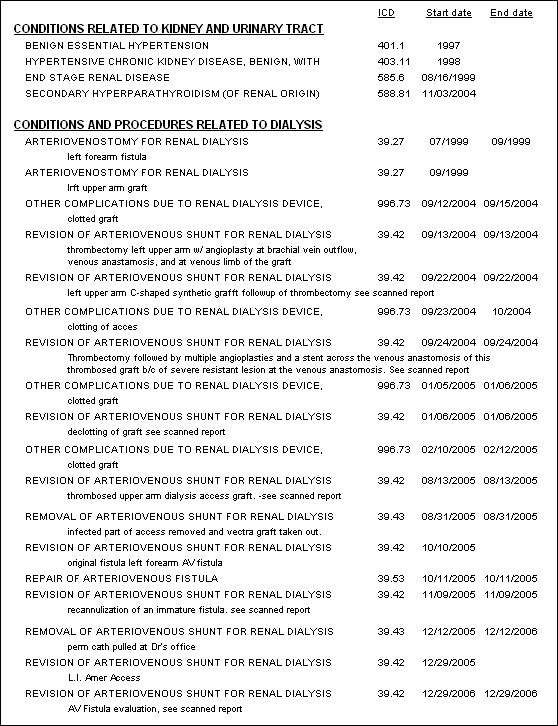
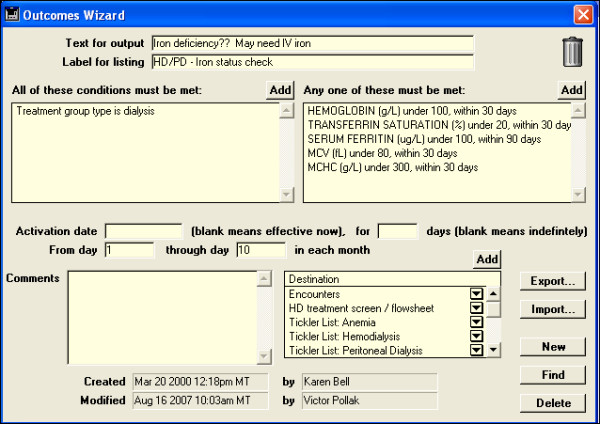
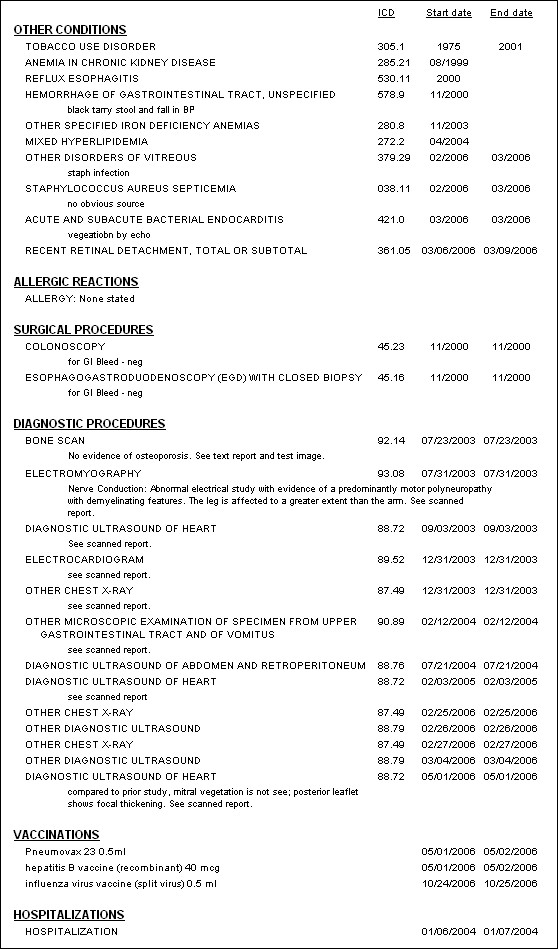
The particular electronic patient record, patient-centered and extensively coded, was used first in patient care in 3 dialysis units in New York, NY in 1998, 1999, and 2000. All data were stored "live"; none were archived. By December 31, 2006, the patients had been treated by maintenance hemodialysis for a total of 3924 years. A retrospective analysis was made using query tools embedded in the software. The United States Renal Data System dialysis population served as controls. In all there were 1790 patients, with many underlying primary diseases and multiple comorbid conditions affecting many organ systems. Year by year mortality, hospital admissions, and staffing were analyzed, and the data were compared with national data compiled by the United States Renal Data System.
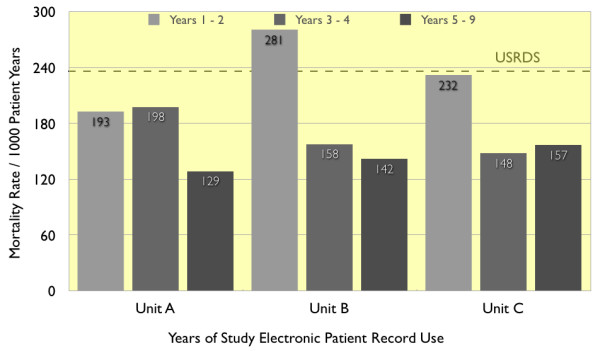
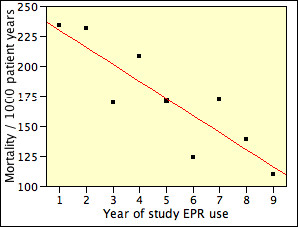
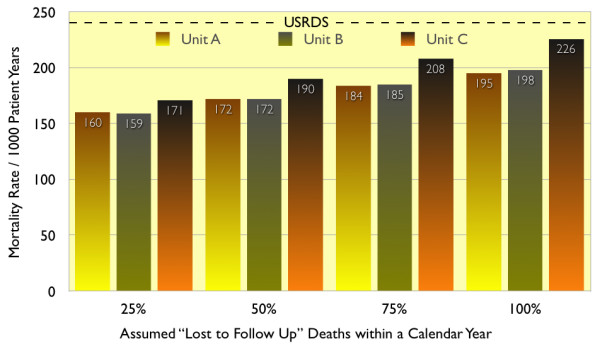
Analyzed by calendar year after electronic patient record implementation, mortality decreased strikingly. In years 3-9 mortality was lower than in years 1-2 by 23%, 48%, and 34% in the 3 units, and was 37%, 37%, and 35% less than that reported by the United States Renal Data System. Clinical staffing was 25% fewer per 100 patients than the national average, thereby lowering costs.
To our knowledge, this is the first demonstration that an electronic patient record, albeit of particular design, can have a favorable effect on outcomes and cost in chronic disease. That the population studied has many underlying diseases affecting all organ systems suggests that the electronic patient record design may enable application to many fields of medical practice.
在慢性病领域,健康信息技术虽有前景,但尚未证明能改善治疗效果并降低成本。本研究的主要目的是确定在终末期肾病这一典型慢性病中,通过慢性维持性血液透析治疗,日常患者护理中使用的电子病历对死亡率和成本的影响。透析治疗受到严格监管,治疗方式和使用的药物几乎一致。
这种以患者为中心且编码广泛的特定电子病历于1998年、1999年和2000年首先在纽约市的3个透析单位用于患者护理。所有数据均实时存储,无存档。到2006年12月31日,这些患者接受维持性血液透析治疗的总时长为3924年。使用软件中嵌入的查询工具进行回顾性分析。美国肾脏数据系统的透析人群作为对照。共有1790名患者,存在许多潜在的原发性疾病以及影响多个器官系统的多种合并症。逐年分析死亡率、住院次数和人员配备情况,并将数据与美国肾脏数据系统汇编的全国数据进行比较。
按实施电子病历后的日历年分析,死亡率显著下降。在第3至9年,3个单位的死亡率分别比第1至2年低23%、48%和34%,比美国肾脏数据系统报告的死亡率低37%、37%和35%。每100名患者的临床工作人员比全国平均水平少25%,从而降低了成本。
据我们所知,这是首次证明电子病历(尽管是特定设计)可对慢性病的治疗效果和成本产生有利影响。所研究的人群存在许多影响所有器官系统的潜在疾病,这表明电子病历设计可能适用于许多医疗实践领域。