Kataoka Shinji, Yang Ruibiao, Ishimaru Yoshiro, Matsunami Hiroaki, Sévigny Jean, Kinnamon John C, Finger Thomas E
Department of Cell and Developmental Biology, University of Colorado at Denver and Health Science Center, Mail Stop 8108, P.O. Box 6511, Aurora, CO 80045, USA.
Chem Senses. 2008 Mar;33(3):243-54. doi: 10.1093/chemse/bjm083. Epub 2007 Dec 21.
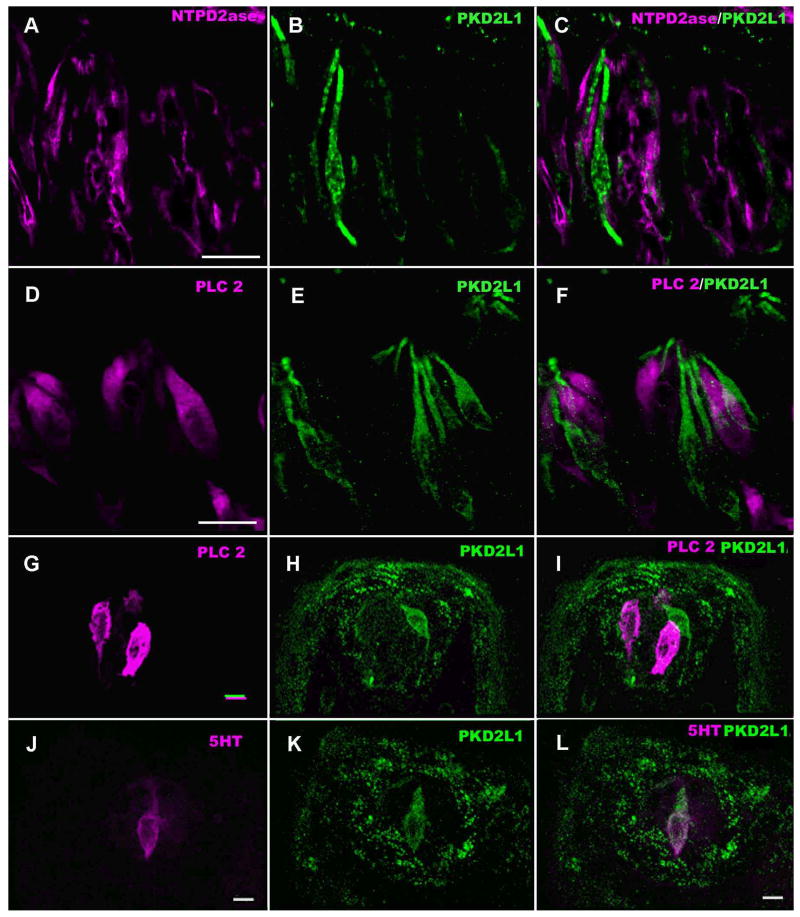
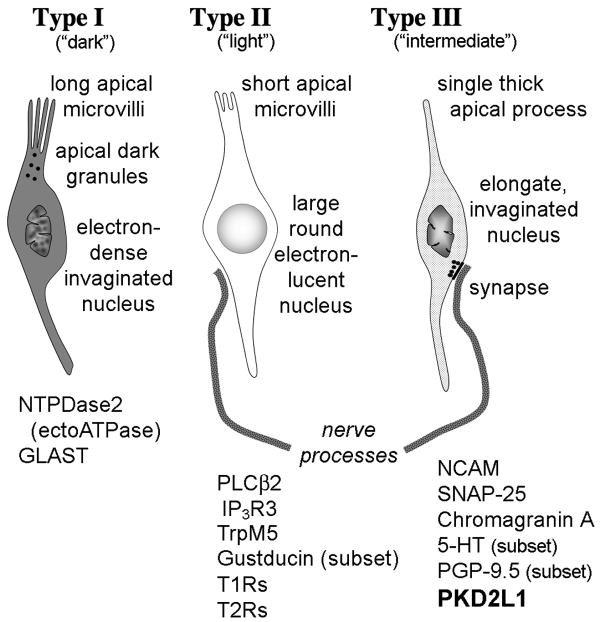
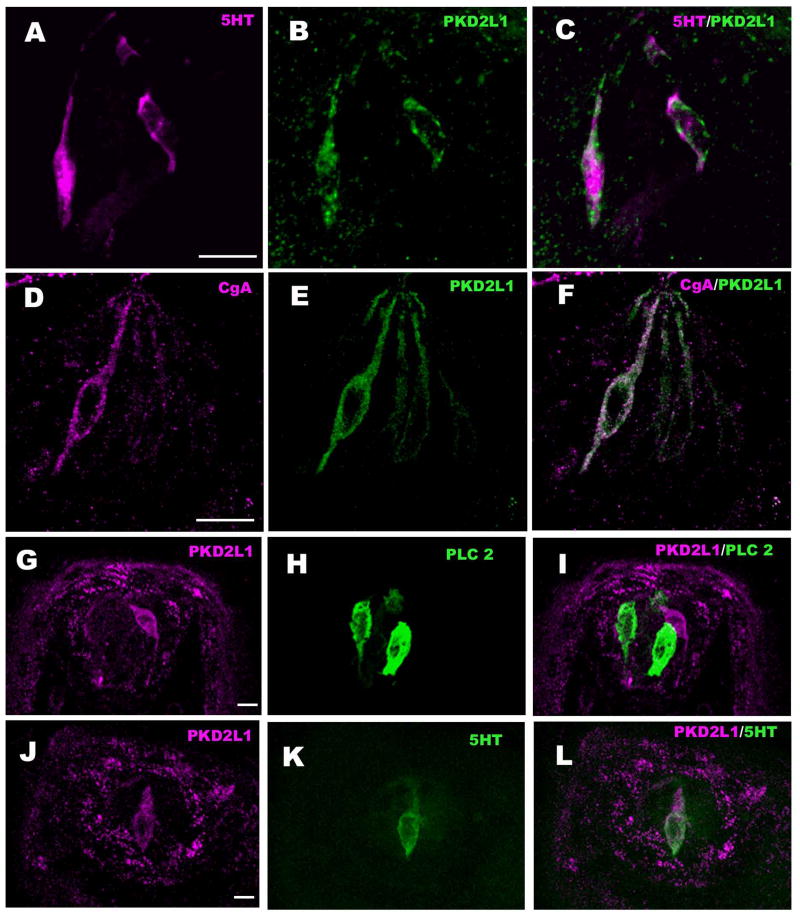
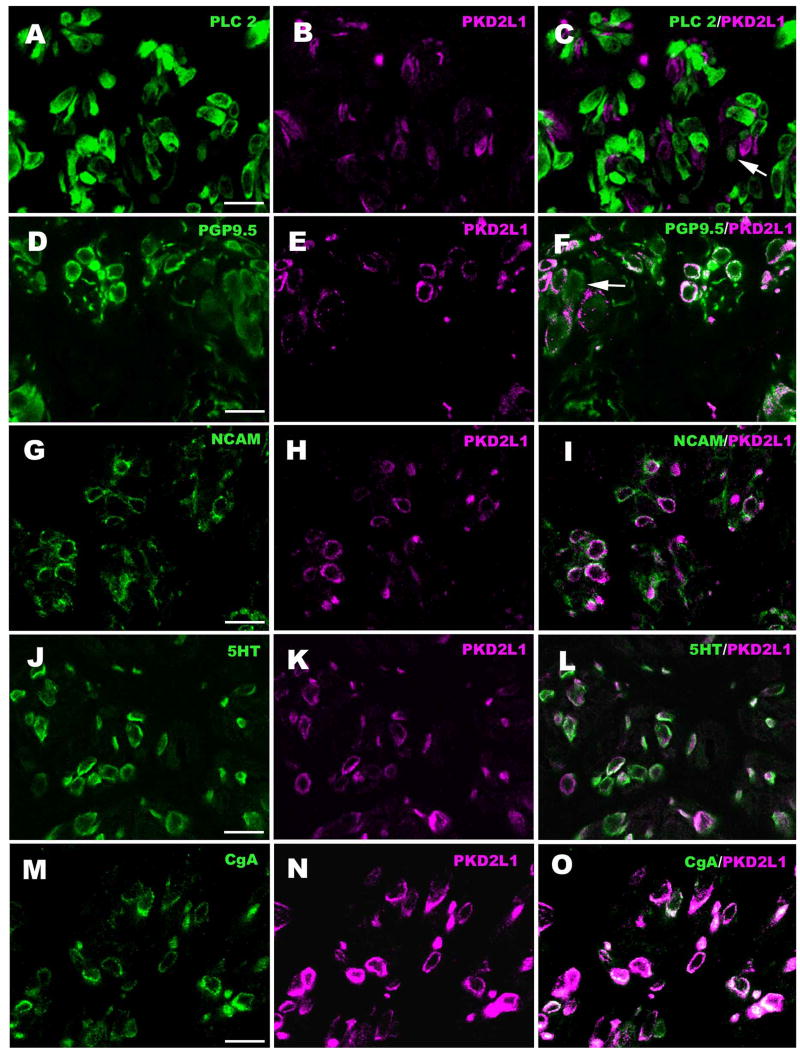
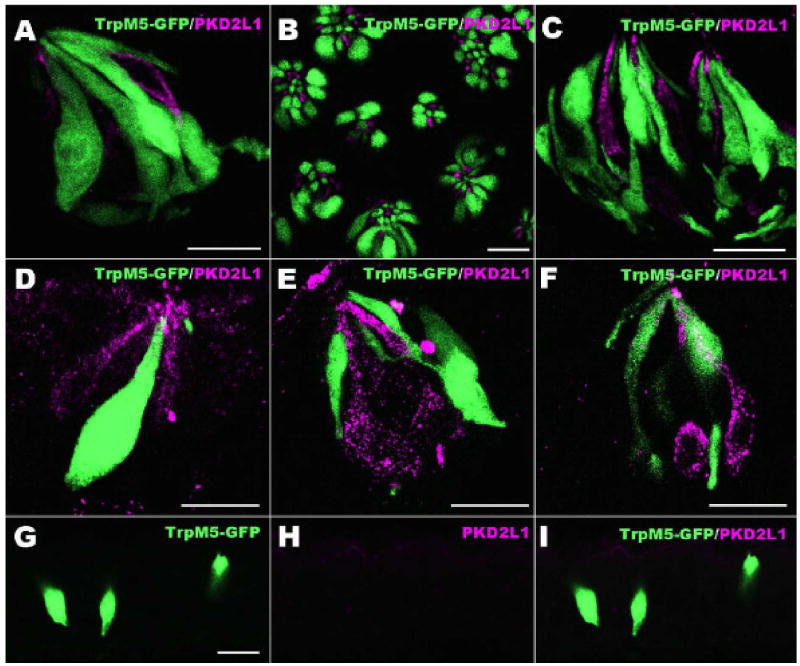
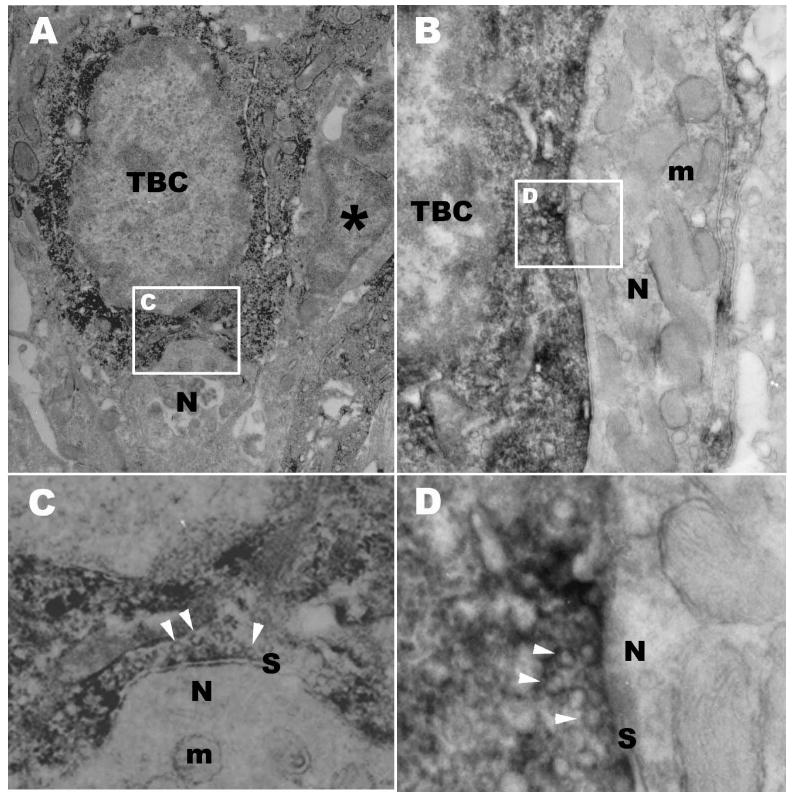
The transient receptor potential channel, PKD2L1, is reported to be a candidate receptor for sour taste based on molecular biological and functional studies. Here, we investigated the expression pattern of PKD2L1-immunoreactivity (IR) in taste buds of the mouse. PKD2L1-IR is present in a few elongate cells in each taste bud as reported previously. The PKD2L1-expressing cells are different from those expressing PLCbeta2, a marker of Type II cells. Likewise PKD2L1-immunoreactive taste cells do not express ecto-ATPase which marks Type I cells. The PKD2L1-positive cells are immunoreactive for neural cell adhesion molecule, serotonin, PGP-9.5 (ubiquitin carboxy-terminal transferase), and chromogranin A, all of which are present in Type III taste cells. At the ultrastructural level, PKD2L1-immunoreactive cells form synapses onto afferent nerve fibers, another feature of Type III taste cells. These results are consistent with the idea that different taste cells in each taste bud perform distinct functions. We suggest that Type III cells are necessary for transduction and/or transmission of information about "sour", but have little or no role in transmission of taste information of other taste qualities.
基于分子生物学和功能研究,瞬时受体电位通道PKD2L1被报道为酸味的候选受体。在此,我们研究了PKD2L1免疫反应性(IR)在小鼠味蕾中的表达模式。如先前报道,PKD2L1-IR存在于每个味蕾中的少数细长细胞中。表达PKD2L1的细胞与表达PLCβ2(II型细胞的标志物)的细胞不同。同样,PKD2L1免疫反应性味觉细胞不表达标记I型细胞的ecto-ATPase。PKD2L1阳性细胞对神经细胞粘附分子、血清素、PGP-9.5(泛素羧基末端转移酶)和嗜铬粒蛋白A呈免疫反应性,所有这些都存在于III型味觉细胞中。在超微结构水平上,PKD2L1免疫反应性细胞在传入神经纤维上形成突触,这是III型味觉细胞的另一个特征。这些结果与每个味蕾中不同味觉细胞执行不同功能的观点一致。我们认为III型细胞对于“酸味”信息的转导和/或传递是必需的,但在其他味觉品质的味觉信息传递中作用很小或没有作用。