Tripathi Sudipta, Bruch David, Kittur Dilip S
Dept of Surgery, SUNY Upstate Medical University, Syracuse, NY 13210, USA.
BMC Complement Altern Med. 2008 Jan 3;8:1. doi: 10.1186/1472-6882-8-1.
Macrophages play a dual role in host defence. They act as the first line of defence by mounting an inflammatory response to antigen exposure and also act as antigen presenting cells and initiate the adaptive immune response. They are also the primary infiltrating cells at the site of inflammation. Inhibition of macrophage activation is one of the possible approaches towards modulating inflammation. Both conventional and alternative approaches are being studied in this regard. Ginger, an herbal product with broad anti inflammatory actions, is used as an alternative medicine in a number of inflammatory conditions like rheumatic disorders. In the present study we examined the effect of ginger extract on macrophage activation in the presence of LPS stimulation.
Murine peritoneal macrophages were stimulated by LPS in presence or absence of ginger extract and production of proinflammatory cytokines and chemokines were observed. We also studied the effect of ginger extract on the LPS induced expression of MHC II, B7.1, B7.2 and CD40 molecules. We also studied the antigen presenting function of ginger extract treated macrophages by primary mixed lymphocyte reaction.
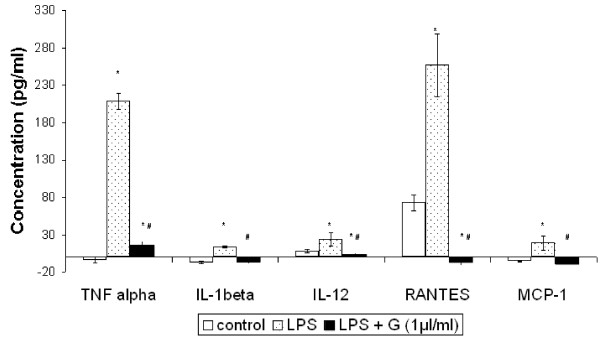
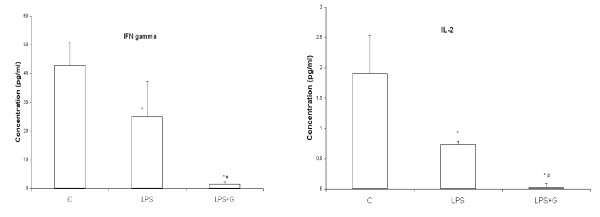
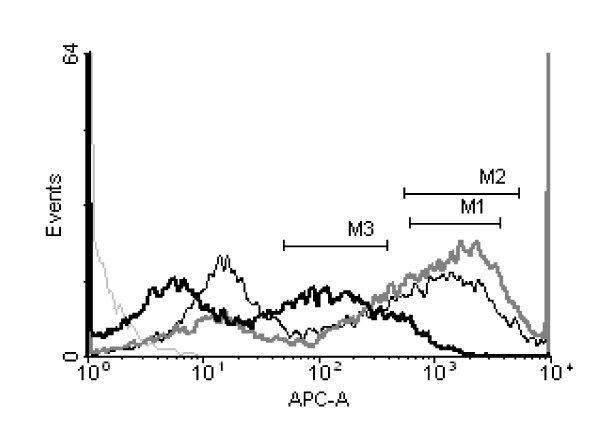
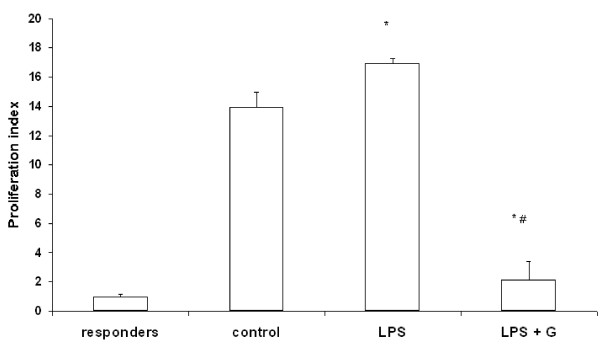
We observed that ginger extract inhibited IL-12, TNF-alpha, IL-1beta (pro inflammatory cytokines) and RANTES, MCP-1 (pro inflammatory chemokines) production in LPS stimulated macrophages. Ginger extract also down regulated the expression of B7.1, B7.2 and MHC class II molecules. In addition ginger extract negatively affected the antigen presenting function of macrophages and we observed a significant reduction in T cell proliferation in response to allostimulation, when ginger extract treated macrophages were used as APCs. A significant decrease in IFN-gamma and IL-2 production by T cells in response to allostimulation was also observed.
In conclusion ginger extract inhibits macrophage activation and APC function and indirectly inhibits T cell activation.
巨噬细胞在宿主防御中发挥双重作用。它们通过对抗原暴露产生炎症反应,充当第一道防线,同时作为抗原呈递细胞并启动适应性免疫反应。它们也是炎症部位的主要浸润细胞。抑制巨噬细胞活化是调节炎症的一种可能方法。在这方面,传统方法和替代方法都在研究中。生姜是一种具有广泛抗炎作用的草药产品,在多种炎症性疾病如风湿性疾病中用作替代药物。在本研究中,我们检测了生姜提取物在脂多糖(LPS)刺激下对巨噬细胞活化的影响。
在有或无生姜提取物的情况下,用LPS刺激小鼠腹腔巨噬细胞,观察促炎细胞因子和趋化因子的产生。我们还研究了生姜提取物对LPS诱导的MHC II、B7.1、B7.2和CD40分子表达的影响。我们还通过初次混合淋巴细胞反应研究了生姜提取物处理的巨噬细胞的抗原呈递功能。
我们观察到生姜提取物抑制LPS刺激的巨噬细胞中IL-12、TNF-α、IL-1β(促炎细胞因子)和RANTES、MCP-1(促炎趋化因子)的产生。生姜提取物还下调了B7.1、B7.2和MHC II类分子的表达。此外,生姜提取物对巨噬细胞的抗原呈递功能产生负面影响,当使用生姜提取物处理的巨噬细胞作为抗原呈递细胞时,我们观察到异体刺激后T细胞增殖显著减少。还观察到T细胞在异体刺激后IFN-γ和IL-2产生显著减少。
总之,生姜提取物抑制巨噬细胞活化和抗原呈递细胞功能,并间接抑制T细胞活化。