Glendinning John I, Yiin Yeh-Min, Ackroff Karen, Sclafani Anthony
Department of Biological Sciences, Barnard College, Columbia University, 3009 Broadway, New York, NY 10027, USA.
Physiol Behav. 2008 Mar 18;93(4-5):757-65. doi: 10.1016/j.physbeh.2007.11.029. Epub 2007 Nov 28.
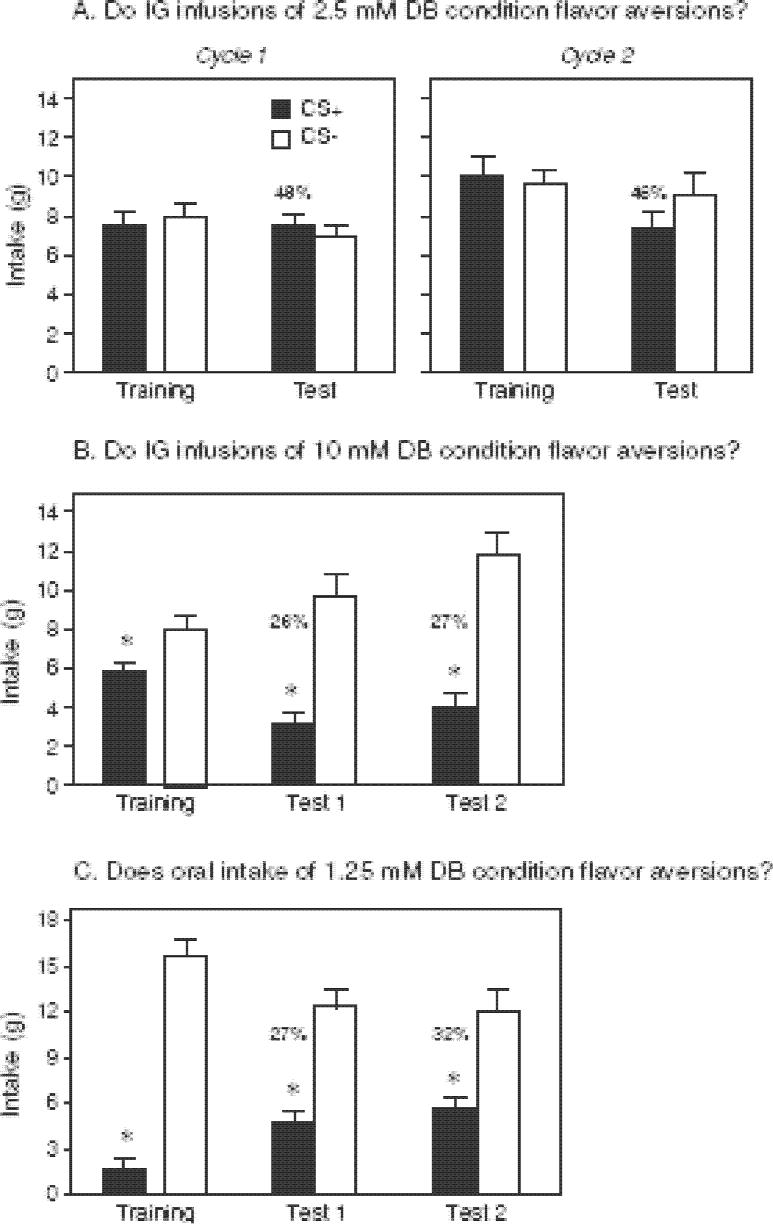
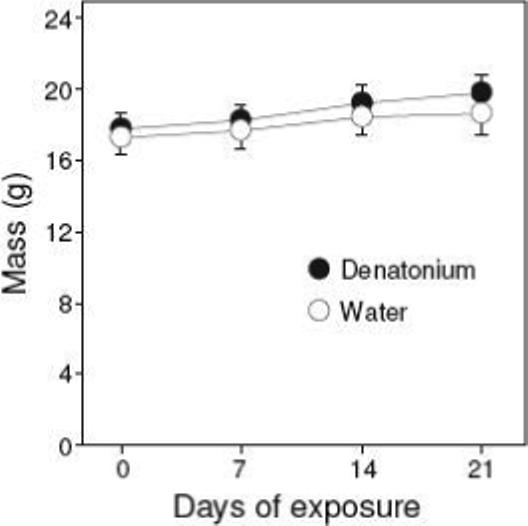
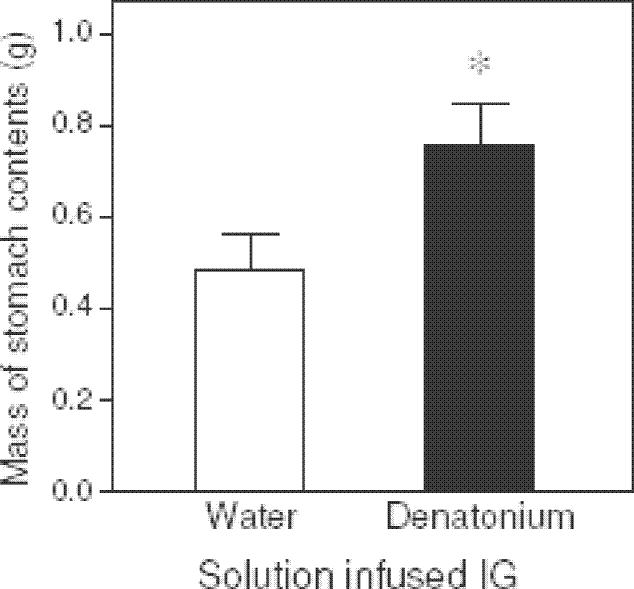
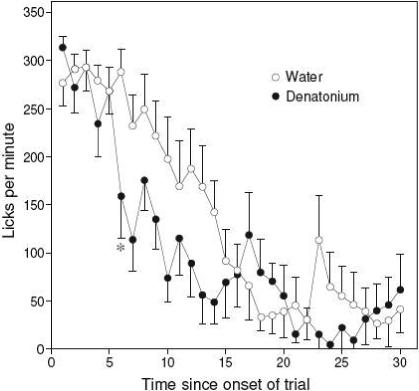
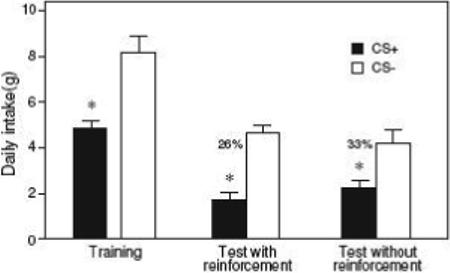
Because most naturally occurring toxins taste bitter to humans, any mechanism that reduces the rate at which bitter substances are ingested and digested should be adaptive. Based on the recent discovery of T2R bitter taste receptors in the gastrointestinal tract of rodents, we asked whether intragastric (IG) infusion of denatonium (a ligand for T2R receptors) would condition a flavor aversion and/or delay gastric emptying. Four experiments tested for post-oral responses to denatonium in rodents. First, Sprague-Dawley rats were trained to associate intake of a flavored solution (the CS+) with IG denatonium infusions, and intake of a different-flavored solution (the CS-) with IG water infusions during 30 min/day sessions. The rats acquired an aversion to the CS+ flavor when it was paired with IG infusions of 10 mM (but not 2.5 mM) denatonium. Intragastric infusions of 10 mM denatonium also delayed gastric emptying of food in the same rats. Second, we asked how long it took for rats to suppress their drinking while being infused IG with 10 mM denatonium. Rats drinking a palatable solution paired with IG infusions of 10 mM denatonium suppressed their licking within 6 min, as compared to rats infused IG with water. Third, we trained C57BL/6J (B6) mice 24 h/day to associate a CS+ flavor paired with IG infusions of 12 mM denatonium (diluted to 6 mM by orally consumed CS+). Like rats, the mice acquired a robust aversion to the CS+ flavor when it was paired with IG infusions of denatonium. A final experiment assessed the potential toxicity of denatonium. To this end, we gave B6 mice a 6 mM denatonium solution as their only source of water for 3 weeks. The mice grew normally and did not display any clinical signs of denatonium toxicosis. This study provides the first evidence that rodents respond to the presence of "bitter" substances in their gastrointestinal tract by generating both behavioral and physiological responses.
由于大多数天然存在的毒素对人类来说味道苦涩,因此任何能够降低苦味物质摄入和消化速率的机制都应该具有适应性。基于最近在啮齿动物胃肠道中发现的T2R苦味受体,我们研究了胃内(IG)注入苯甲地那铵(一种T2R受体配体)是否会引发味觉厌恶和/或延迟胃排空。四项实验测试了啮齿动物对苯甲地那铵的口腔后反应。首先,在每天30分钟的实验过程中,训练斯普拉格-道利大鼠将摄入一种调味溶液(条件刺激物+,CS+)与胃内注入苯甲地那铵相关联,将摄入另一种不同调味溶液(条件刺激物-,CS-)与胃内注入水相关联。当CS+味道与10 mM(而非2.5 mM)苯甲地那铵的胃内注入配对时,大鼠对CS+味道产生了厌恶。在同一批大鼠中,胃内注入10 mM苯甲地那铵也延迟了食物的胃排空。其次,我们研究了大鼠在胃内注入10 mM苯甲地那铵时,需要多长时间来抑制饮水。与胃内注入水的大鼠相比,饮用美味溶液并与胃内注入10 mM苯甲地那铵配对的大鼠在6分钟内就抑制了舔舐行为。第三,我们每天24小时训练C57BL/6J(B6)小鼠,使其将一种CS+味道与胃内注入12 mM苯甲地那铵(通过口服的CS+稀释至6 mM)相关联。与大鼠一样,当CS+味道与胃内注入苯甲地那铵配对时,小鼠对CS+味道产生了强烈的厌恶。最后一项实验评估了苯甲地那铵的潜在毒性。为此,我们给B6小鼠提供6 mM苯甲地那铵溶液作为它们三周内唯一的水源。小鼠生长正常,没有表现出任何苯甲地那铵中毒的临床症状。这项研究提供了首个证据,表明啮齿动物通过产生行为和生理反应来应对胃肠道中“苦味”物质的存在。