Steinhausen Hans-Christoph, Eschmann Susanne, Heimgartner Annina, Metzke Christa Winkler
Department of Child and Adolescent Psychiatry, University of Zurich, Neumuensterallee 9, CH 8032 Zurich, Switzerland.
BMC Psychiatry. 2008 Jan 17;8:5. doi: 10.1186/1471-244X-8-5.
Few studies have analyzed the frequency of alcohol use across time from adolescence to young adulthood and its outcome in young adulthood. A Swiss longitudinal multilevel assessment project using various measures of psychopathology and psychosocial variables allowed for the study of the frequency and correlates of alcohol use so that this developmental trajectory may be better understood.
Alcohol use was studied by a questionnaire in a cohort of N = 593 subjects who had been assessed at three times between adolescence and young adulthood within the Zurich Psychology and Psychopathology Study (ZAPPS). Other assessment included questionnaire data measuring emotional and behavioural problems, life events, coping style, self-related cognitions, perceived parenting style and school environment, and size and efficiency of the social network.
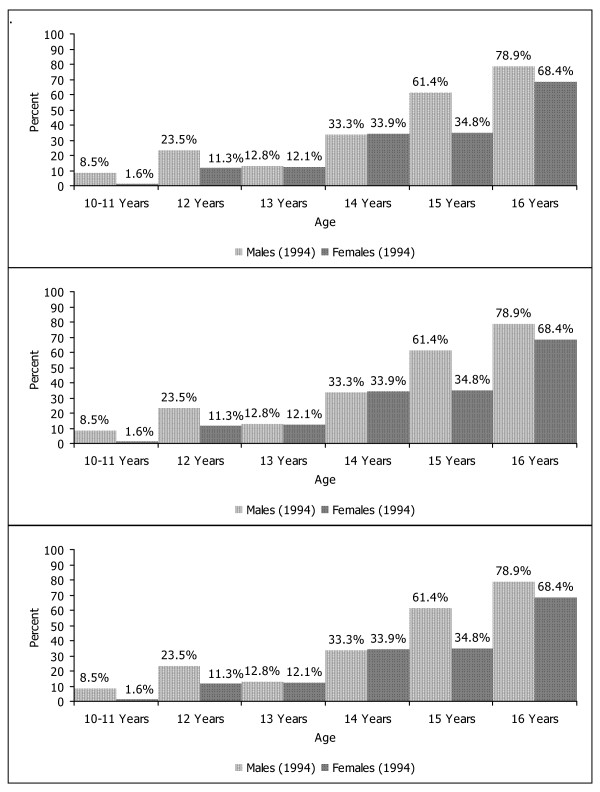
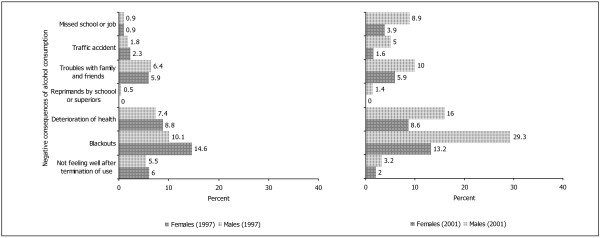
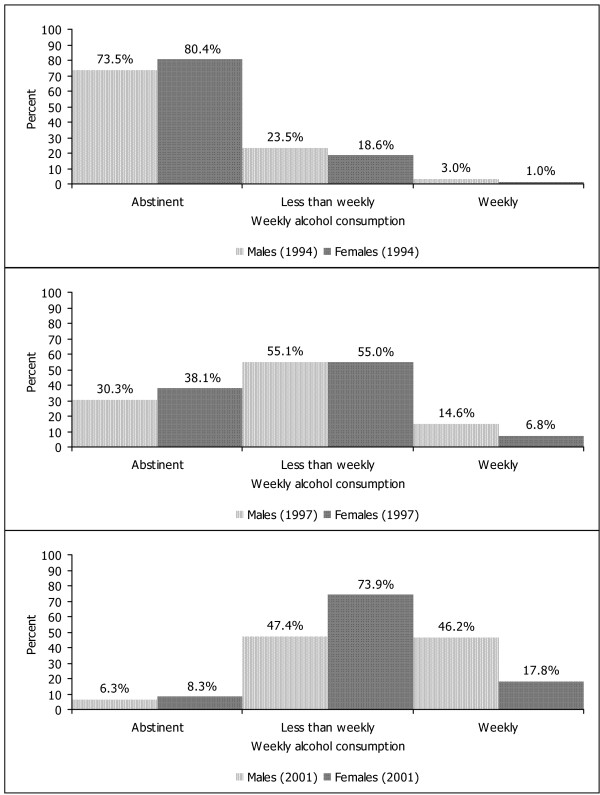
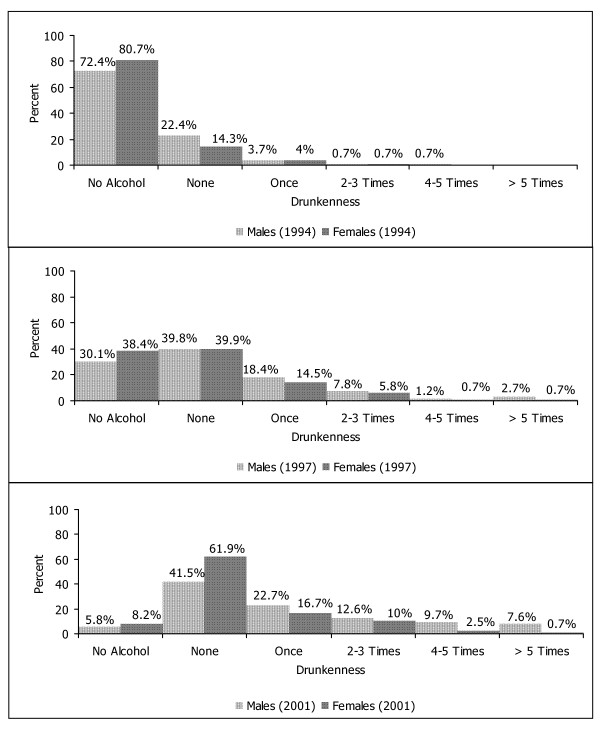
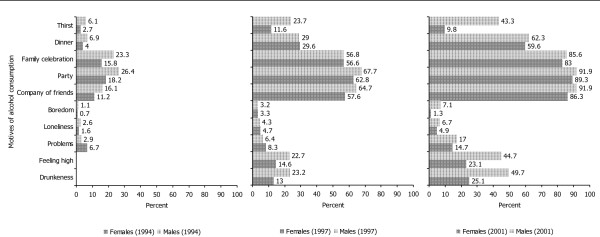
The increase of alcohol use from early adolescence to young adulthood showed only a few sex-specific differences in terms of the amount of alcohol consumption and the motives to drink. In late adolescence and young adulthood, males had a higher amount of alcohol consumption and were more frequently looking for drunkenness and feeling high. Males also experienced more negative consequences of alcohol use. A subgroup of heavy or problem drinkers showed a large range of emotional and behavioural problems and further indicators of impaired psychosocial functioning both in late adolescence and young adulthood.
This Swiss community survey documents that alcohol use is problematic in a sizeable proportion of youth and goes hand in hand with a large number of psychosocial problems.
很少有研究分析从青春期到青年期饮酒频率的变化及其在青年期的结果。瑞士一项纵向多层次评估项目使用了各种心理病理学和社会心理变量测量方法,从而能够对饮酒频率及其相关因素进行研究,以便更好地理解这一发展轨迹。
在苏黎世心理学与精神病理学研究(ZAPPS)中,通过问卷调查对一组N = 593名受试者的饮酒情况进行了研究,这些受试者在青春期到青年期之间接受了三次评估。其他评估包括通过问卷数据测量情绪和行为问题、生活事件、应对方式、自我相关认知、感知到的养育方式和学校环境,以及社交网络的规模和效率。
从青春期早期到青年期饮酒量的增加在饮酒量和饮酒动机方面仅显示出少数性别差异。在青春期后期和青年期,男性饮酒量更高,更频繁地寻求醉酒和兴奋的感觉。男性也经历了更多饮酒带来的负面后果。在青春期后期和青年期,一个大量饮酒或存在饮酒问题的亚组表现出广泛的情绪和行为问题以及心理社会功能受损的其他指标。
这项瑞士社区调查表明,相当一部分年轻人存在饮酒问题,并且与大量社会心理问题密切相关。