Auslander M, Yudkovski Y, Chalifa-Caspi V, Herut B, Ophir R, Reinhardt R, Neumann P M, Tom M
Israel Oceanographic and Limnological Research, Haifa 31080, Israel.
Mar Biotechnol (NY). 2008 May-Jun;10(3):250-61. doi: 10.1007/s10126-007-9060-y. Epub 2008 Jan 24.
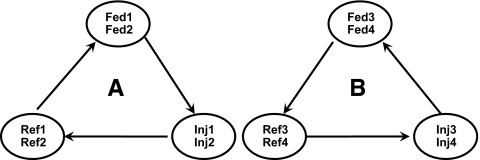
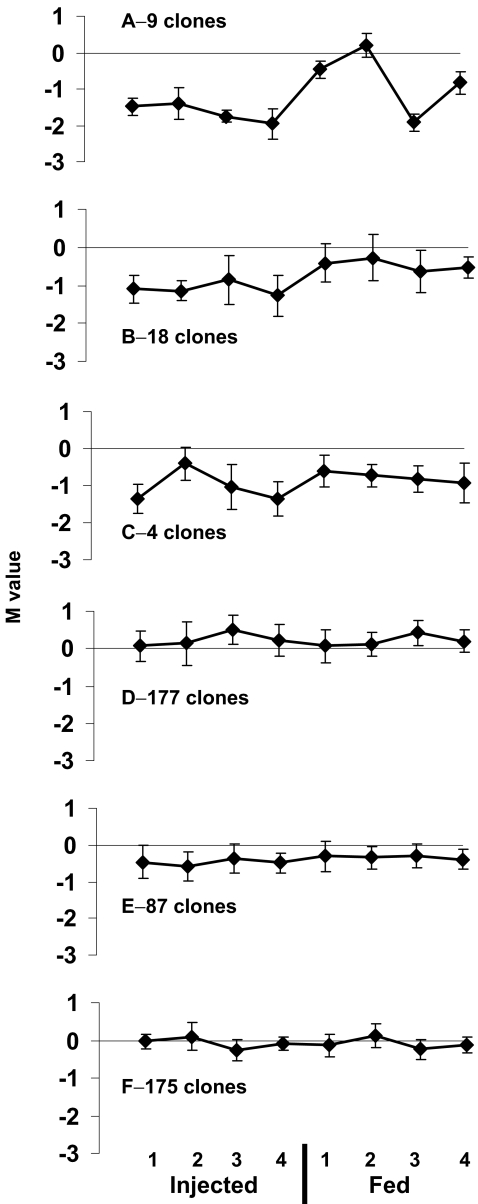
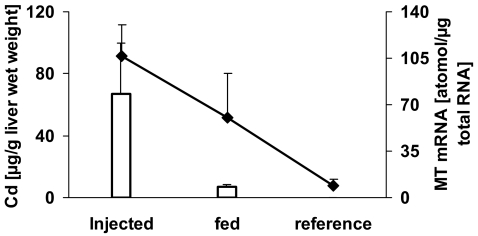
Individuals of the fish Lithognathus mormyrus were exposed to a series of pollutants including: benzo[a]pyrene, pp-DDE, Aroclor 1254, perfluorooctanoic acid, tributyl-tin chloride, lindane, estradiol, 4-nonylphenol, methyl mercury chloride, and cadmium chloride. Five mixtures of the pollutants were injected. Each mixture included one to three compounds. A microarray was constructed using 4608 L. mormyrus hepatic cDNAs cloned from the pollutant-exposed fish. Most clones (4456) were sequenced and assembled into 1494 annotated unique clones. The constructed microarray was used to identify changes in hepatic gene expression profile on exposure to cadmium administered to the fish by feeding or injections. Thirty-one unique clones showed altered expression levels on exposure to cadmium. Prominently differentially expressed genes included elastase 4, carboxypeptidase B, trypsinogen, perforin, complement C31, cytochrome P450 2K5, ceruloplasmin, carboxyl ester lipase, and metallothionein. Twelve sequences have no available annotation. Most genes (23) were downregulated and hypothesized to be affected by general toxicity due to the intensive cadmium exposure regime. The concept of an operational multigene cDNA microarray, aimed at routine and fast biomonitoring of multiple environmental threats, is outlined and the cadmium exposure experiment has been used to demonstrate functional and methodological aspects of the biomonitoring tool. The components of the outlined system include: (1) spotted array, composed of both pollution-affected and constitutively expressed genes, the latter are used for normalization; (2) standard, repeatable labeling procedure of a reference transcript population; and (3) biomarker indices derived from the profile of expression ratio across the pollution-affected genes, between the field-sampled transcript populations and the reference.
将莫氏立颌鲷个体暴露于一系列污染物中,这些污染物包括:苯并[a]芘、对,对'-滴滴伊、多氯联苯混合物Aroclor 1254、全氟辛酸、三丁基氯化锡、林丹、雌二醇、4-壬基酚、甲基氯化汞和氯化镉。注射了五种污染物混合物。每种混合物包含一至三种化合物。利用从受污染物暴露的鱼类中克隆的4608个莫氏立颌鲷肝脏cDNA构建了一个微阵列。对大多数克隆(4456个)进行了测序,并组装成1494个有注释的独特克隆。构建的微阵列用于识别通过投喂或注射给予鱼类镉后肝脏基因表达谱的变化。31个独特克隆在暴露于镉时显示出表达水平改变。显著差异表达的基因包括弹性蛋白酶4、羧肽酶B、胰蛋白酶原、穿孔素、补体C31、细胞色素P450 2K5、铜蓝蛋白、羧基酯脂肪酶和金属硫蛋白。12个序列没有可用注释。大多数基因(23个)下调,推测是由于高强度镉暴露导致受到一般毒性影响。概述了旨在对多种环境威胁进行常规快速生物监测的实用多基因cDNA微阵列概念,并利用镉暴露实验来展示生物监测工具的功能和方法学方面。概述系统的组成部分包括:(1)点阵阵列,由受污染影响的基因和组成型表达基因组成,后者用于标准化;(2)参考转录本群体的标准、可重复标记程序;(3)从受污染影响基因的表达比谱、现场采样转录本群体与参考之间得出的生物标志物指数。