Ho Yung Shwen, Abecasis Ana B, Theys Kristof, Deforche Koen, Dwyer Dominic E, Charleston Michael, Vandamme Anne Mieke, Saksena Nitin K
Retroviral Genetics Laboratory, Centre for Virus Research, Westmead Millennium Institute, Westmead Hospital, University of Sydney, Westmead NSW, 2145 Sydney, Australia.
Virol J. 2008 Jan 23;5:14. doi: 10.1186/1743-422X-5-14.
N-linked glycosylation is a major mechanism for minimizing virus neutralizing antibody response and is present on the Human Immunodeficiency Virus (HIV) envelope glycoprotein. Although it is known that glycosylation changes can dramatically influence virus recognition by the host antibody, the actual contribution of compartmental differences in N-linked glycosylation patterns remains unclear.
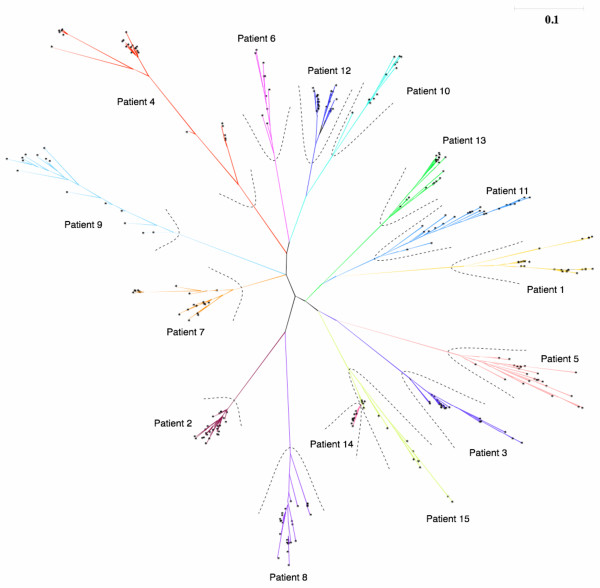
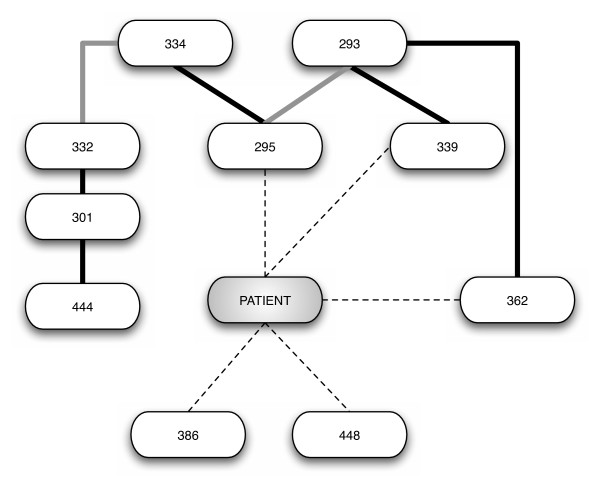
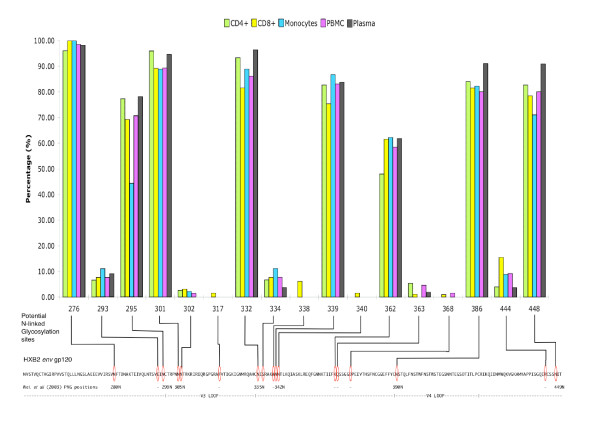
We amplified the env gp120 C2-V5 region and analyzed 305 clones derived from plasma and other compartments from 15 HIV-1 patients. Bioinformatics and Bayesian network analyses were used to examine N-linked glycosylation differences between compartments. We found evidence for cellspecific single amino acid changes particular to monocytes, and significant variation was found in the total number of N-linked glycosylation sites between patients. Further, significant differences in the number of glycosylation sites were observed between plasma and cellular compartments. Bayesian network analyses showed an interdependency between N-linked glycosylation sites found in our study, which may have immense functional relevance.
Our analyses have identified single cell/compartment-specific amino acid changes and differences in N-linked glycosylation patterns between plasma and diverse blood leukocytes. Bayesian network analyses showed associations inferring alternative glycosylation pathways. We believe that these studies will provide crucial insights into the host immune response and its ability in controlling HIV replication in vivo. These findings could also have relevance in shielding and evasion of HIV-1 from neutralizing antibodies.
N-糖基化是使病毒中和抗体反应最小化的主要机制,存在于人类免疫缺陷病毒(HIV)包膜糖蛋白上。虽然已知糖基化变化可显著影响宿主抗体对病毒的识别,但N-糖基化模式的区室差异的实际作用仍不清楚。
我们扩增了env gp120 C2-V5区域,并分析了来自15名HIV-1患者血浆和其他区室的305个克隆。采用生物信息学和贝叶斯网络分析来研究区室之间的N-糖基化差异。我们发现了单核细胞特有的细胞特异性单氨基酸变化的证据,并且在患者之间N-糖基化位点的总数存在显著差异。此外,在血浆和细胞区室之间观察到糖基化位点数量的显著差异。贝叶斯网络分析表明我们研究中发现的N-糖基化位点之间存在相互依赖性,这可能具有巨大的功能相关性。
我们的分析确定了单细胞/区室特异性氨基酸变化以及血浆与多种血液白细胞之间N-糖基化模式的差异。贝叶斯网络分析显示了推断替代糖基化途径的关联。我们相信这些研究将为宿主免疫反应及其在体内控制HIV复制的能力提供关键见解。这些发现也可能与HIV-1逃避中和抗体有关。