Medical Scientist Training Program, Miller School of Medicine, University of Miami, Miami, Florida, USA.
Department of Pathology, Miller School of Medicine, University of Miami, Miami, Florida, USA.
J Virol. 2019 May 1;93(10). doi: 10.1128/JVI.00094-19. Print 2019 May 15.
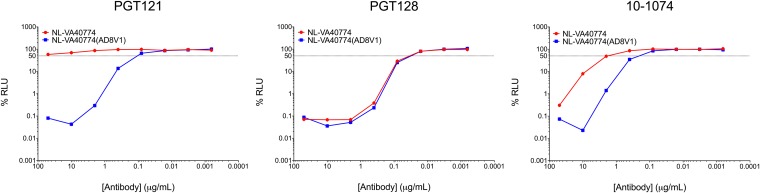
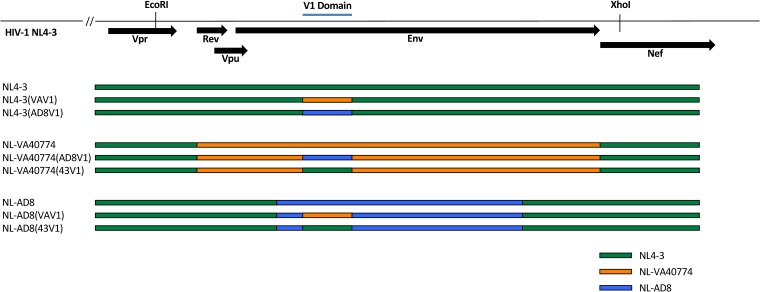
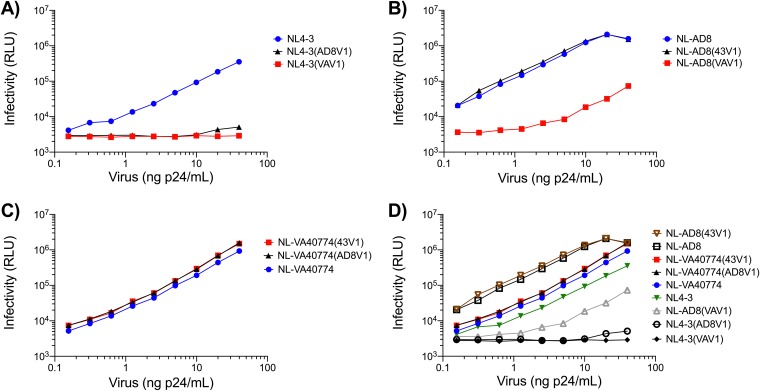
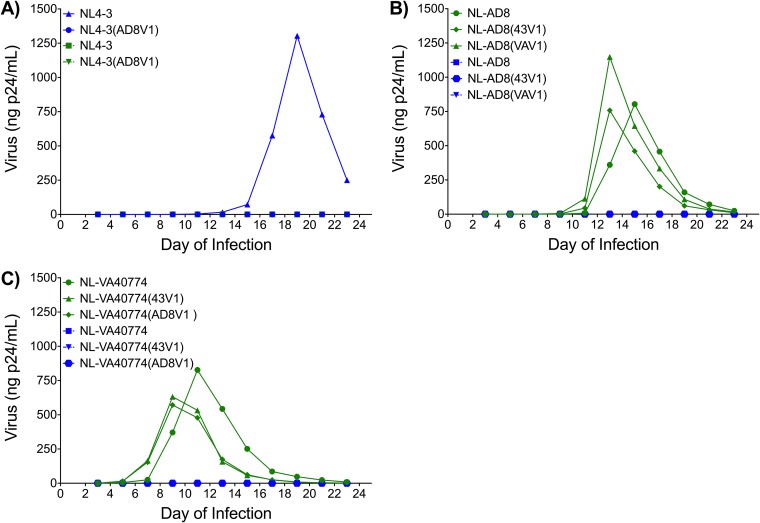
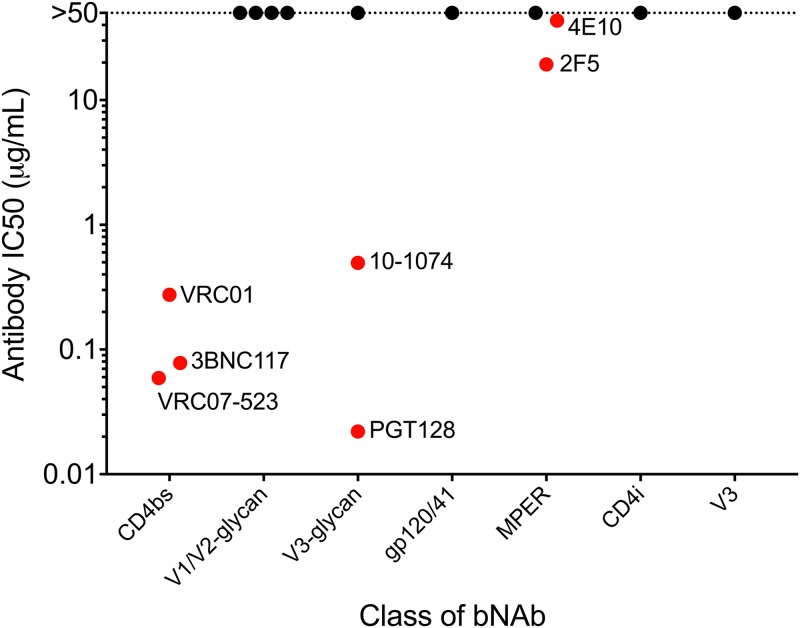
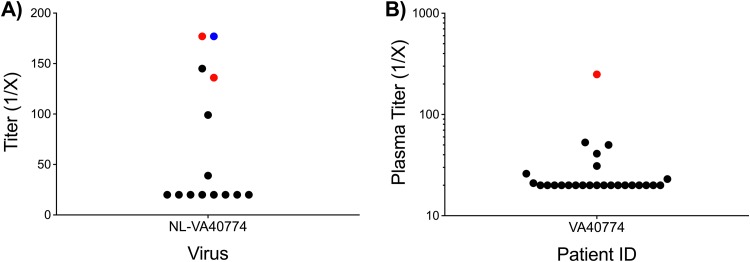
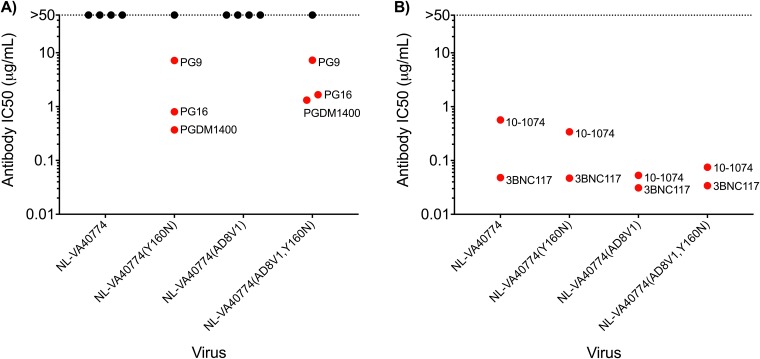
HIV elite controllers represent a remarkable minority of patients who maintain normal CD4 T-cell counts and low or undetectable viral loads for decades in the absence of antiretroviral therapy. To examine the possible contribution of virus attenuation to elite control, we obtained a primary HIV-1 isolate from an elite controller who had been infected for 19 years, the last 10 of which were in the absence of antiretroviral therapy. Full-length sequencing of this isolate revealed a highly unusual V1 domain in Envelope (Env). The V1 domain in this HIV-1 strain was 49 amino acids, placing it in the top 1% of lengths among the 6,112 Env sequences in the Los Alamos National Laboratory online database. Furthermore, it included two additional N-glycosylation sites and a pair of cysteines suggestive of an extra disulfide loop. Virus with this Env retained good infectivity and replicative capacity; however, analysis of recombinant viruses suggested that other sequences in Env were adapted to accommodate the unusual V1 domain. While the long V1 domain did not confer resistance to neutralization by monoclonal antibodies of the V1/V2-glycan-dependent class, it did confer resistance to neutralization by monoclonal antibodies of the V3-glycan-dependent class. Our findings support results in the literature that suggest a role for long V1 regions in shielding HIV-1 from recognition by V3-directed broadly neutralizing antibodies. In the case of the elite controller described here, it seems likely that selective pressures from the humoral immune system were responsible for driving the highly unusual polymorphisms present in this HIV-1 Envelope. Elite controllers have long provided an avenue for researchers to reveal mechanisms underlying control of HIV-1. While the role of host genetic factors in facilitating elite control is well known, the possibility of infection by attenuated strains of HIV-1 has been much less studied. Here we describe an unusual viral feature found in an elite controller of HIV-1 infection and demonstrate its role in conferring escape from monoclonal antibodies of the V3-glycan class. Our results suggest that extreme variation may be needed by HIV-1 to escape neutralization by some antibody specificities.
HIV 精英控制者代表了一小部分患者,他们在没有抗逆转录病毒治疗的情况下,数十年内保持正常的 CD4 T 细胞计数和低或无法检测到的病毒载量。为了研究病毒衰减对精英控制的可能贡献,我们从一名感染了 19 年的精英控制者中获得了一个原发性 HIV-1 分离株,其中最后 10 年没有接受抗逆转录病毒治疗。对该分离株全长序列的分析显示,其 Envelope(Env)中的 V1 结构域非常不寻常。该 HIV-1 株的 V1 结构域为 49 个氨基酸,在洛斯阿拉莫斯国家实验室在线数据库中 6112 个 Env 序列中长度排名前 1%。此外,它还包含两个额外的 N-糖基化位点和一对提示额外二硫键环的半胱氨酸。具有这种 Env 的病毒保持良好的感染性和复制能力;然而,重组病毒的分析表明,Env 中的其他序列适应了容纳不寻常的 V1 结构域。虽然长 V1 结构域没有赋予对 V1/V2-聚糖依赖性类单克隆抗体中和的抗性,但它确实赋予了对 V3-聚糖依赖性类单克隆抗体中和的抗性。我们的发现支持文献中的结果,即长 V1 区域在保护 HIV-1 免受 V3 定向广泛中和抗体的识别方面发挥作用。就这里描述的精英控制者而言,似乎可以肯定的是,来自体液免疫系统的选择压力负责驱动该 HIV-1 Env 中存在的高度异常多态性。精英控制者长期以来一直为研究人员提供了揭示 HIV-1 控制机制的途径。虽然宿主遗传因素在促进精英控制中的作用是众所周知的,但对感染 HIV-1 衰减株的可能性研究要少得多。在这里,我们描述了在 HIV-1 感染的精英控制者中发现的一种不寻常的病毒特征,并证明了它在赋予对 V3-聚糖类单克隆抗体逃逸中的作用。我们的结果表明,HIV-1 可能需要极端变异才能逃避某些抗体特异性的中和。