Holbrook W Peter, Ganss Carolina
Faculty of Odontology, University of Iceland, Reykjavík, Iceland.
Clin Oral Investig. 2008 Mar;12 Suppl 1(Suppl 1):S33-9. doi: 10.1007/s00784-007-0174-4. Epub 2008 Jan 29.
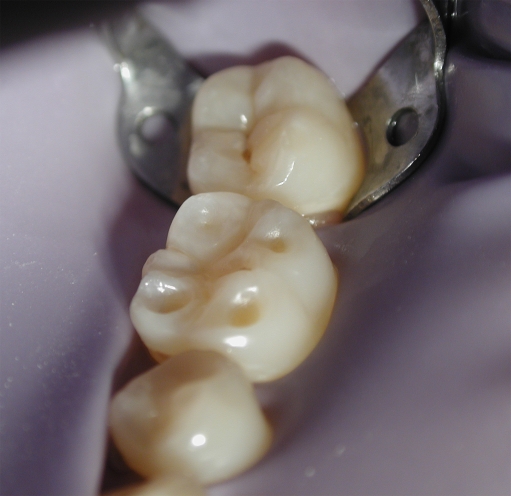
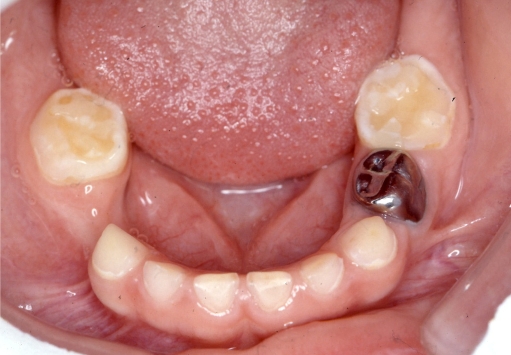
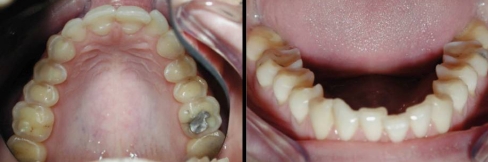
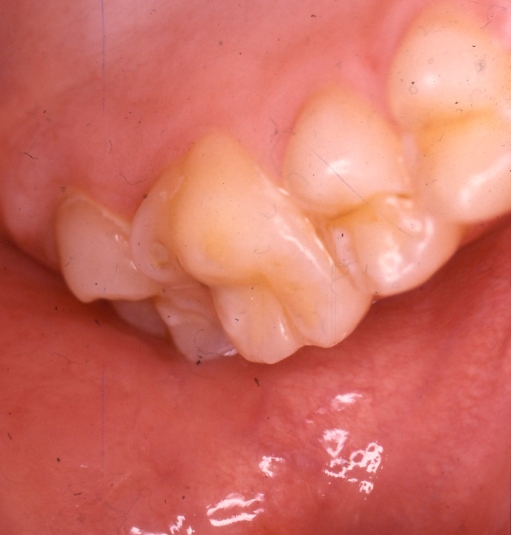
Quantifying tooth wear in general and erosion in particular mostly is made by distinguishing between lesions restricted to enamel and lesions reaching the underlying dentine. Various scores for grading have been used, but in all systems, higher scores are given in cases of exposed dentine, thus, indicating a more severe stage of the condition. Clinical diagnosis of exposed dentine is made by assessing changes in colour or optical properties of the hard tissues. This paper aims to review the literature and discuss critically problems arising form this approach. It appears that classifying the severity of erosion by the area or depth of exposed dentine is difficult and poorly reproducible, and taking into account the variation of enamel thickness, the amount of tissue lost often is not related simply to the area of exposed dentine. There has still been very little longitudinal investigation of the significance of exposed dentine as a prognostic indicator. Further work and discussion is needed to reevaluate the explanative power of current grading procedures.
一般而言,对牙齿磨损尤其是酸蚀症的量化,大多是通过区分局限于牙釉质的病变和累及下方牙本质的病变来进行的。已经使用了各种分级评分方法,但在所有系统中,牙本质暴露的情况下会给予更高的分数,因此表明病情处于更严重的阶段。通过评估硬组织颜色或光学特性的变化来进行牙本质暴露的临床诊断。本文旨在回顾文献并批判性地讨论这种方法所产生的问题。似乎通过暴露牙本质的面积或深度对酸蚀症的严重程度进行分类很困难且重复性差,并且考虑到牙釉质厚度的变化,组织丧失量往往并不简单地与暴露牙本质的面积相关。关于暴露牙本质作为预后指标的意义,纵向研究仍然很少。需要进一步的工作和讨论来重新评估当前分级程序的解释力。