Robey E, Ramsdell F, Elliott J, Raulet D, Kioussis D, Axel R, Fowlkes B J
Department of Biochemistry and Molecular Biophysics, Columbia University, New York, NY 10032.
Proc Natl Acad Sci U S A. 1991 Jan 15;88(2):608-12. doi: 10.1073/pnas.88.2.608.
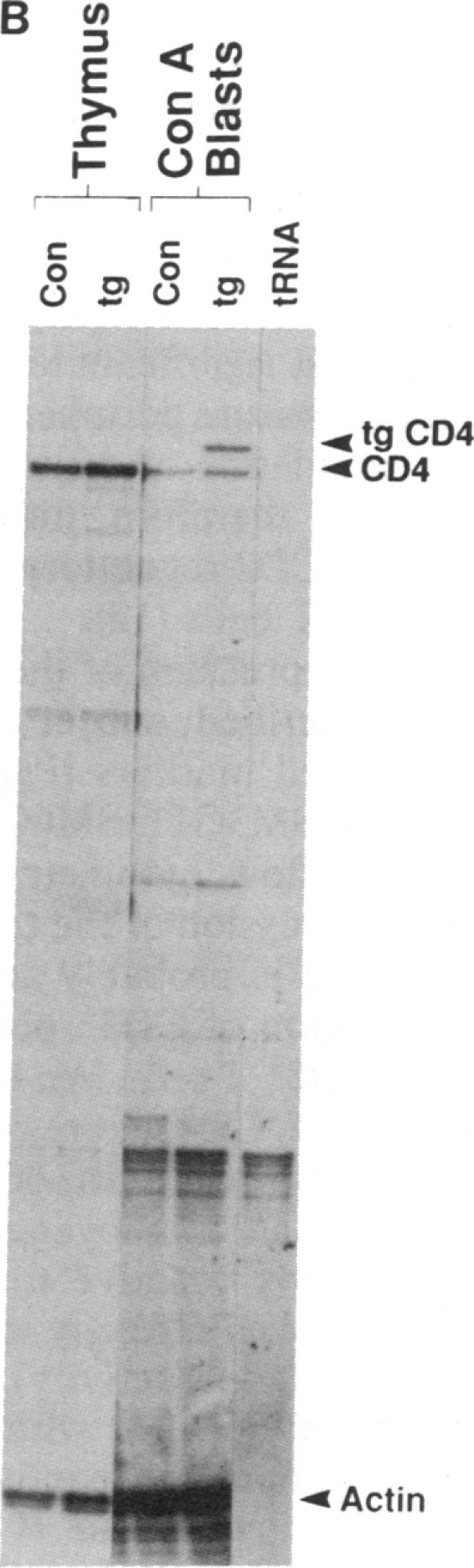
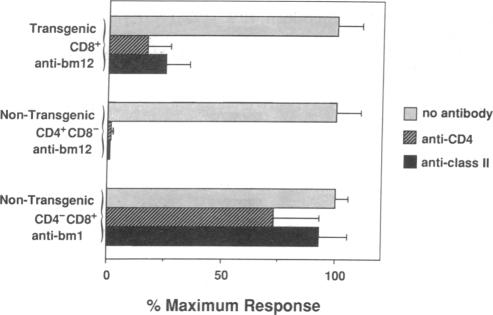
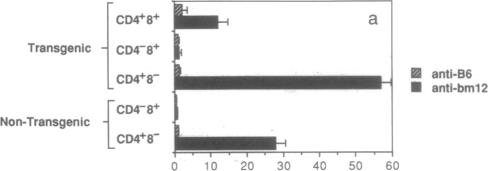
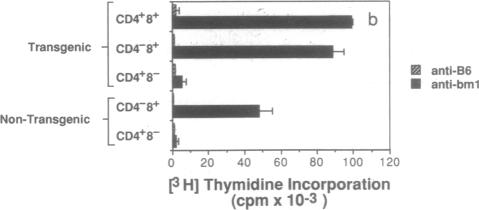
We have generated a transgenic mouse line in which a CD4 transgene is expressed on a significant fraction of the mature CD8+ lymphocytes but is not expressed in the thymus. This provides an opportunity to examine the functional consequences of CD4 expression in a population of class I-selected CD8+ lymphocytes. CD8+ lymphocytes expressing the CD4 transgene proliferate in response to allogeneic class I and class II major histocompatibility complex, whereas CD8+ cells from control animals proliferate only to allogeneic class I gene products. These observations suggest that the ability of a T-cell population to react with class II allogeneic major histocompatibility complex is determined by the presence of CD4.
我们已经培育出一种转基因小鼠品系,其中CD4转基因在相当一部分成熟的CD8+淋巴细胞上表达,但在胸腺中不表达。这为研究I类选择的CD8+淋巴细胞群体中CD4表达的功能后果提供了一个机会。表达CD4转基因的CD8+淋巴细胞对同种异体I类和II类主要组织相容性复合体产生增殖反应,而来自对照动物的CD8+细胞仅对同种异体I类基因产物产生增殖反应。这些观察结果表明,T细胞群体与II类同种异体主要组织相容性复合体反应的能力由CD4的存在决定。