Gao Lu, Matthews Fiona E, Sargeant Lincoln A, Brayne Carol
MRC Biostatistics Unit, Institute of Public Health, Cambridge, UK.
BMC Public Health. 2008 Feb 11;8:54. doi: 10.1186/1471-2458-8-54.
Diabetes is common in the older population and is increasing. Glycated hemoglobin (HbA1c) is an indicator of average blood glucose concentration over the past three months. The HbA1c test is currently one of clinical methods used to check diabetes control. Recent studies have suggested diabetes is a risk factor for dementia, cognitive dysfunction and physical disability. In addition, there have reported the relationship between HbA1c and mortality on all cause, cardiovascular disease and cognitive function, but few studies have investigated the relationship concentrating on the older population. The aim of this study is to investigate the association between the level of HbA1c and mortality from all causes, incident cardiovascular disease, cognitive decline and physical disability in people aged 65 and over in England and Wales.
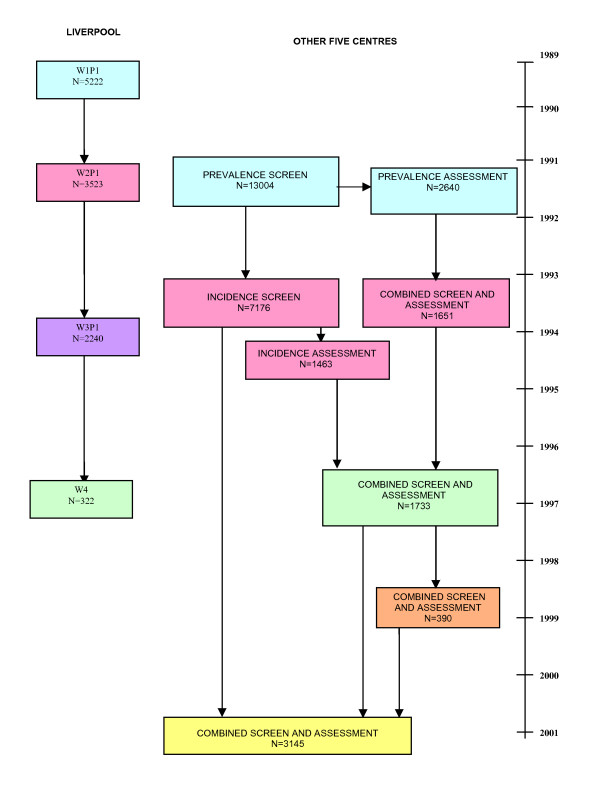
1139 men and women aged 69 years and over who were participants in a ten year population based ageing multi-centre, longitudinal study who had HbA1c measurements after 5-6 years of follow up. All participants were flagged for death notification including causes at the Office of National Statistics. Information on health including vascular conditions, cognitive status, physical function and dementia were available from the study both before and after the HbA1c measurement. Survival analyses and logistic regression were conducted.
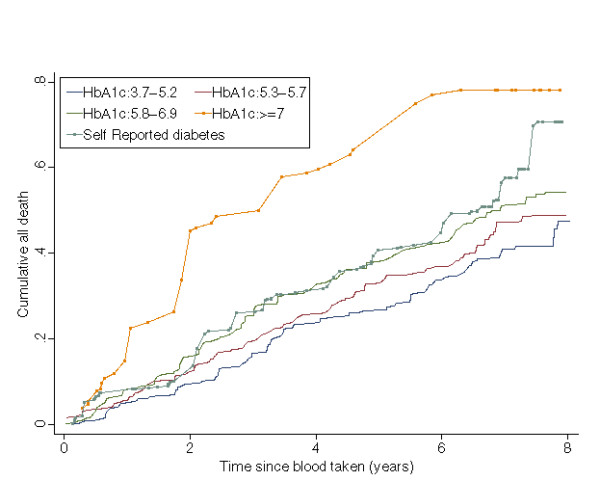
Mortality from all causes, cardiovascular and ischaemic heart disease increased with increasing HbA1c. Participants with diagnosed diabetes or who had HbA1c > or = 7% but no self-reported diabetes had increased mortality risk from all causes and cardiovascular diseases. The respondents in the group HbA1c > or = 7% who had not been diagnosed with diabetes had a significantly higher risk (odds ratio = 4.8 95% CI: 1.1 to 21.6) of developing dementia. Individuals who had self-reported diabetes but a HbA1c level < 7% had mortality and dementia incidence comparable to individuals without diabetes and HbA1c < 7%.
The findings support previous reports that bio-markers of glucose metabolism are associated with long term outcomes, such as mortality and dementia.
糖尿病在老年人群中很常见且呈上升趋势。糖化血红蛋白(HbA1c)是过去三个月平均血糖浓度的指标。HbA1c检测是目前用于检查糖尿病控制情况的临床方法之一。最近的研究表明,糖尿病是痴呆、认知功能障碍和身体残疾的危险因素。此外,已有关于HbA1c与全因死亡率、心血管疾病和认知功能之间关系的报道,但很少有研究关注老年人群中的这种关系。本研究的目的是调查在英格兰和威尔士65岁及以上人群中,HbA1c水平与全因死亡率、心血管疾病发病率、认知衰退和身体残疾之间的关联。
1139名年龄在69岁及以上的男性和女性参与了一项为期十年的基于人群的老龄化多中心纵向研究,在随访5 - 6年后进行了HbA1c测量。所有参与者都被标记以便向国家统计局办公室通报死亡情况,包括死因。在HbA1c测量前后,均可从该研究中获取包括血管状况、认知状态、身体功能和痴呆等健康信息。进行了生存分析和逻辑回归分析。
全因死亡率、心血管疾病和缺血性心脏病死亡率随HbA1c升高而增加。已诊断糖尿病的参与者或HbA1c≥7%但无自我报告糖尿病的参与者,全因死亡率和心血管疾病死亡率风险增加。HbA1c≥7%且未被诊断为糖尿病的组中的受访者患痴呆症的风险显著更高(优势比 = 4.8,95%置信区间:1.1至21.6)。自我报告患有糖尿病但HbA1c水平<7%的个体,其死亡率和痴呆症发病率与无糖尿病且HbA1c<7%的个体相当。
这些发现支持了先前的报道,即葡萄糖代谢生物标志物与长期预后相关,如死亡率和痴呆症。