Peiffer Ann M, Maldjian Joseph A, Laurienti Paul J
Department of Radiology, Wake Forest University School of Medicine, Medical Center Boulevard, PP1 - 7th Floor, Winston-Salem, NC 27157, USA.
Int J Biomed Imaging. 2008;2008:167078. doi: 10.1155/2008/167078.
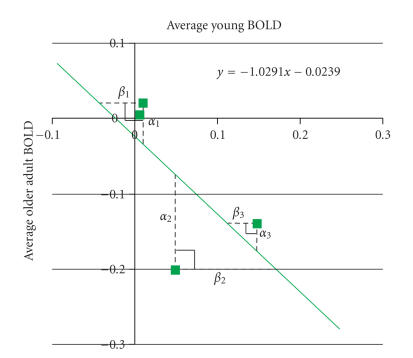
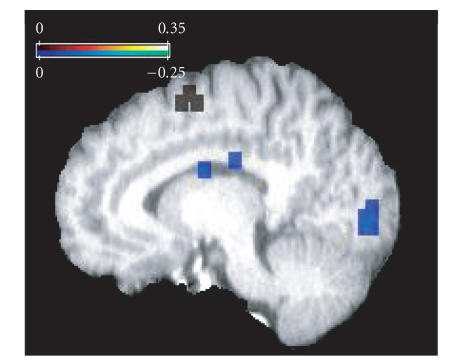
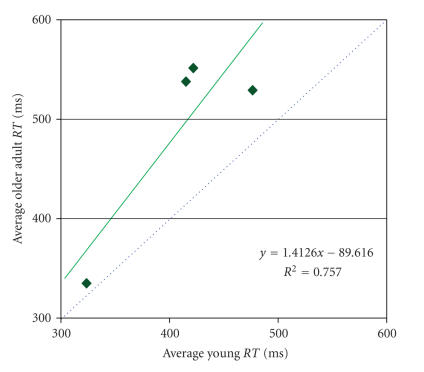
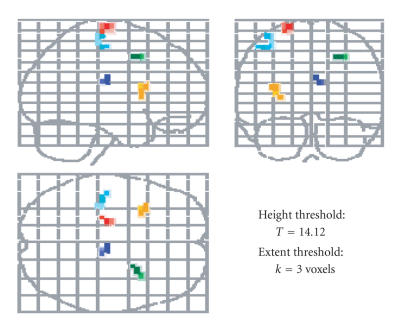
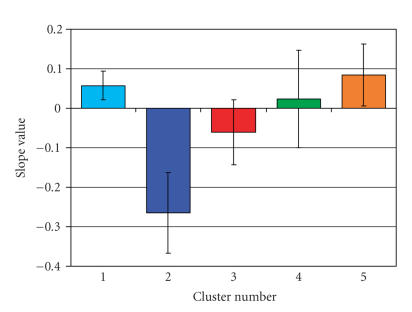
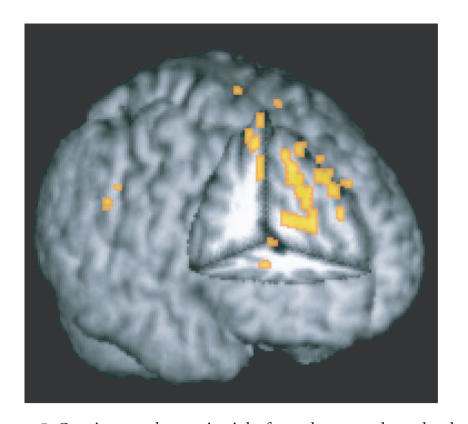
By plotting response times of young and older adults across a variety of tasks, Brinley spurred investigation and debate into the theory of general cognitive slowing. Though controversial, Brinley plots can assess between-task differences, the impact of increasing task demand, and the relationship between responses in two groups of subjects. Since a relationship exists between response times and the blood-oxygen level dependent (BOLD) signal of functional MRI (fMRI), Brinley's plotting method could be applied as a meta-analysis tool in fMRI studies of aging. Here, fledgling "Peiffer plots" are discussed for their potential impact on understanding general cognitive brain activity in aging. Preliminary results suggest that general cognitive slowing may be localized at the sensorimotor transformation in the precentral gyrus. Although this meta-analysis method is naturally used with imaging studies of aging, theoretically it may be applied to other study pairs (e.g., schizophrenic versus normal) or imaging datasets (e.g., PET).
通过绘制年轻人和老年人在各种任务中的反应时间,布林利激发了对一般认知减缓理论的研究和辩论。尽管存在争议,但布林利图可以评估任务间差异、任务需求增加的影响以及两组受试者反应之间的关系。由于反应时间与功能磁共振成像(fMRI)的血氧水平依赖(BOLD)信号之间存在关联,布林利的绘图方法可作为衰老的fMRI研究中的一种元分析工具。在此,将讨论新兴的“派弗图”对理解衰老过程中一般认知脑活动的潜在影响。初步结果表明,一般认知减缓可能定位于中央前回的感觉运动转换区。虽然这种元分析方法自然适用于衰老的影像学研究,但理论上它也可应用于其他研究对(如精神分裂症患者与正常人)或成像数据集(如正电子发射断层扫描)。