Woodruff Tracey J, Carlson Alison, Schwartz Jackie M, Giudice Linda C
National Center of Excellence in Women's Health, Department of Obstetrics, Gynecology and Reproductive Sciences, University of California, San Francisco, California 94143, USA.
Fertil Steril. 2008 Feb;89(2):281-300. doi: 10.1016/j.fertnstert.2007.10.002.
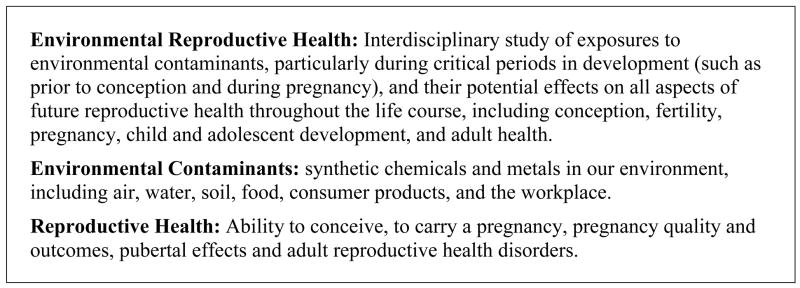
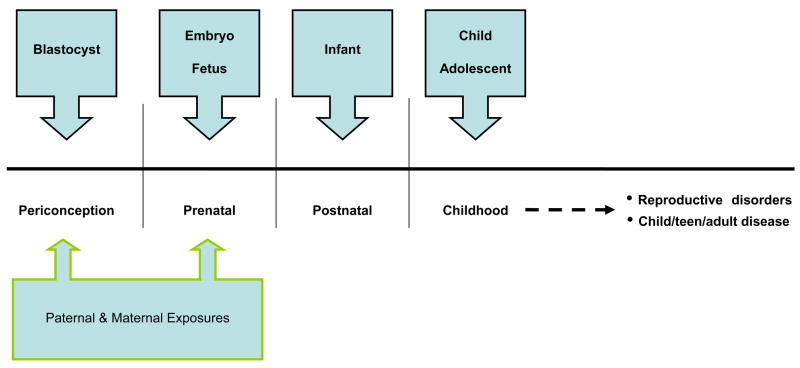
The 2007 Summit on Environmental Challenges to Reproductive Health and Fertility convened scientists, health care professionals, community groups, political representatives, and the media to hear presentations on the impact of environmental contaminants on reproductive health and fertility, and to discuss opportunities to improve health through research, education, communication, and policy. Environmental reproductive health focuses on exposures to environmental contaminants, particularly during critical periods of development, and their potential effects on future reproductive health, including conception, fertility, pregnancy, adolescent development, and adult health. Approximately 87,000 chemical substances are registered for commercial use in the United States, with ubiquitous human exposures to environmental contaminants in air, water, food, and consumer products. Exposures during critical windows of susceptibility may result in adverse effects with lifelong and even intergenerational health impacts. Effects can include impaired development and function of the reproductive tract and permanently altered gene expression, leading to metabolic and hormonal disorders, reduced fertility and fecundity, and illnesses such as testicular, prostate, uterine, and cervical cancers later in life. This executive summary reviews effects of pre- and postnatal exposures on male and female reproductive health, and provides a series of recommendations for advancing the field in the areas of research, policy, health care, and community action.
2007年生殖健康与生育的环境挑战峰会召集了科学家、医疗保健专业人员、社区团体、政治代表和媒体,听取关于环境污染物对生殖健康与生育影响的报告,并讨论通过研究、教育、宣传和政策改善健康的机会。环境生殖健康关注的是接触环境污染物的情况,尤其是在关键发育时期,以及这些污染物对未来生殖健康的潜在影响,包括受孕、生育能力、怀孕、青少年发育和成人健康。在美国,约有87000种化学物质注册用于商业用途,人类普遍暴露于空气、水、食物和消费品中的环境污染物。在关键的易感性窗口期接触这些污染物可能会导致不良影响,对健康产生终身甚至代际影响。这些影响可能包括生殖道发育和功能受损以及基因表达永久改变,进而导致代谢和激素紊乱、生育能力和生殖力下降,以及日后患上睾丸癌、前列腺癌、子宫癌和宫颈癌等疾病。本执行摘要回顾了产前和产后接触污染物对男性和女性生殖健康的影响,并就推进该领域在研究、政策、医疗保健和社区行动等方面的工作提出了一系列建议。