Tata Despina A, Yamamoto Bryan K
Laboratory of Neurochemistry, Department of Pharmacology and Experimental Therapeutics, Boston University School of Medicine, Boston, Massachusetts 02118, USA.
Synapse. 2008 May;62(5):325-36. doi: 10.1002/syn.20497.
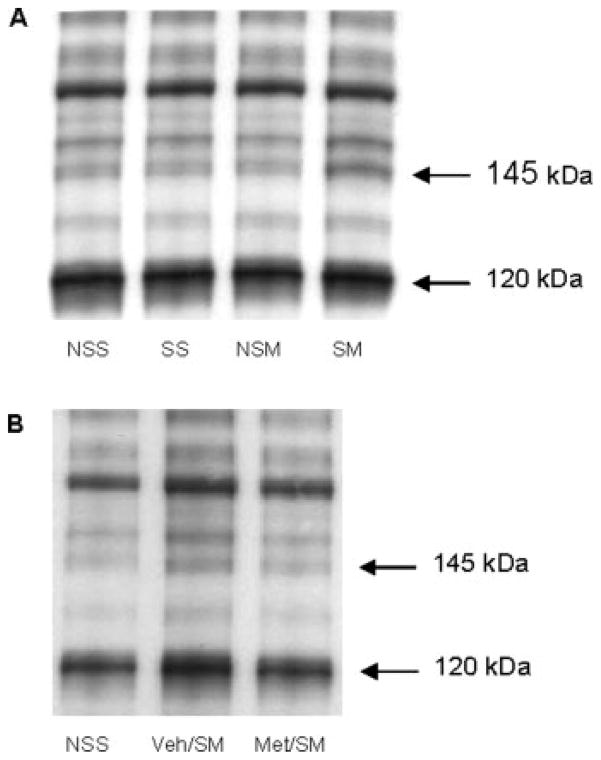
Striking parallels exist between the neurochemical and toxic effects of stress and methamphetamine. Despite these similarities, no studies have examined how stress may promote the toxic effects of methamphetamine (METH). The current study tested the hypothesis that chronic stress enhances METH toxicity by augmenting glutamate (GLU) release and excitotoxicity in response to METH administration. Adult male Sprague-Dawley rats were exposed to 10 days of unpredictable stress and then received either saline or METH (7.5 mg/kg, i.p., once every 2 h x four injections). Prior exposure to unpredictable stress acutely enhanced the striatal extracellular GLU concentrations in response to METH, and eventually caused proteolysis of the cytoskeleton protein spectrin. Administration of the corticosterone synthesis inhibitor, metyrapone (25 mg/kg, i.p., prior to each stressor), during unpredictable stress attenuated the enhanced striatal GLU release in response to METH, blocked spectrin proteolysis, and attenuated METH-associated toxicity measured by long-term depletions in the dopamine and serotonin tissue content as well as depletions in dopamine and serotonin transporter immunoreactivity of the striatum. In summary, prior exposure to unpredictable stress enhances METH-induced elevations of GLU in the striatum, resulting in long-term excitotoxic damage and an augmentation of damage to dopamine and serotonin terminals. These studies provide a neurochemical basis for how stress contributes to the deleterious effects of METH abuse.
应激与甲基苯丙胺的神经化学及毒性作用之间存在显著的相似之处。尽管存在这些相似性,但尚无研究探讨应激如何促进甲基苯丙胺(METH)的毒性作用。本研究检验了以下假设:慢性应激通过增加谷氨酸(GLU)释放及对METH给药的兴奋性毒性作用来增强METH毒性。成年雄性Sprague-Dawley大鼠暴露于10天不可预测的应激环境,然后接受生理盐水或METH(7.5mg/kg,腹腔注射,每2小时一次,共注射四次)。预先暴露于不可预测的应激环境会急性增强纹状体细胞外GLU浓度对METH的反应,并最终导致细胞骨架蛋白血影蛋白的蛋白水解。在不可预测的应激期间,给予皮质酮合成抑制剂美替拉酮(25mg/kg,腹腔注射,在每次应激源之前),可减弱纹状体对METH反应增强的GLU释放,阻止血影蛋白的蛋白水解,并减弱通过多巴胺和5-羟色胺组织含量的长期耗竭以及纹状体多巴胺和5-羟色胺转运体免疫反应性的耗竭所测量的与METH相关的毒性。总之,预先暴露于不可预测的应激环境会增强METH诱导的纹状体GLU升高,导致长期的兴奋性毒性损伤以及多巴胺和5-羟色胺终末损伤的加剧。这些研究为应激如何导致METH滥用的有害影响提供了神经化学基础。