Lorca T, Galas S, Fesquet D, Devault A, Cavadore J C, Dorée M
CNRS and INSERM, BP 505, Montpellier, France.
EMBO J. 1991 Aug;10(8):2087-93. doi: 10.1002/j.1460-2075.1991.tb07741.x.
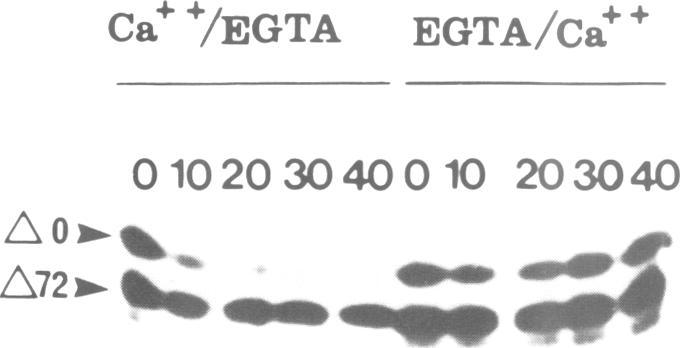
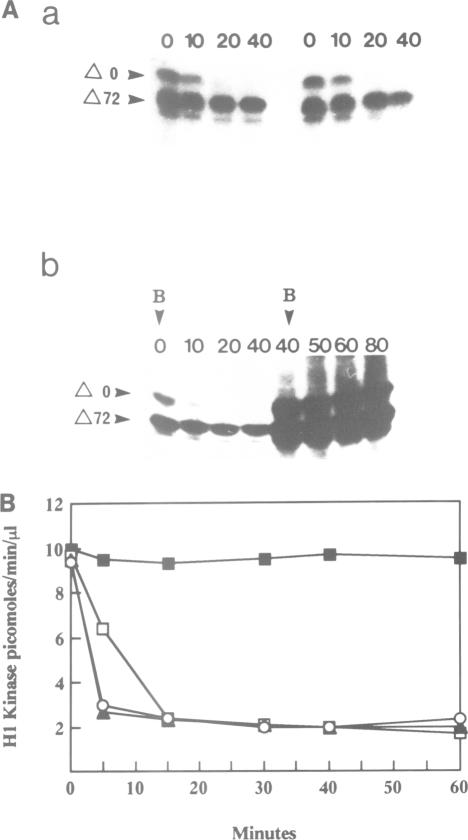
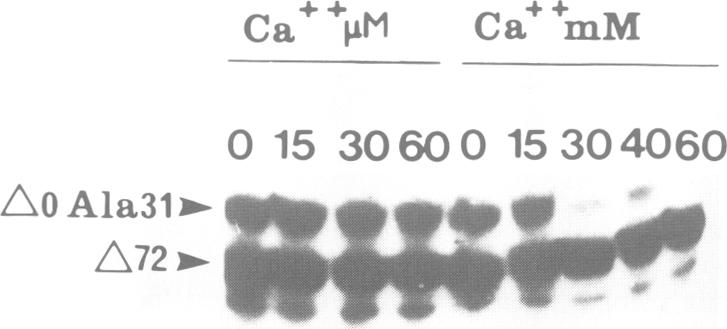
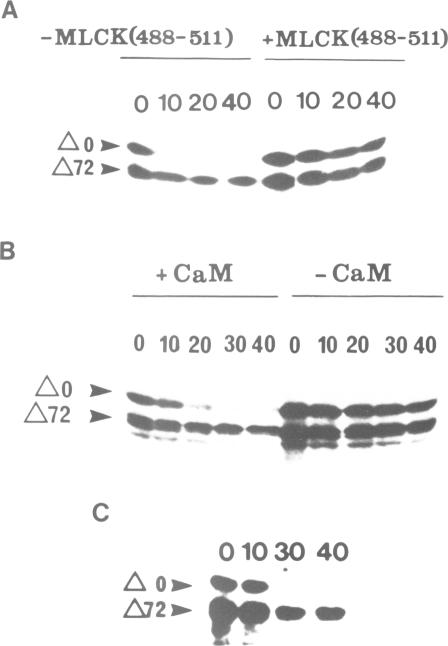
Exit from M phase, which requires cyclin degradation, is prevented from occurring in unfertilized eggs of vertebrates arrested at second meiotic metaphase due to a cytostatic factor recently identified as p39mos, the product of the proto-oncogene c-mos. Calpain can destroy both p39mos and cyclin in vitro in extracts prepared from metaphase-arrested Xenopus eggs, but only when free Ca2+ concentration is raised to the millimolar range. When free Ca2+ concentration is raised for only 30 s to the micromolar range, as occurs in physiological conditions after fertilization, cyclin degradation is induced, byt p39mos is not degraded. Cyclin proteolysis at micromolar free Ca2+, is not inhibited by calpastatin, and therefore does not involve calpain. A cyclin mutant modified in the destruction box is found to be resistant at micromolar, but not millimolar free Ca2+, suggesting that the ubiquitin pathway mediates cyclin degradation at micromolar Ca2+ concentration whereas calpain is involved at the millimolar level. A synthetic peptide which binds Ca(2+)-calmodulin with high affinity suppresses cyclin degradation at micromolar but not millimolar free Ca2+, and this only when it is present in the extract during the first 30 s after raising free Ca2+ concentration. The inhibition of the cyclin degradation pathway by the Ca(2+)-calmodulin binding peptide can be overcome by adding calmodulin. These results strongly suggest that a Ca(2+)-calmodulin process is required as an early event following fertilization to release the cyclin degradation pathway from inhibition in metaphase-arrested eggs. In contrast, p39mos degradation is not required.
M期的退出需要细胞周期蛋白的降解,而在脊椎动物未受精的卵子中,由于一种最近被鉴定为p39mos(原癌基因c-mos的产物)的细胞静止因子,卵子停滞在第二次减数分裂中期,M期退出被阻止。钙蛋白酶能在体外从处于中期停滞的非洲爪蟾卵子制备的提取物中破坏p39mos和细胞周期蛋白,但只有当游离Ca2+浓度升高到毫摩尔范围时才行。当游离Ca2+浓度仅在受精后的生理条件下升高30秒至微摩尔范围时,细胞周期蛋白的降解被诱导,但p39mos不被降解。在微摩尔游离Ca2+浓度下的细胞周期蛋白蛋白水解不受钙蛋白酶抑制蛋白的抑制,因此不涉及钙蛋白酶。发现在破坏框中修饰的细胞周期蛋白突变体在微摩尔而非毫摩尔游离Ca2+浓度下具有抗性,这表明泛素途径在微摩尔Ca2+浓度下介导细胞周期蛋白的降解,而钙蛋白酶在毫摩尔水平起作用。一种与Ca(2+)-钙调蛋白具有高亲和力结合的合成肽在微摩尔而非毫摩尔游离Ca2+浓度下抑制细胞周期蛋白的降解,并且只有当它在游离Ca2+浓度升高后的最初30秒内存在于提取物中时才会如此。通过添加钙调蛋白可以克服Ca(2+)-钙调蛋白结合肽对细胞周期蛋白降解途径的抑制。这些结果强烈表明,受精后作为早期事件需要一个Ca(2+)-钙调蛋白过程,以解除中期停滞卵子中细胞周期蛋白降解途径的抑制。相比之下,p39mos的降解则不需要。