Guinet Françoise, Avé Patrick, Jones Louis, Huerre Michel, Carniel Elisabeth
Unité des Yersinia, Institut Pasteur, Paris, France.
PLoS One. 2008 Feb 27;3(2):e1688. doi: 10.1371/journal.pone.0001688.
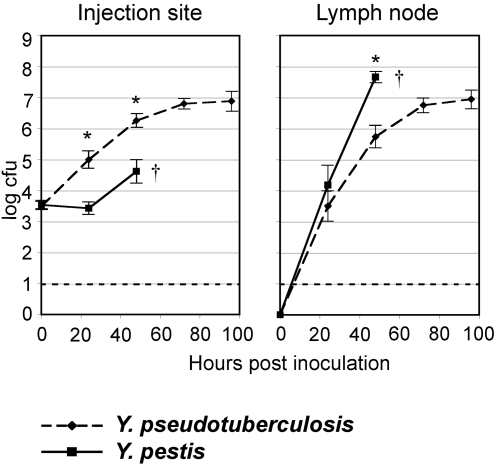
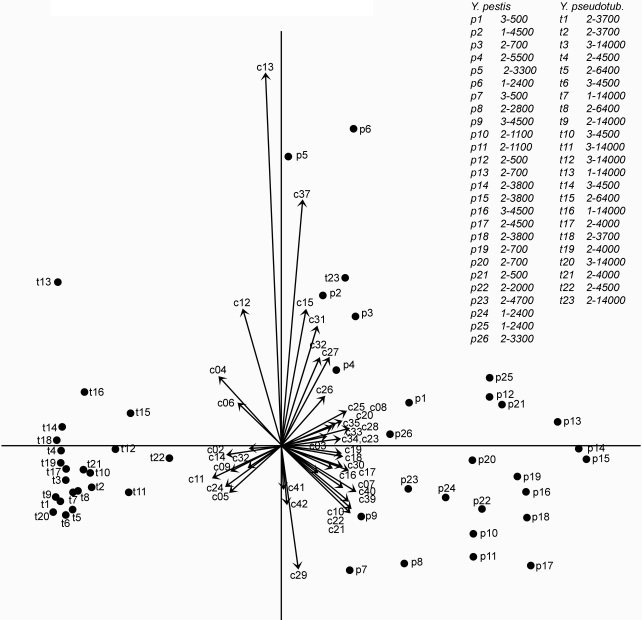
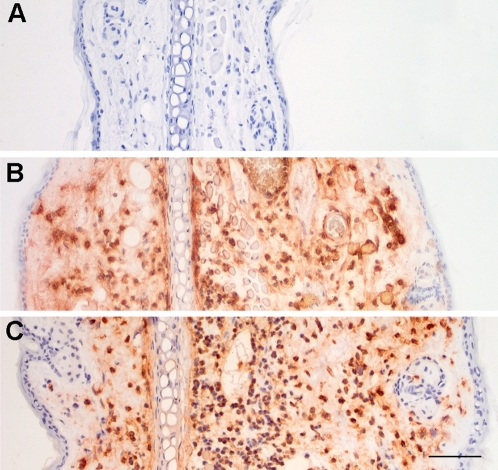
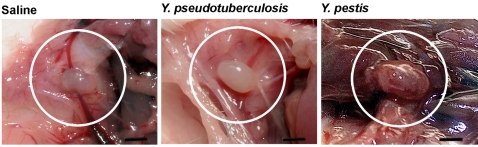
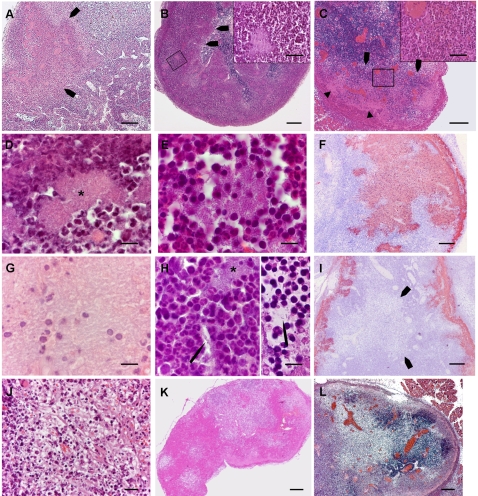
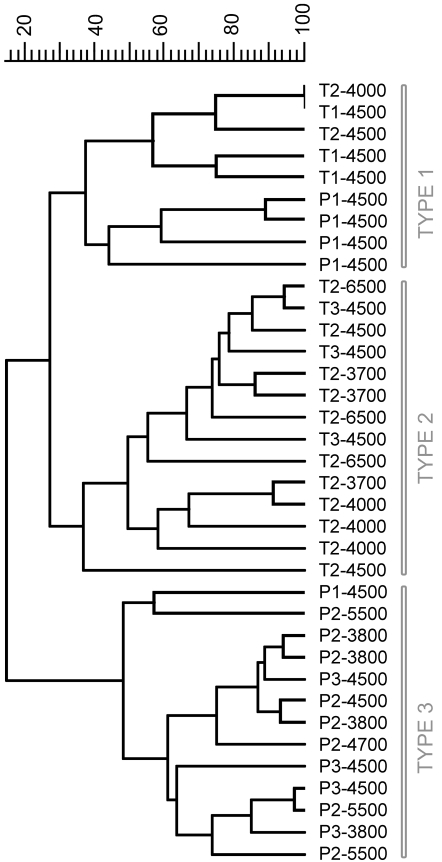
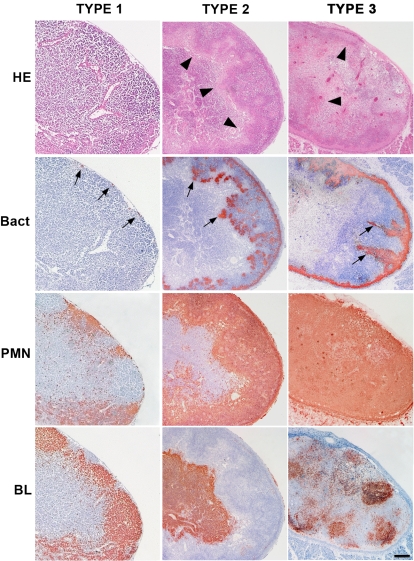
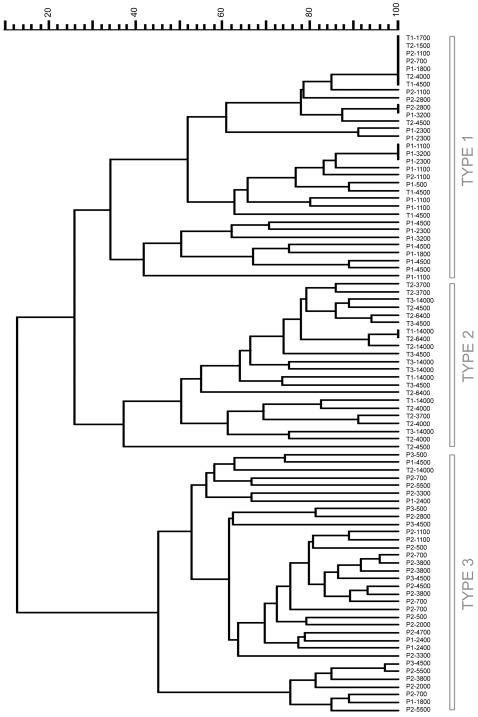
Since its recent emergence from the enteropathogen Yersinia pseudotuberculosis, Y. pestis, the plague agent, has acquired an intradermal (id) route of entry and an extreme virulence. To identify pathophysiological events associated with the Y. pestis high degree of pathogenicity, we compared disease progression and evolution in mice after id inoculation of the two Yersinia species. Mortality studies showed that the id portal was not in itself sufficient to provide Y. pseudotuberculosis with the high virulence power of its descendant. Surprisingly, Y. pseudotuberculosis multiplied even more efficiently than Y. pestis in the dermis, and generated comparable histological lesions. Likewise, Y. pseudotuberculosis translocated to the draining lymph node (DLN) and similar numbers of the two bacterial species were found at 24 h post infection (pi) in this organ. However, on day 2 pi, bacterial loads were higher in Y. pestis-infected than in Y. pseudotuberculosis-infected DLNs. Clustering and multiple correspondence analyses showed that the DLN pathologies induced by the two species were statistically significantly different and identified the most discriminating elementary lesions. Y. pseudotuberculosis infection was accompanied by abscess-type polymorphonuclear cell infiltrates containing the infection, while Y. pestis-infected DLNs exhibited an altered tissue density and a vascular congestion, and were typified by an invasion of the tissue by free floating bacteria. Therefore, Y. pestis exceptional virulence is not due to its recently acquired portal of entry into the host, but is associated with a distinct ability to massively infiltrate the DLN, without inducing in this organ an organized polymorphonuclear cell reaction. These results shed light on pathophysiological processes that draw the line between a virulent and a hypervirulent pathogen.
鼠疫杆菌耶尔森氏菌(Y. pestis)是由肠道病原体假结核耶尔森氏菌(Yersinia pseudotuberculosis)近期演化而来,它获得了经皮内(id)途径进入机体的方式以及极强的毒力。为了确定与鼠疫杆菌高度致病性相关的病理生理事件,我们比较了对两种耶尔森氏菌进行皮内接种后小鼠的疾病进展和演变情况。死亡率研究表明,皮内接种途径本身并不足以使假结核耶尔森氏菌获得其后代所具有的高毒力。令人惊讶的是,假结核耶尔森氏菌在真皮层中的繁殖效率甚至比鼠疫杆菌更高,并产生了类似的组织学损伤。同样,假结核耶尔森氏菌转移至引流淋巴结(DLN),在感染后24小时(pi)在该器官中发现两种细菌的数量相似。然而,在感染后第2天,鼠疫杆菌感染的DLN中的细菌载量高于假结核耶尔森氏菌感染的DLN。聚类分析和多重对应分析表明,两种细菌诱导的DLN病理在统计学上有显著差异,并确定了最具鉴别力的基本病变。假结核耶尔森氏菌感染伴随着包含感染灶的脓肿型多形核细胞浸润,而鼠疫杆菌感染的DLN则表现出组织密度改变和血管充血,其特征是游离细菌侵入组织。因此,鼠疫杆菌的超强毒力并非因其最近获得的进入宿主的途径,而是与大量浸润DLN的独特能力有关,且不会在该器官中诱导有组织的多形核细胞反应。这些结果揭示了区分有毒病原体和超强毒力病原体的病理生理过程。