Wu Jinzi, Dou Yan, Ladiges Warren C
Department of Comparative Medicine, School of Medicine, University of Washington, Seattle, WA 98195, USA;
Clocks Sleep. 2020 Aug 6;2(3):325-333. doi: 10.3390/clockssleep2030024. eCollection 2020 Sep.
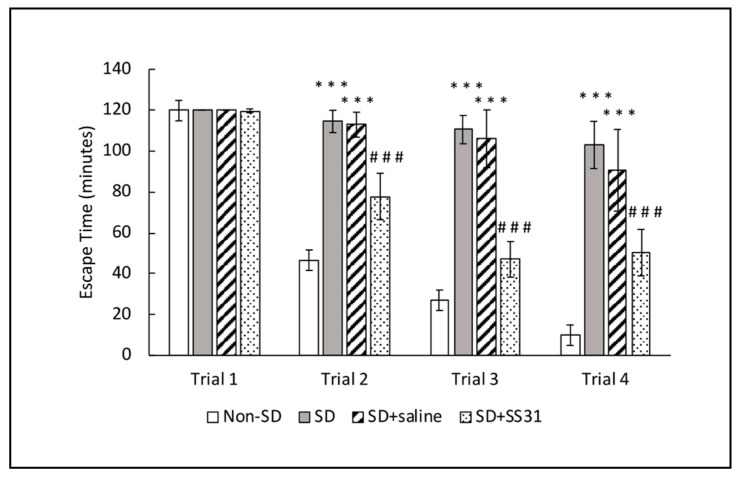
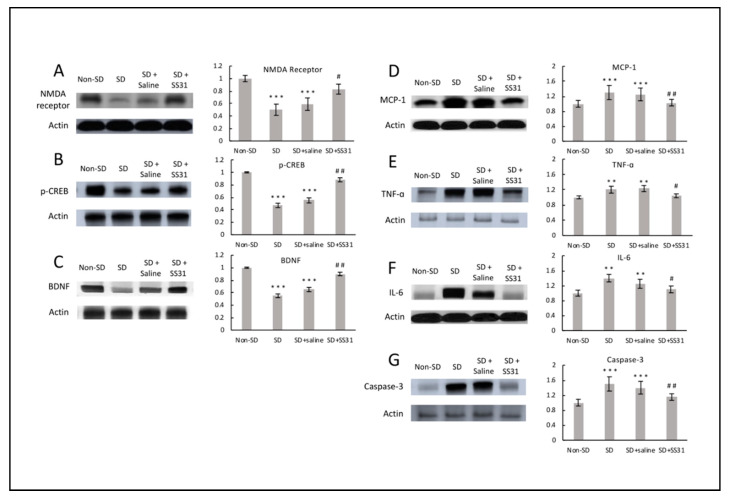
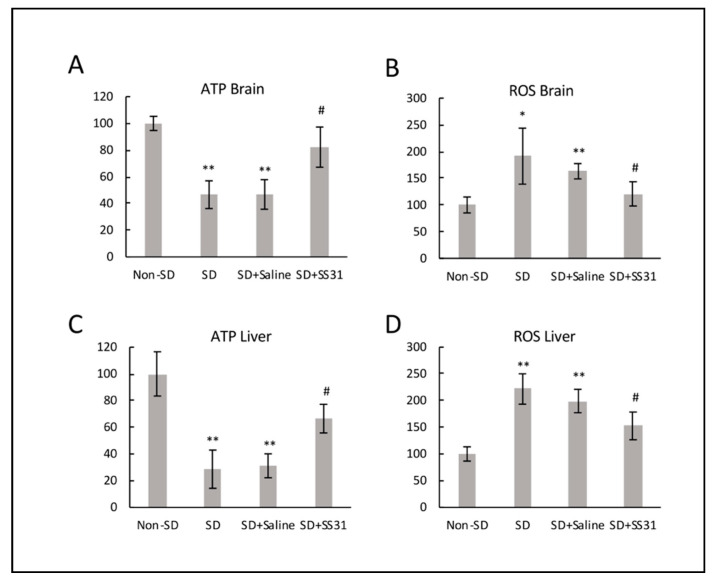
Sleep deprivation is a potent stress factor that disrupts regulatory pathways in the brain resulting in cognitive dysfunction and increased risk of neurodegenerative disease with increasing age. Prevention of the adverse effects of sleep deprivation could be beneficial in older individuals by restoring healthy brain function. We report here on the ability of SS31, a mitochondrial specific peptide, to attenuate the negative neurological effects of short-term sleep deprivation in aging mice. C57BL/6 female mice, 20 months old, were subcutaneously injected with SS31 (3 mg/kg) or saline daily for four days. Sleep deprivation was 4 h daily for the last two days of SS31 treatment. Mice were immediately tested for learning ability followed by collection of brain and other tissues. In sleep deprived mice treated with SS31, learning impairment was prevented, brain mitochondrial ATP levels and synaptic plasticity regulatory proteins were restored, and reactive oxygen species (ROS) and inflammatory cytokines levels were decreased in the hippocampus. This observation suggests possible therapeutic benefits of SS31 for alleviating adverse neurological effects of short-term sleep loss.
睡眠剥夺是一种强大的应激因素,会扰乱大脑中的调节通路,随着年龄增长导致认知功能障碍和神经退行性疾病风险增加。通过恢复健康的脑功能来预防睡眠剥夺的不良影响,对老年人可能有益。我们在此报告线粒体特异性肽SS31减轻衰老小鼠短期睡眠剥夺负面神经影响的能力。20月龄的C57BL/6雌性小鼠每天皮下注射SS31(3mg/kg)或生理盐水,持续四天。在SS31治疗的最后两天,每天进行4小时的睡眠剥夺。小鼠在接受学习能力测试后立即处死,随后收集大脑和其他组织。在用SS31治疗的睡眠剥夺小鼠中,学习障碍得到预防,脑线粒体ATP水平和突触可塑性调节蛋白得以恢复,海马体中的活性氧(ROS)和炎性细胞因子水平降低。这一观察结果表明,SS31可能具有减轻短期睡眠不足负面神经影响的治疗益处。