Department of Pharmaceutical Sciences, College of Pharmacy, University of North Texas Health Science Center, Fort Worth, TX 76107, USA.
School of Health and Life Sciences, University of Health and Rehabilitation Sciences, Qingdao 266071, China.
Nutrients. 2023 Apr 1;15(7):1732. doi: 10.3390/nu15071732.
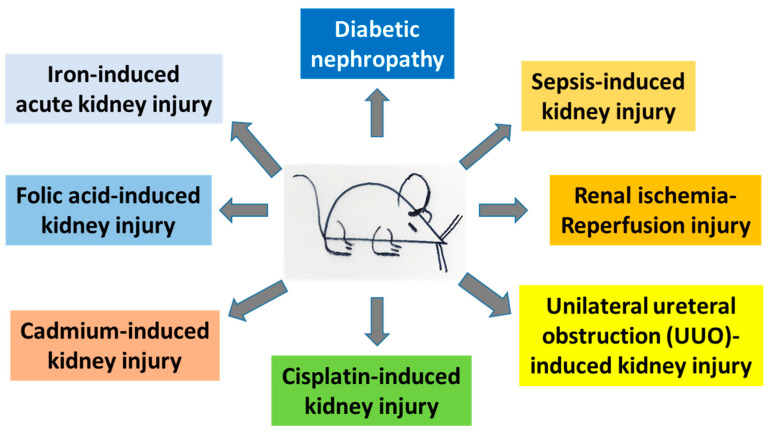
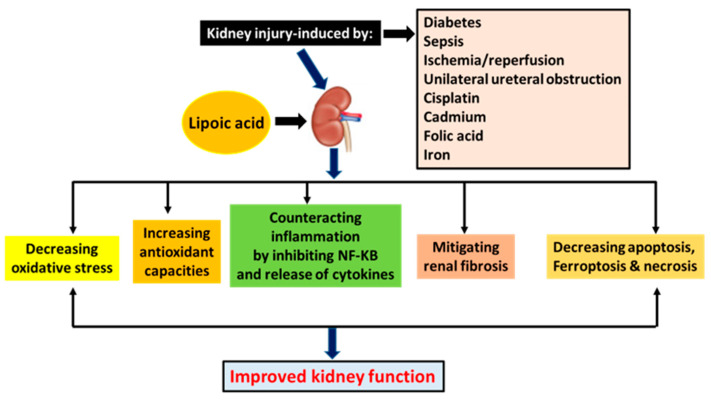
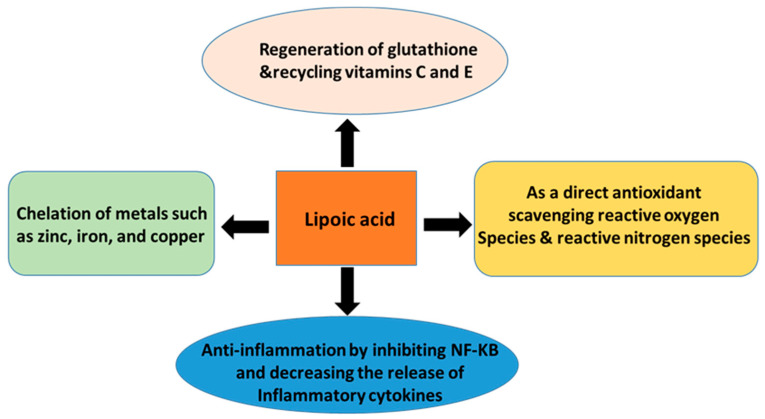
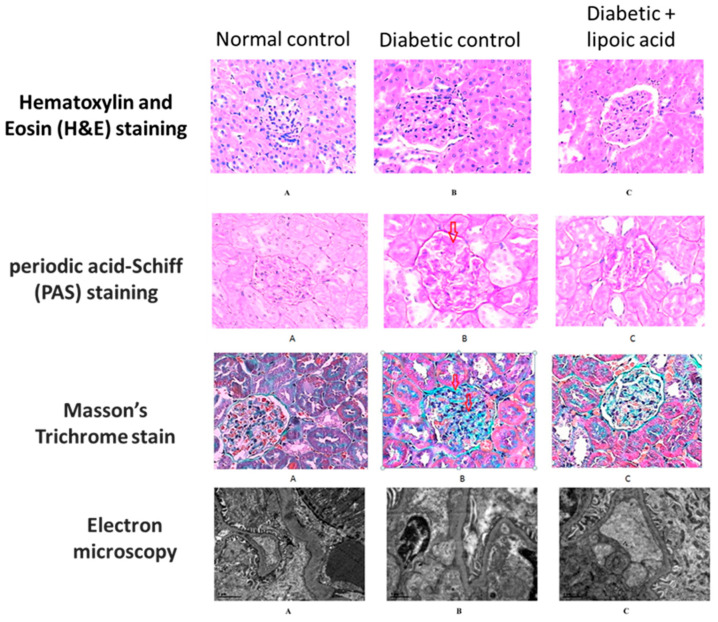
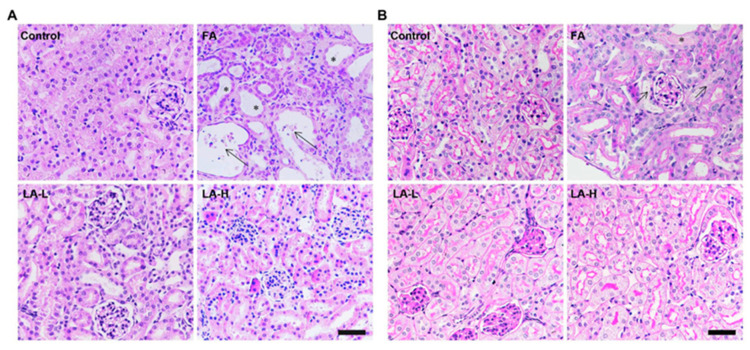
The kidney is a crucial organ that eliminates metabolic waste and reabsorbs nutritious elements. It also participates in the regulation of blood pressure, maintenance of electrolyte balance and blood pH homeostasis, as well as erythropoiesis and vitamin D maturation. Due to such a heavy workload, the kidney is an energy-demanding organ and is constantly exposed to endogenous and exogenous insults, leading to the development of either acute kidney injury (AKI) or chronic kidney disease (CKD). Nevertheless, there are no therapeutic managements to treat AKI or CKD effectively. Therefore, novel therapeutic approaches for fighting kidney injury are urgently needed. This review article discusses the role of α-lipoic acid (ALA) in preventing and treating kidney diseases. We focus on various animal models of kidney injury by which the underlying renoprotective mechanisms of ALA have been unraveled. The animal models covered include diabetic nephropathy, sepsis-induced kidney injury, renal ischemic injury, unilateral ureteral obstruction, and kidney injuries induced by folic acid and metals such as cisplatin, cadmium, and iron. We highlight the common mechanisms of ALA's renal protective actions that include decreasing oxidative damage, increasing antioxidant capacities, counteracting inflammation, mitigating renal fibrosis, and attenuating nephron cell death. It is by these mechanisms that ALA achieves its biological function of alleviating kidney injury and improving kidney function. Nevertheless, we also point out that more comprehensive, preclinical, and clinical studies will be needed to make ALA a better therapeutic agent for targeting kidney disorders.
肾脏是一个至关重要的器官,它可以清除代谢废物并重新吸收营养物质。它还参与调节血压、维持电解质平衡和血液 pH 值稳态,以及红细胞生成和维生素 D 成熟。由于肾脏的工作量如此之大,它是一个耗能器官,不断受到内源性和外源性的损伤,导致急性肾损伤(AKI)或慢性肾脏病(CKD)的发生。然而,目前还没有有效的治疗方法来治疗 AKI 或 CKD。因此,迫切需要新的治疗方法来对抗肾损伤。本文综述了α-硫辛酸(ALA)在预防和治疗肾脏疾病中的作用。我们重点讨论了各种肾脏损伤的动物模型,揭示了 ALA 的潜在肾保护机制。涵盖的动物模型包括糖尿病肾病、脓毒症引起的肾损伤、肾缺血损伤、单侧输尿管梗阻以及叶酸和金属(如顺铂、镉和铁)引起的肾损伤。我们强调了 ALA 的肾脏保护作用的共同机制,包括减少氧化损伤、增加抗氧化能力、对抗炎症、减轻肾纤维化和减少肾单位细胞死亡。正是通过这些机制,ALA 发挥了缓解肾损伤和改善肾功能的生物学功能。然而,我们也指出,需要更全面、更临床前和临床试验,才能使 ALA 成为治疗肾脏疾病的更好的治疗药物。