Jauregui Andrew R, Nguyen Ken C Q, Hall David H, Barr Maureen M
Department of Genetics, Rutgers University, Piscataway, NJ 08854, USA.
J Cell Biol. 2008 Mar 10;180(5):973-88. doi: 10.1083/jcb.200707090. Epub 2008 Mar 3.
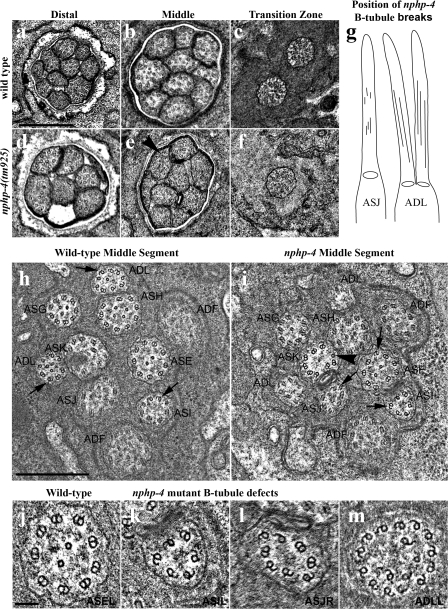
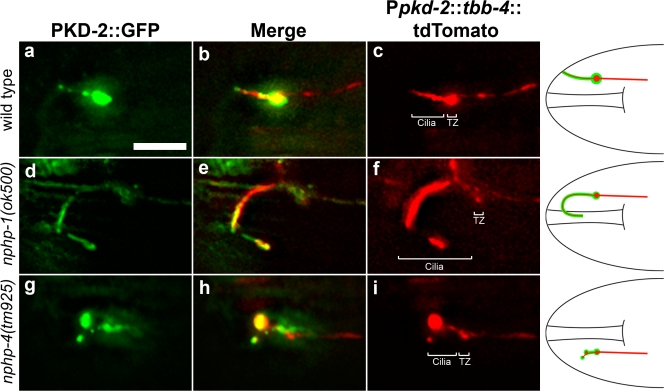
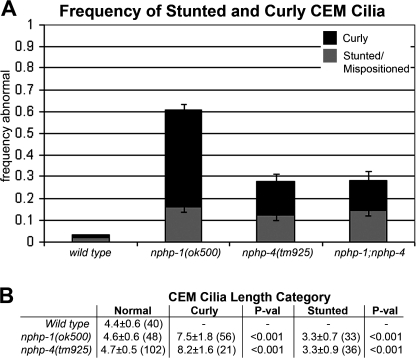
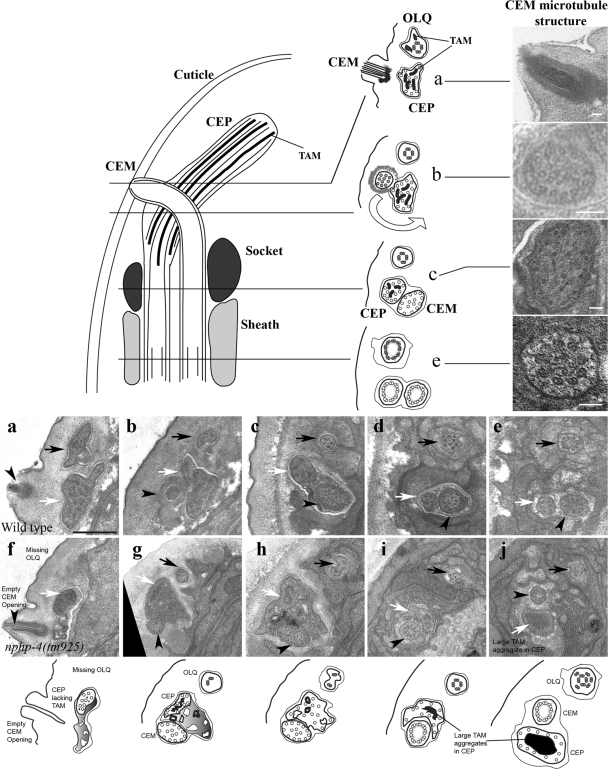
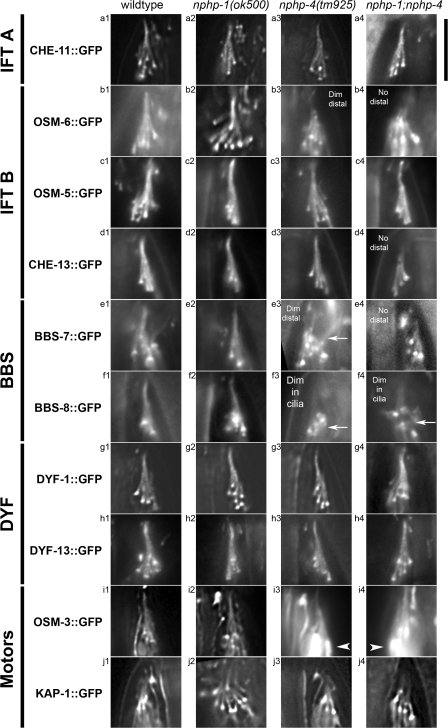
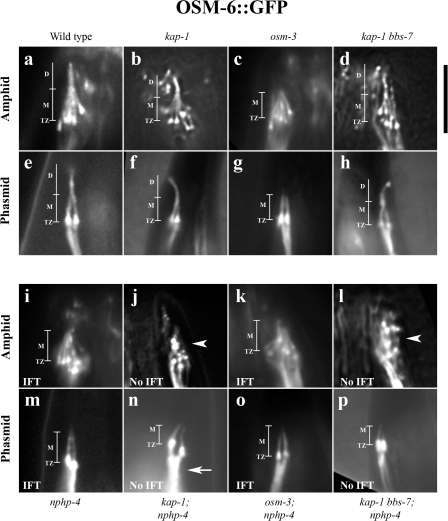
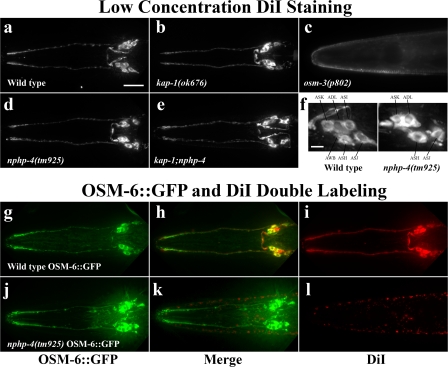
Nephronophthisis (NPHP) is the most common genetic cause of end-stage renal disease in children and young adults. In Chlamydomonas reinhardtii, Caenorhabditis elegans, and mammals, the NPHP1 and NPHP4 gene products nephrocystin-1 and nephrocystin-4 localize to basal bodies or ciliary transition zones (TZs), but their function in this location remains unknown. We show here that loss of C. elegans NPHP-1 and NPHP-4 from TZs is tolerated in developing cilia but causes changes in localization of specific ciliary components and a broad range of subtle axonemal ultrastructural defects. In amphid channel cilia, nphp-4 mutations cause B tubule defects that further disrupt intraflagellar transport (IFT). We propose that NPHP-1 and NPHP-4 act globally at the TZ to regulate ciliary access of the IFT machinery, axonemal structural components, and signaling molecules, and that perturbing this balance results in cell type-specific phenotypes.
肾单位肾痨(NPHP)是儿童和青年终末期肾病最常见的遗传病因。在莱茵衣藻、秀丽隐杆线虫和哺乳动物中,NPHP1和NPHP4基因产物肾囊肿蛋白-1和肾囊肿蛋白-4定位于基体或纤毛过渡区(TZ),但其在此位置的功能尚不清楚。我们在此表明,在发育中的纤毛中,秀丽隐杆线虫TZ中NPHP-1和NPHP-4的缺失是可以耐受的,但会导致特定纤毛成分的定位发生变化以及广泛的细微轴丝超微结构缺陷。在两性感觉毛通道纤毛中,nphp-4突变会导致B微管缺陷,进而破坏鞭毛内运输(IFT)。我们提出,NPHP-1和NPHP-4在TZ全局发挥作用,以调节IFT机制、轴丝结构成分和信号分子的纤毛进入,并且扰乱这种平衡会导致细胞类型特异性表型。