Oldroyd Benjamin P, Beekman Madeleine
Behaviour and Genetics of Social Insects Laboratory, School of Biological Sciences A12, University of Sydney, New South Wales, Australia.
PLoS Biol. 2008 Mar 4;6(3):e56. doi: 10.1371/journal.pbio.0060056.
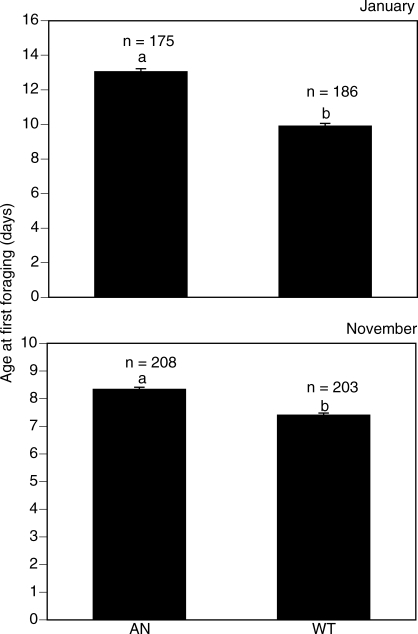
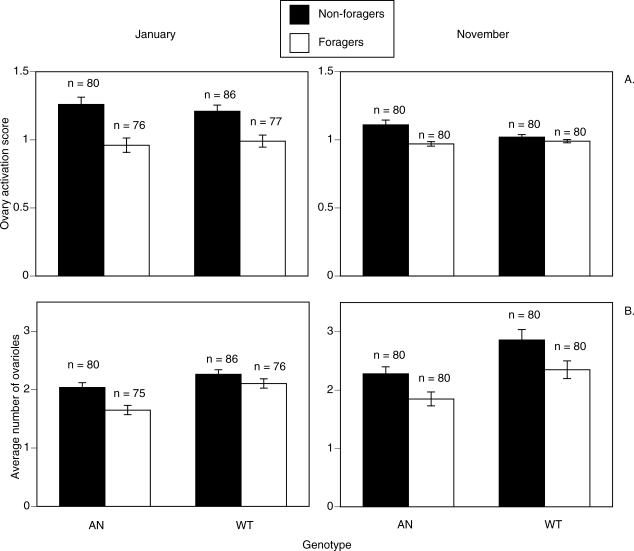
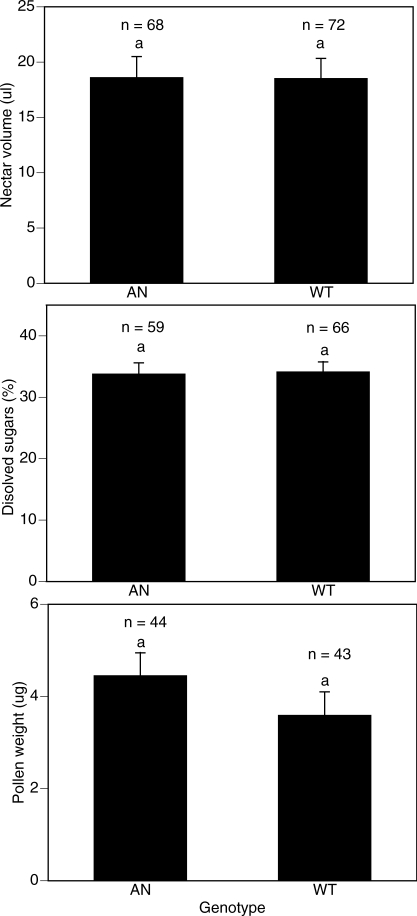
The "reproductive ground plan" hypothesis (RGPH) proposes that reproductive division of labour in social insects had its antecedents in the ancient gene regulatory networks that evolved to regulate the foraging and reproductive phases of their solitary ancestors. Thus, queens express traits that are characteristic of the reproductive phase of solitary insects, whereas workers express traits characteristic of the foraging phase. The RGPH has also been extended to help understand the regulation of age polyethism within the worker caste and more recently to explain differences in the foraging specialisations of individual honey bee workers. Foragers that specialise in collecting proteinaceous pollen are hypothesised to have higher reproductive potential than individuals that preferentially forage for nectar because genes that were ancestrally associated with the reproductive phase are active. We investigated the links between honey bee worker foraging behaviour and reproductive traits by comparing the foraging preferences of a line of workers that has been selected for high rates of worker reproduction with the preferences of wild-type bees. We show that while selection for reproductive behaviour in workers has not altered foraging preferences, the age at onset of foraging of our selected line has been increased. Our findings therefore support the hypothesis that age polyethism is related to the reproductive ground plan, but they cast doubt on recent suggestions that foraging preferences and reproductive traits are pleiotropically linked.
“生殖基础计划”假说(RGPH)提出,社会性昆虫的生殖分工起源于古老的基因调控网络,这些网络在其独居祖先的觅食和生殖阶段进化形成。因此,蜂后表现出独居昆虫生殖阶段的特征性状,而工蜂则表现出觅食阶段的特征性状。RGPH还被扩展用于帮助理解工蜂阶层内年龄多型行为的调控,最近也用于解释单个蜜蜂工蜂觅食专业化的差异。据推测,专门采集富含蛋白质花粉的觅食者比那些优先采集花蜜的个体具有更高的生殖潜力,因为与生殖阶段相关的祖先基因是活跃的。我们通过比较一组因工蜂高繁殖率而被选育的工蜂的觅食偏好与野生型蜜蜂的偏好,研究了蜜蜂工蜂觅食行为与生殖性状之间的联系。我们发现,虽然对工蜂生殖行为的选择并未改变觅食偏好,但我们所选品系开始觅食的年龄有所增加。因此,我们的研究结果支持了年龄多型行为与生殖基础计划相关的假说,但对最近关于觅食偏好和生殖性状存在多效性联系的观点提出了质疑。