Böcker Wolfgang, Yin Zhanhai, Drosse Inga, Haasters Florian, Rossmann Oliver, Wierer Matthias, Popov Cvetan, Locher Melanie, Mutschler Wolf, Docheva Denitsa, Schieker Matthias
Experimental Surgery and Regenerative Medicine, Department of Surgery, Ludwig-Maximilians-University, Nussbaumstrasse 20, 80336 Munich, Germany.
J Cell Mol Med. 2008 Aug;12(4):1347-59. doi: 10.1111/j.1582-4934.2008.00299.x. Epub 2008 Mar 4.
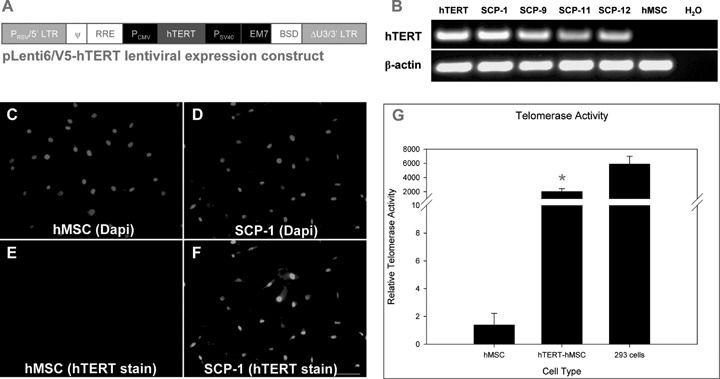
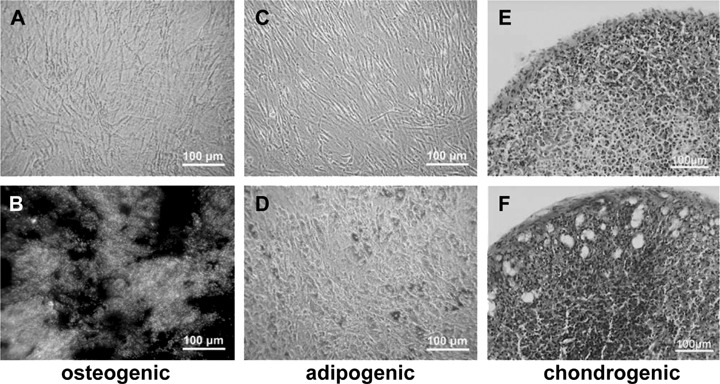
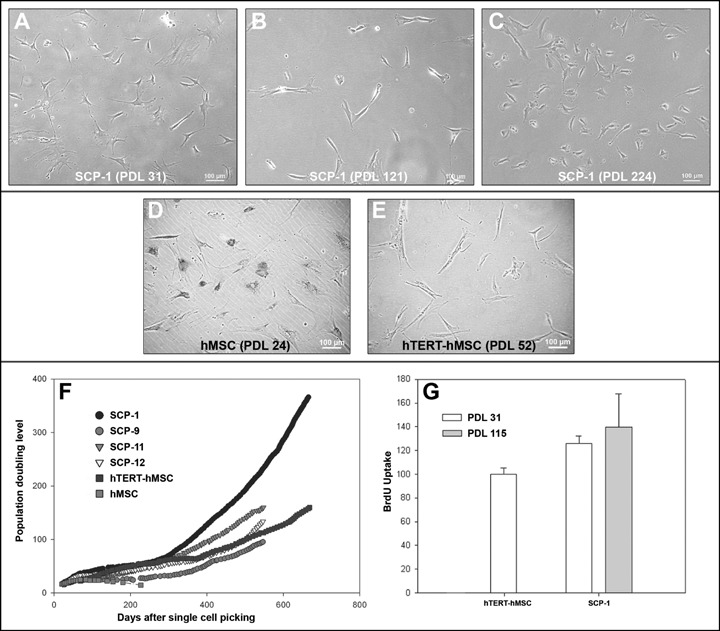
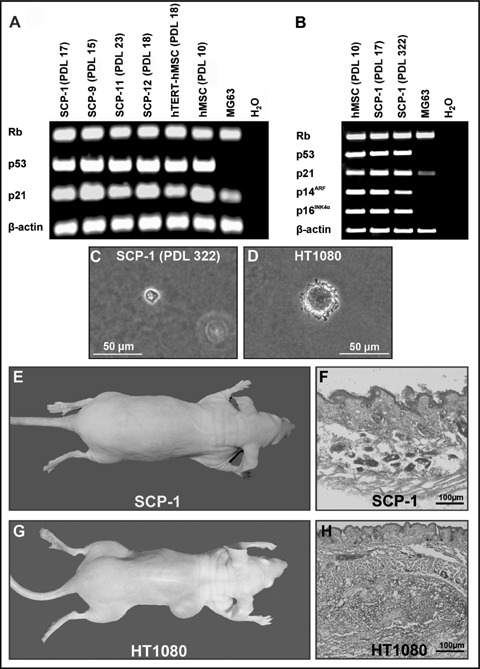
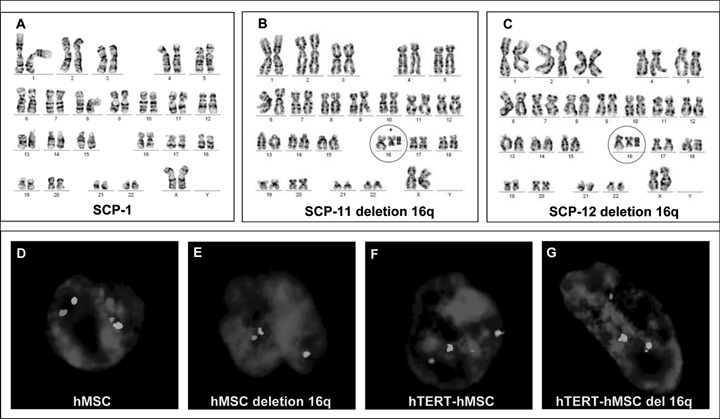
Human mesenchymal stem cells (hMSCs) can be readily isolated from bone marrow and differentiate into multiple tissues, making them a promising target for future cell and gene therapy applications. The low frequency of hMSCs in bone marrow necessitates their isolation and expansion in vitro prior to clinical use, but due to senescence-associated growth arrest during culture, limited cell numbers can be generated. The lifespan of hMSCs has been extended by ectopic expression of human telomerase reverse transcriptase (hTERT) using retroviral vectors. Since malignant transformation was observed in hMSCs and retroviral vectors cause insertional mutagenesis, we ectopically expressed hTERT using lentiviral gene transfer. Single-cell-derived hMSC clones expressing hTERT did not show malignant transformation in vitro and in vivo after extended culture periods. There were no changes observed in the expression of tumour suppressor genes and karyotype. Cultured hMSCs lack telomerase activity, but it was significantly increased by ectopic expression of hTERT. HTERT expression prevented hMSC senescence and the cells showed significantly higher and unlimited proliferation capacity. Even after an extended culture period, hMSCs expressing hTERT preserved their stem cells character as shown by osteogenic, adipogenic and chondrogenic differentiation. In summary, extending the lifespan of human mesenchymal stem cells by ectopic expression of hTERT using lentiviral gene transfer may be an attractive and safe way to generate appropriate cell numbers for cell and gene therapy applications.
人间充质干细胞(hMSCs)可轻易从骨髓中分离出来,并分化为多种组织,这使其成为未来细胞和基因治疗应用的一个有前景的靶点。骨髓中hMSCs的频率较低,因此在临床使用前需要在体外进行分离和扩增,但由于培养过程中与衰老相关的生长停滞,能够产生的细胞数量有限。使用逆转录病毒载体通过异位表达人端粒酶逆转录酶(hTERT)延长了hMSCs的寿命。由于在hMSCs中观察到恶性转化,且逆转录病毒载体可导致插入诱变,我们使用慢病毒基因转移异位表达hTERT。在延长培养期后,表达hTERT的单细胞来源的hMSC克隆在体外和体内均未显示恶性转化。肿瘤抑制基因的表达和核型均未观察到变化。培养的hMSCs缺乏端粒酶活性,但通过hTERT的异位表达其活性显著增加。hTERT表达可防止hMSC衰老,细胞显示出显著更高的和无限的增殖能力。即使在延长培养期后,表达hTERT的hMSCs仍保持其干细胞特性,如成骨、成脂和软骨分化所示。总之,通过使用慢病毒基因转移异位表达hTERT来延长人间充质干细胞的寿命,可能是为细胞和基因治疗应用产生合适细胞数量的一种有吸引力且安全的方法。