Lång Pernilla, van Harmelen Vanessa, Rydén Mikael, Kaaman Maria, Parini Paolo, Carneheim Claes, Cassady A Ian, Hume David A, Andersson Göran, Arner Peter
Division of Pathology, Department of Laboratory Medicine, Karolinska Institutet, Karolinska University Hospital, Huddinge, Sweden.
PLoS One. 2008 Mar 5;3(3):e1713. doi: 10.1371/journal.pone.0001713.
Obesity is associated with macrophage infiltration of adipose tissue, which may link adipose inflammation to insulin resistance. However, the impact of inflammatory cells in the pathophysiology of obesity remains unclear. Tartrate resistant acid phosphatase (TRAP) is an enzyme expressed by subsets of macrophages and osteoclasts that exists either as an enzymatically inactive monomer or as an active, proteolytically processed dimer.
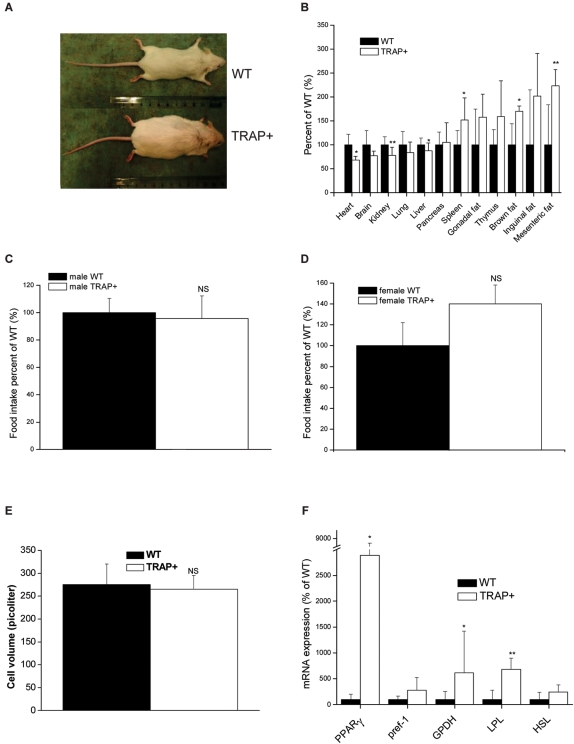
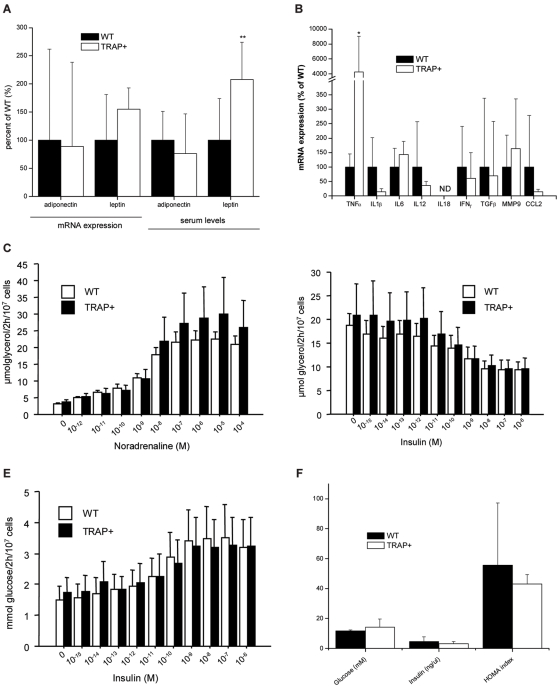
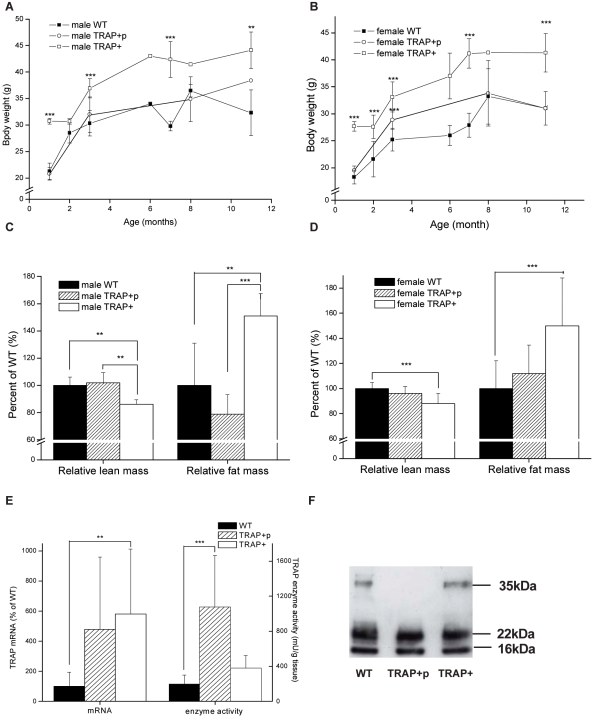
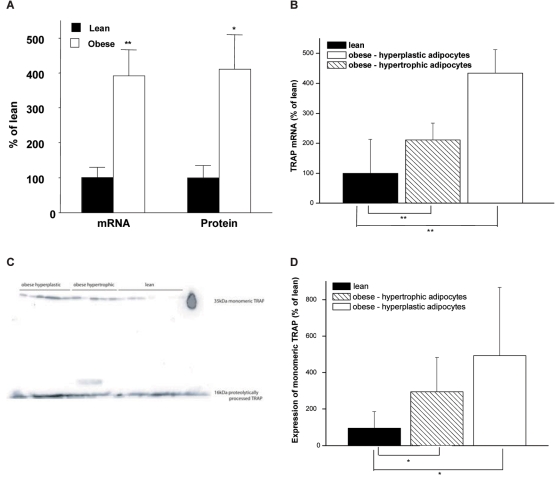
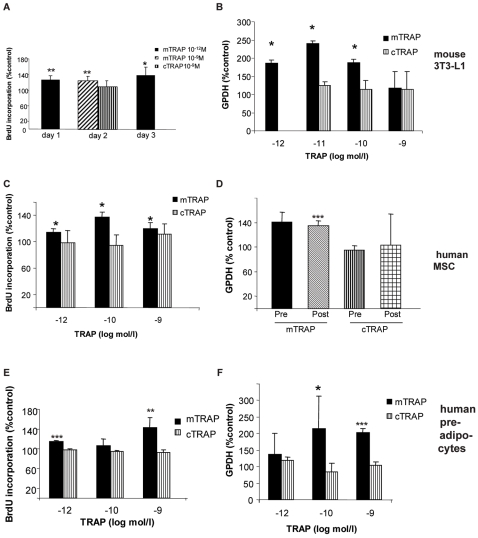
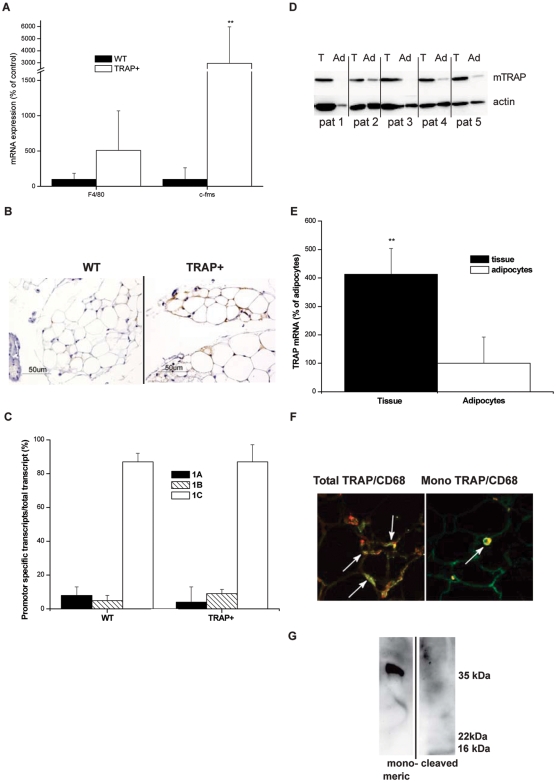
Using mice over expressing TRAP, we show that over-expression of monomeric, but not the dimeric form in adipose tissue leads to early onset spontaneous hyperplastic obesity i.e. many small fat cells. In vitro, recombinant monomeric, but not proteolytically processed TRAP induced proliferation and differentiation of mouse and human adipocyte precursor cells. In humans, monomeric TRAP was highly expressed in the adipose tissue of obese individuals. In both the mouse model and in the obese humans the source of TRAP in adipose tissue was macrophages. In addition, the obese TRAP over expressing mice exhibited signs of a low-grade inflammatory reaction in adipose tissue without evidence of abnormal adipocyte lipolysis, lipogenesis or insulin sensitivity.
Monomeric TRAP, most likely secreted from adipose tissue macrophages, induces hyperplastic obesity with normal adipocyte lipid metabolism and insulin sensitivity.
肥胖与脂肪组织中的巨噬细胞浸润有关,这可能将脂肪炎症与胰岛素抵抗联系起来。然而,炎症细胞在肥胖病理生理学中的作用仍不清楚。抗酒石酸酸性磷酸酶(TRAP)是一种由巨噬细胞和破骨细胞亚群表达的酶,它以无酶活性的单体或有活性的、经蛋白水解加工的二聚体形式存在。
利用过表达TRAP的小鼠,我们发现脂肪组织中单体形式而非二聚体形式的过表达会导致早发性自发性增生性肥胖,即许多小脂肪细胞。在体外,重组单体而非经蛋白水解加工的TRAP可诱导小鼠和人类脂肪细胞前体细胞的增殖和分化。在人类中,单体TRAP在肥胖个体的脂肪组织中高度表达。在小鼠模型和肥胖人类中,脂肪组织中TRAP的来源均为巨噬细胞。此外,过表达TRAP的肥胖小鼠在脂肪组织中表现出低度炎症反应的迹象,但没有异常脂肪细胞脂解、脂肪生成或胰岛素敏感性的证据。
单体TRAP很可能由脂肪组织巨噬细胞分泌,可诱导增生性肥胖,同时脂肪细胞脂质代谢和胰岛素敏感性正常。