Blackiston Douglas J, Silva Casey Elena, Weiss Martha R
Department of Biology, Georgetown University, Washington, DC, USA.
PLoS One. 2008 Mar 5;3(3):e1736. doi: 10.1371/journal.pone.0001736.
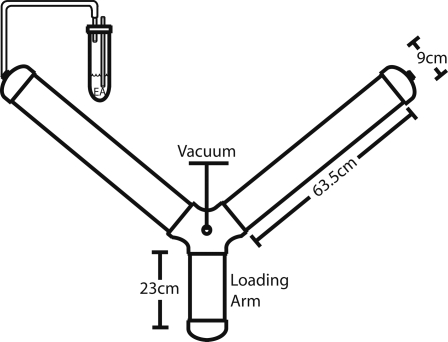
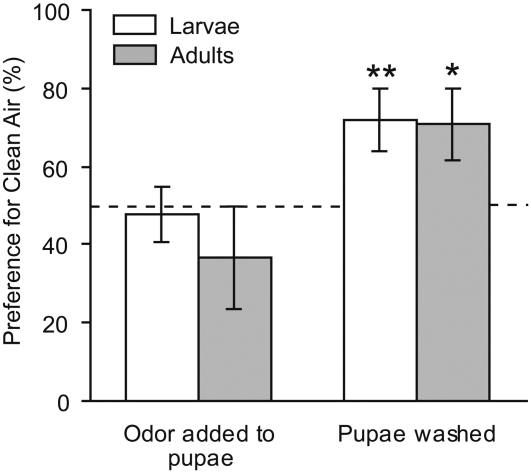
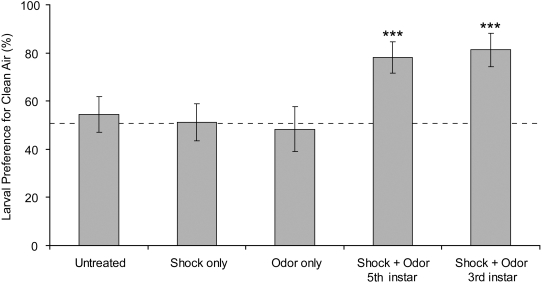
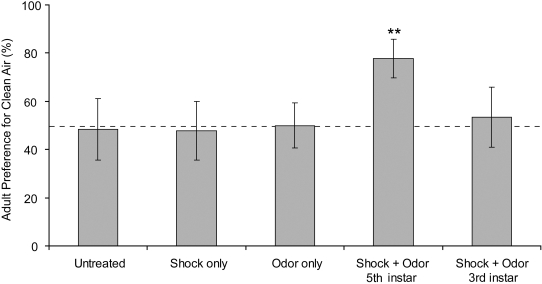
Insects that undergo complete metamorphosis experience enormous changes in both morphology and lifestyle. The current study examines whether larval experience can persist through pupation into adulthood in Lepidoptera, and assesses two possible mechanisms that could underlie such behavior: exposure of emerging adults to chemicals from the larval environment, or associative learning transferred to adulthood via maintenance of intact synaptic connections. Fifth instar Manduca sexta caterpillars received an electrical shock associatively paired with a specific odor in order to create a conditioned odor aversion, and were assayed for learning in a Y choice apparatus as larvae and again as adult moths. We show that larvae learned to avoid the training odor, and that this aversion was still present in the adults. The adult aversion did not result from carryover of chemicals from the larval environment, as neither applying odorants to naïve pupae nor washing the pupae of trained caterpillars resulted in a change in behavior. In addition, we report that larvae trained at third instar still showed odor aversion after two molts, as fifth instars, but did not avoid the odor as adults, consistent with the idea that post-metamorphic recall involves regions of the brain that are not produced until later in larval development. The present study, the first to demonstrate conclusively that associative memory survives metamorphosis in Lepidoptera, provokes intriguing new questions about the organization and persistence of the central nervous system during metamorphosis. Our results have both ecological and evolutionary implications, as retention of memory through metamorphosis could influence host choice by polyphagous insects, shape habitat selection, and lead to eventual sympatric speciation.
经历完全变态的昆虫在形态和生活方式上都会发生巨大变化。本研究探讨了鳞翅目昆虫幼虫的经历是否能在化蛹后持续到成虫期,并评估了可能导致这种行为的两种机制:成虫接触幼虫环境中的化学物质,或通过完整突触连接的维持将联想学习传递到成虫期。五龄烟草天蛾幼虫接受与特定气味相关联的电击,以形成条件性气味厌恶,并在Y型选择装置中作为幼虫和成年蛾再次进行学习测试。我们发现幼虫学会了避开训练气味,并且这种厌恶在成虫中仍然存在。成虫的厌恶并非源于幼虫环境中化学物质的残留,因为对未接触过气味的蛹施加气味剂,或清洗受过训练的幼虫的蛹,都不会导致行为改变。此外,我们报告说,在三龄时接受训练的幼虫在两次蜕皮后作为五龄幼虫时仍表现出气味厌恶,但作为成虫时并不避开该气味,这与变态后记忆涉及直到幼虫发育后期才产生的大脑区域的观点一致。本研究首次确凿地证明了联想记忆在鳞翅目昆虫变态过程中得以保留,引发了关于变态过程中中枢神经系统的组织和持续性的有趣新问题。我们的研究结果具有生态和进化意义,因为通过变态保留记忆可能会影响多食性昆虫的宿主选择、塑造栖息地选择,并最终导致同域物种形成。