Beach Thomas G, Sue Lucia I, Walker Douglas G, Roher Alex E, Lue LihFen, Vedders Linda, Connor Donald J, Sabbagh Marwan N, Rogers Joseph
Sun Health Research Institute, Sun City, 85351, USA.
Cell Tissue Bank. 2008 Sep;9(3):229-45. doi: 10.1007/s10561-008-9067-2. Epub 2008 Mar 18.
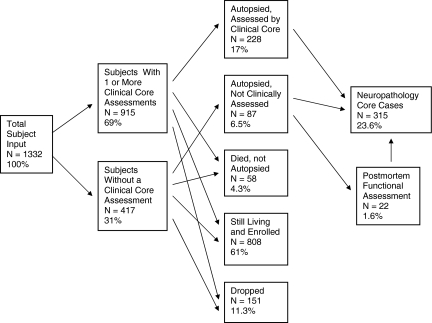
The Brain Donation Program at Sun Health Research Institute has been in continual operation since 1987, with over 1000 brains banked. The population studied primarily resides in the retirement communities of northwest metropolitan Phoenix, Arizona. The Institute is affiliated with Sun Health, a nonprofit community-owned and operated health care provider. Subjects are enrolled prospectively to allow standardized clinical assessments during life. Funding comes primarily from competitive grants. The Program has made short postmortem brain retrieval a priority, with a 2.75-h median postmortem interval for the entire collection. This maximizes the utility of the resource for molecular studies; frozen tissue from approximately 82% of all cases is suitable for RNA studies. Studies performed in-house have shown that, even with very short postmortem intervals, increasing delays in brain retrieval adversely affect RNA integrity and that cerebrospinal fluid pH increases with postmortem interval but does not predict tissue viability.
太阳健康研究所的脑捐赠项目自1987年以来一直在持续运作,已储存了1000多个大脑。所研究的人群主要居住在亚利桑那州凤凰城西北大都市的退休社区。该研究所隶属于太阳健康公司,这是一家非营利性社区所有并运营的医疗保健机构。受试者通过前瞻性招募,以便在生前进行标准化临床评估。资金主要来自竞争性拨款。该项目将死后短时间内获取大脑作为优先事项,整个收集过程的死后间隔中位数为2.75小时。这最大限度地提高了该资源用于分子研究的效用;约82%的所有病例的冷冻组织适合进行RNA研究。内部研究表明,即使死后间隔非常短,大脑获取延迟的增加也会对RNA完整性产生不利影响,并且脑脊液pH值会随着死后间隔而升高,但无法预测组织活力。