Mank Judith E, Hultin-Rosenberg Lina, Webster Matthew T, Ellegren Hans
Department of Evolutionary Biology, Evolutionary Biology Centre, Uppsala University, Norbyvägen 18D, SE 752 36 Uppsala, Sweden.
BMC Genomics. 2008 Mar 31;9:148. doi: 10.1186/1471-2164-9-148.
In order to develop a framework for the analysis of sex-biased genes, we present a characterization of microarray data comparing male and female gene expression in 18 day chicken embryos for brain, gonad, and heart tissue.
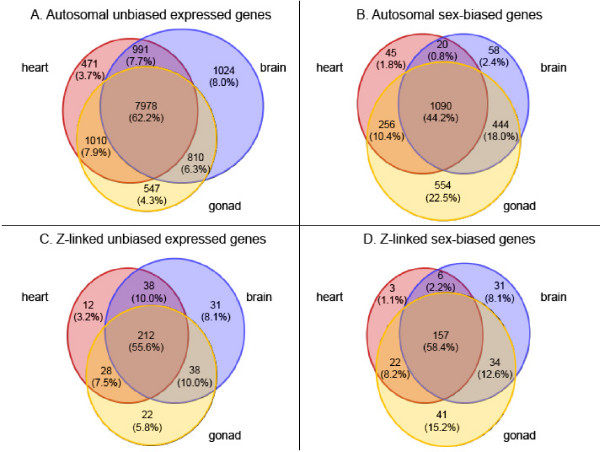
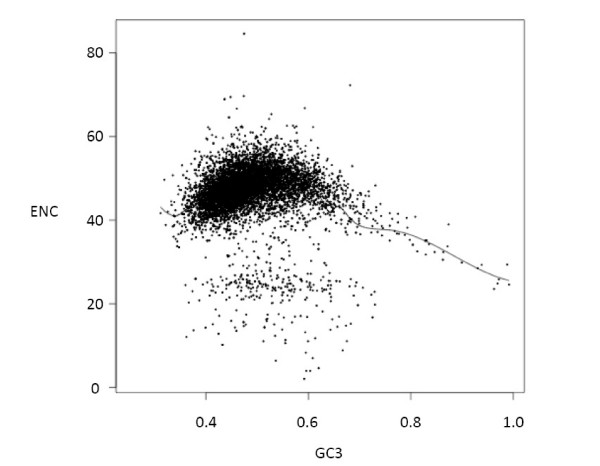
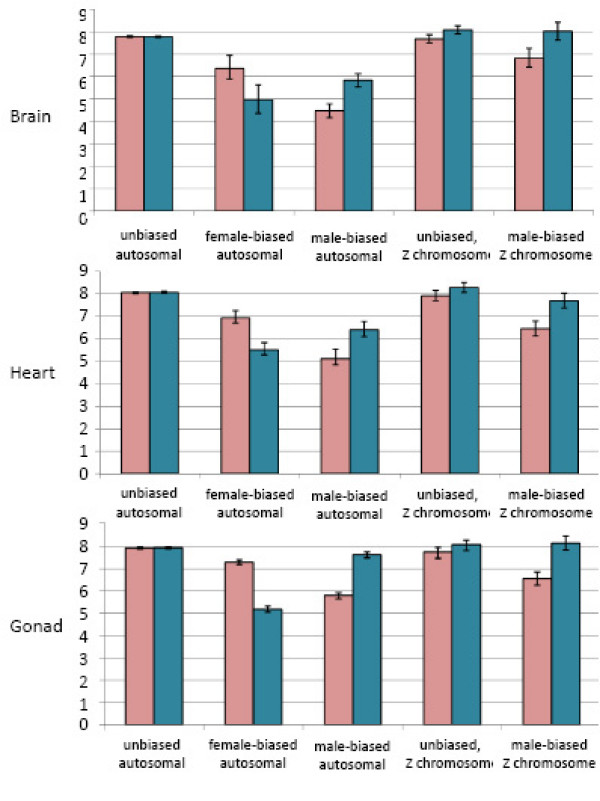
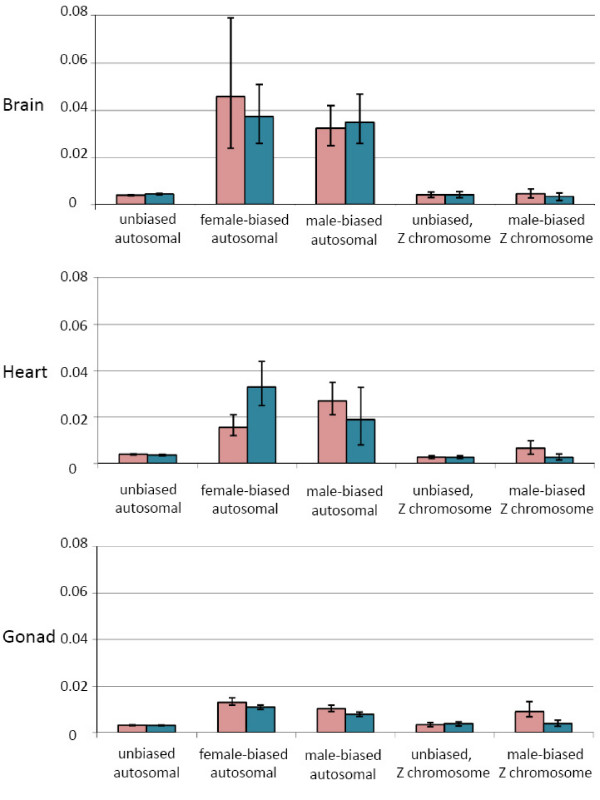
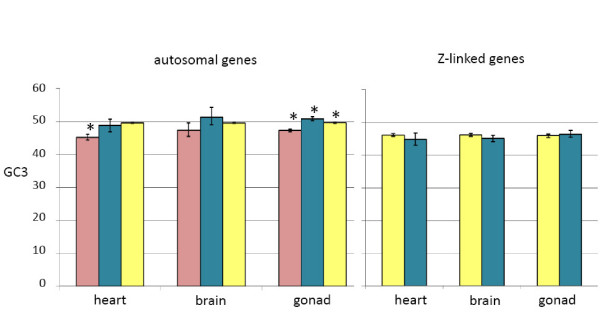
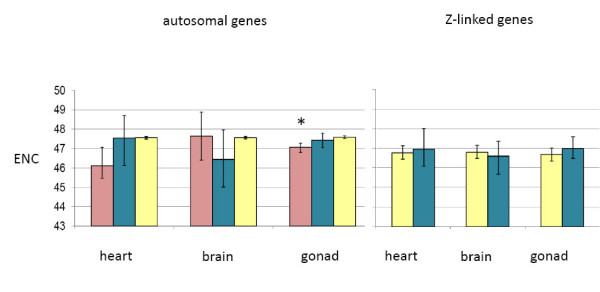
From the 15982 significantly expressed coding regions that have been assigned to either the autosomes or the Z chromosome (12979 in brain, 13301 in gonad, and 12372 in heart), roughly 18% were significantly sex-biased in any one tissue, though only 4 gene targets were biased in all tissues. The gonad was the most sex-biased tissue, followed by the brain. Sex-biased autosomal genes tended to be expressed at lower levels and in fewer tissues than unbiased gene targets, and autosomal somatic sex-biased genes had more expression noise than similar unbiased genes. Sex-biased genes linked to the Z-chromosome showed reduced expression in females, but not in males, when compared to unbiased Z-linked genes, and sex-biased Z-linked genes were also expressed in fewer tissues than unbiased Z coding regions. Third position GC content, and codon usage bias showed some sex-biased effects, primarily for autosomal genes expressed in the gonad. Finally, there were several over-represented Gene Ontology terms in the sex-biased gene sets.
On the whole, this analysis suggests that sex-biased genes have unique genomic and organismal properties that delineate them from genes that are expressed equally in males and females.
为了建立一个分析性别偏向基因的框架,我们对18日龄鸡胚胎的脑、性腺和心脏组织中雄性和雌性基因表达的微阵列数据进行了表征。
在已分配到常染色体或Z染色体的15982个显著表达的编码区域中(脑中有12979个,性腺中有13301个,心脏中有12372个),在任何一个组织中约18%的基因存在显著的性别偏向,不过在所有组织中只有4个基因靶点存在偏向。性腺是性别偏向最明显的组织,其次是脑。与无偏向的基因靶点相比,性别偏向的常染色体基因往往表达水平较低且在较少的组织中表达,并且常染色体体细胞性别偏向基因比类似的无偏向基因有更多的表达噪声。与无偏向的Z连锁基因相比,与Z染色体连锁的性别偏向基因在雌性中表达降低,但在雄性中没有,并且性别偏向的Z连锁基因也比无偏向的Z编码区域在更少的组织中表达。第三位GC含量和密码子使用偏好显示出一些性别偏向效应,主要针对性腺中表达的常染色体基因。最后,在性别偏向基因集中有几个过度富集的基因本体术语。
总体而言,该分析表明性别偏向基因具有独特的基因组和生物体特性,使其与在雄性和雌性中均同等表达的基因区分开来。