Sakakibara Shin-ichi, Nakadate Kazuhiko, Ookawara Shigeo, Ueda Shuichi
Department of Histology and Neurobiology, Dokkyo Medical University School of Medicine, Tochigi, Japan.
BMC Neurosci. 2008 Apr 5;9:35. doi: 10.1186/1471-2202-9-35.
The zitter (zi/zi) rat, a loss-of-function mutant of the glycosylated transmembrane protein attractin (atrn), exhibits widespread age-dependent spongiform degeneration, hypomyelination, and abnormal metabolism of reactive oxygen species (ROS) in the brain. To date, the mechanisms underlying these phenotypes have remained unclear.
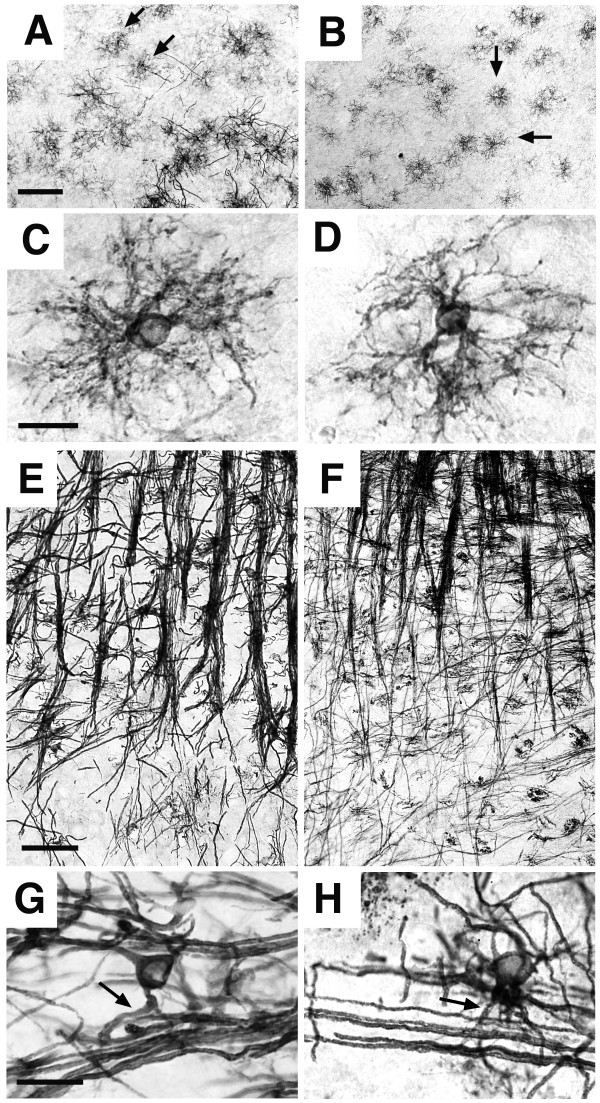
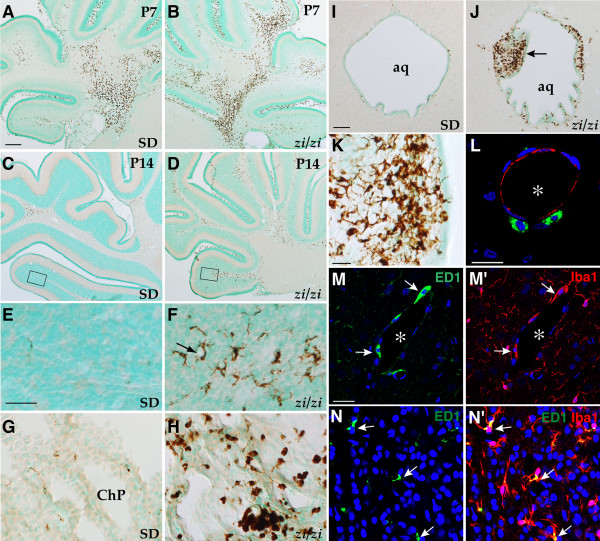
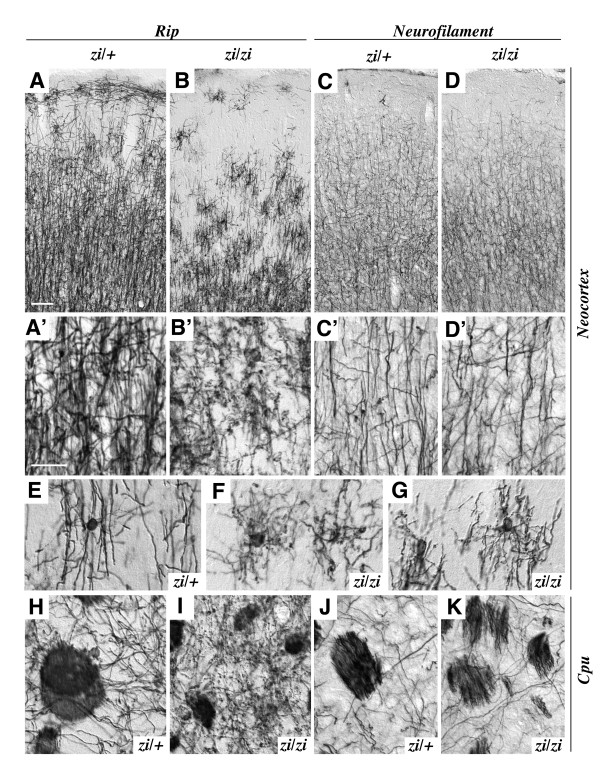
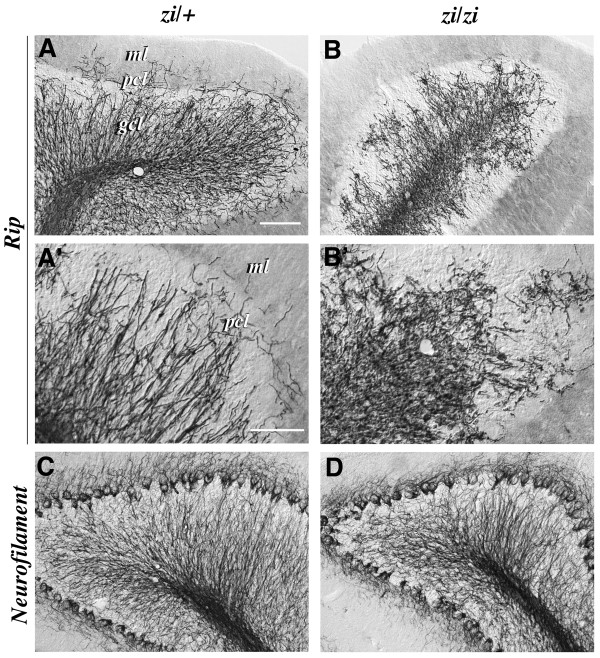
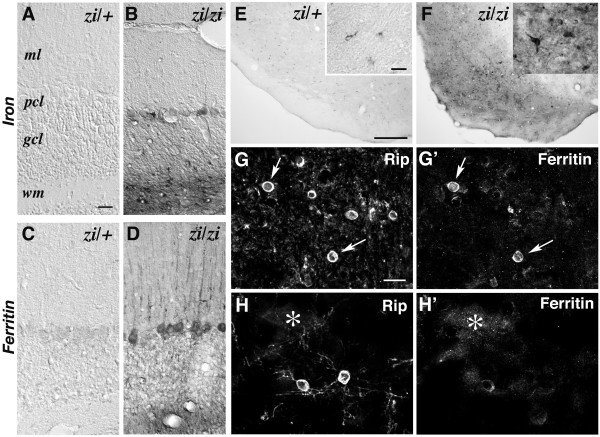
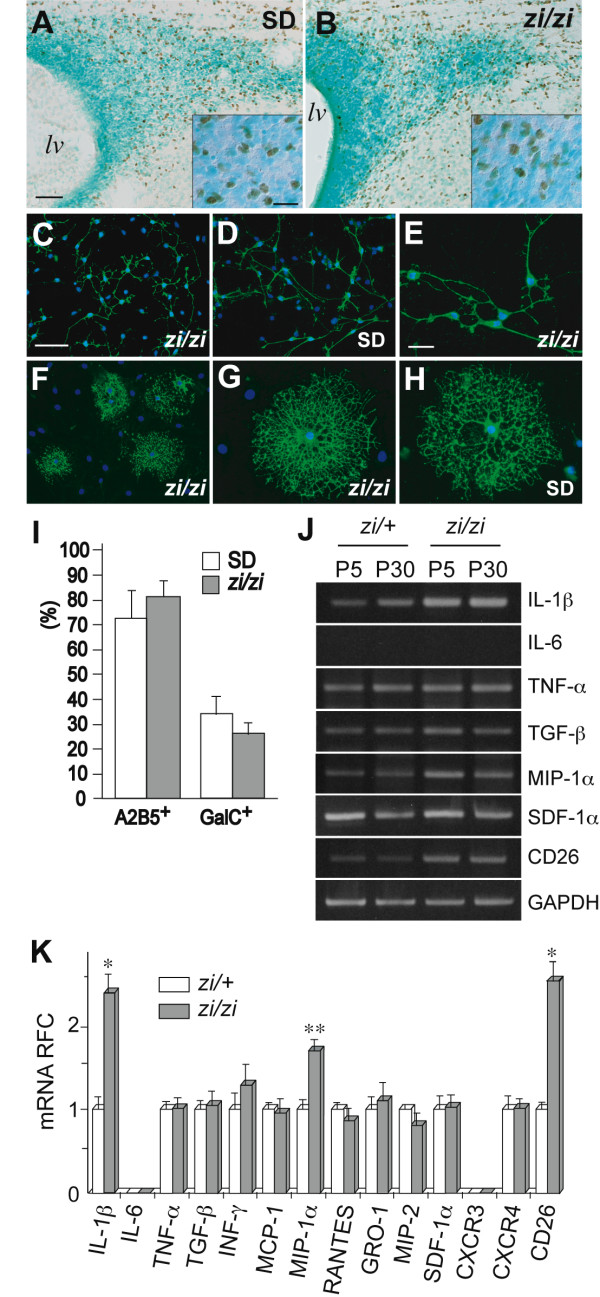
Here, we show differentiation defects in zi/zi oligodendrocytes, accompanied by aberrant extension of cell-processes and hypomyelination. Axonal bundles were relatively preserved during postnatal development. With increasing in age, the injured oligodendrocytes in zi/zi rats become pathological, as evidenced by the accumulation of iron in their cell bodies. Immunohistochemical analysis revealed that atrn expression was absent from an oligodendrocyte lineage, including A2B5-positive progenitors and CNPase-positive differentiated cells. The number and distribution of Olig2-positive oligodendrocyte progenitors was unchanged in the zi/zi brain. Furthermore, an in vitro differentiation assay of cultured oligodendrocyte progenitors prepared from zi/zi brains revealed their normal competence for proliferation and differentiation into mature oligodendrocytes. Interestingly, we demonstrated the accelerated recruitment of ED1-positive macrophages/microglia to the developing zi/zi brain parenchyma prior to the onset of hypomyelination. Semiquantitative RT-PCR analysis revealed a significant up-regulation of CD26 and IL1-beta in the zi/zi brain during this early postnatal stage.
We demonstrated that the onset of the impairment of oligodendrocyte differentiation occurs in a non-cell autonomous manner in zi/zi rats. Hypomyelination of oligodendrocytes was not due to a failure of the intrinsic program of oligodendrocytes, but rather, was caused by extrinsic factors that interrupt oligodendrocyte development. It is likely that macrophage/microglial activation in the zi/zi CNS leads to disturbances in oligodendrocyte differentiation via deleterious extrinsic factors, such as the cytokine IL1-beta or ROS. Atrn might be involved in the activation of brain macrophages/microglia by suppressing excessive migration of monocytes into the CNS, or by accelerating the transformation of brain monocytes into resting microglia. Understanding the pathogenesis of the zi/zi rat may provide novel insights into the developmental interaction betweens macrophages/microglia and cells of an oligodendrocyte lineage.
颤抖(zi/zi)大鼠是糖基化跨膜蛋白吸引素(atrn)的功能缺失突变体,表现出广泛的年龄依赖性海绵状变性、髓鞘形成减少以及大脑中活性氧(ROS)代谢异常。迄今为止,这些表型背后的机制仍不清楚。
在这里,我们展示了zi/zi少突胶质细胞的分化缺陷,伴有细胞突起的异常延伸和髓鞘形成减少。轴突束在出生后发育过程中相对保留。随着年龄的增长,zi/zi大鼠中受损的少突胶质细胞变得病理性,其细胞体内铁的积累证明了这一点。免疫组织化学分析显示,少突胶质细胞谱系,包括A2B5阳性祖细胞和CNPase阳性分化细胞中不存在atrn表达。zi/zi大脑中Olig2阳性少突胶质细胞祖细胞的数量和分布没有变化。此外,对从zi/zi大脑制备的培养少突胶质细胞祖细胞进行的体外分化试验表明,它们具有正常的增殖能力和分化为成熟少突胶质细胞的能力。有趣的是,我们证明在髓鞘形成减少开始之前,ED1阳性巨噬细胞/小胶质细胞加速募集到发育中的zi/zi脑实质。半定量RT-PCR分析显示,在出生后早期阶段,zi/zi大脑中CD26和IL1-β显著上调。
我们证明,zi/zi大鼠少突胶质细胞分化受损的起始以非细胞自主方式发生。少突胶质细胞的髓鞘形成减少不是由于少突胶质细胞内在程序的失败,而是由中断少突胶质细胞发育的外在因素引起的。很可能zi/zi中枢神经系统中的巨噬细胞/小胶质细胞激活通过细胞因子IL1-β或ROS等有害外在因素导致少突胶质细胞分化紊乱。Atrn可能通过抑制单核细胞过度迁移到中枢神经系统或加速脑单核细胞转化为静止小胶质细胞而参与脑巨噬细胞/小胶质细胞的激活。了解zi/zi大鼠的发病机制可能为巨噬细胞/小胶质细胞与少突胶质细胞谱系细胞之间的发育相互作用提供新的见解。