Interdisciplinary Neuroscience Program, University of Missouri-Columbia, Columbia, Missouri, USA.
Purinergic Signal. 2005 Dec;1(4):337-47. doi: 10.1007/s11302-005-7145-5. Epub 2005 Dec 3.
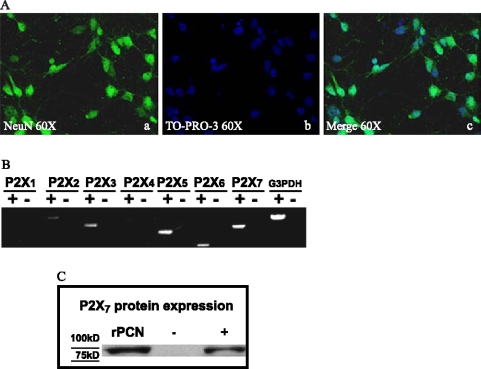
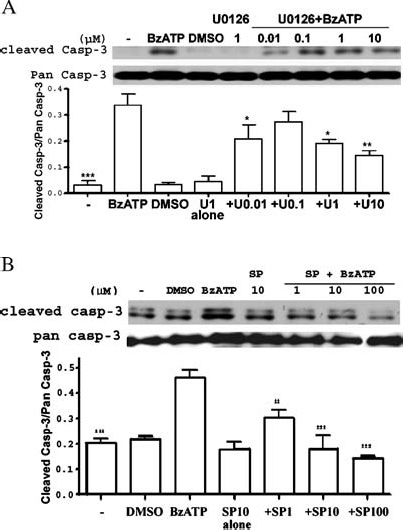
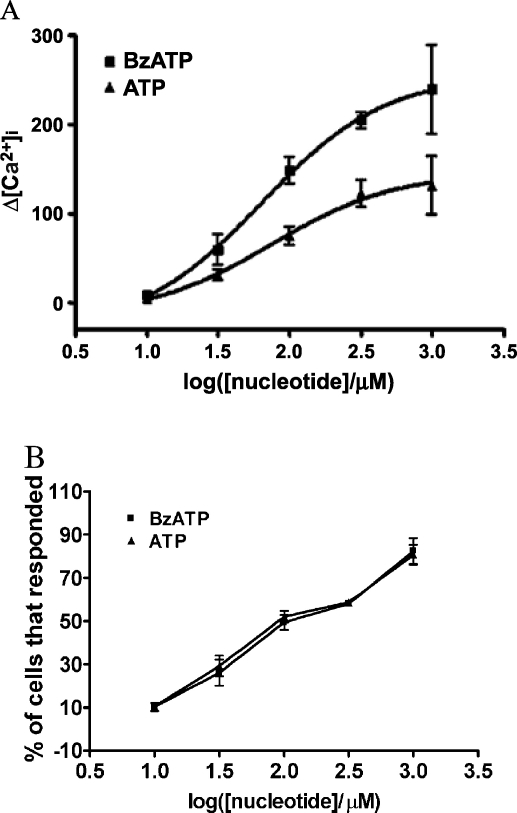
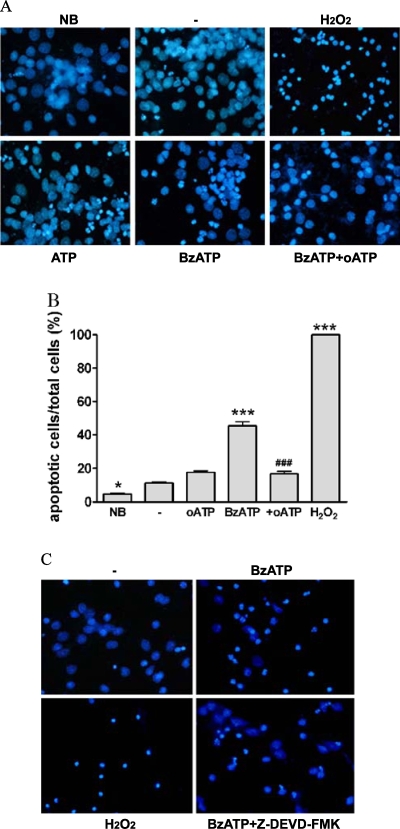
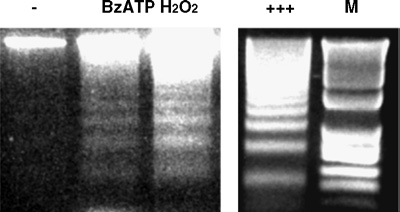
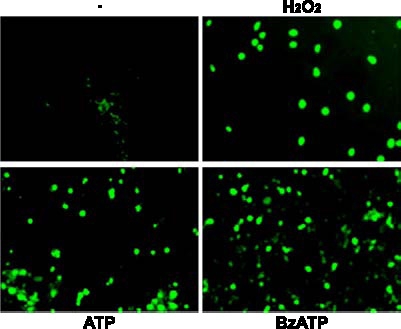
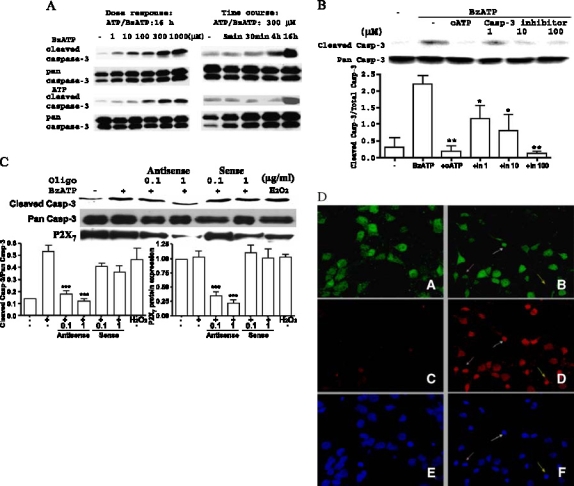
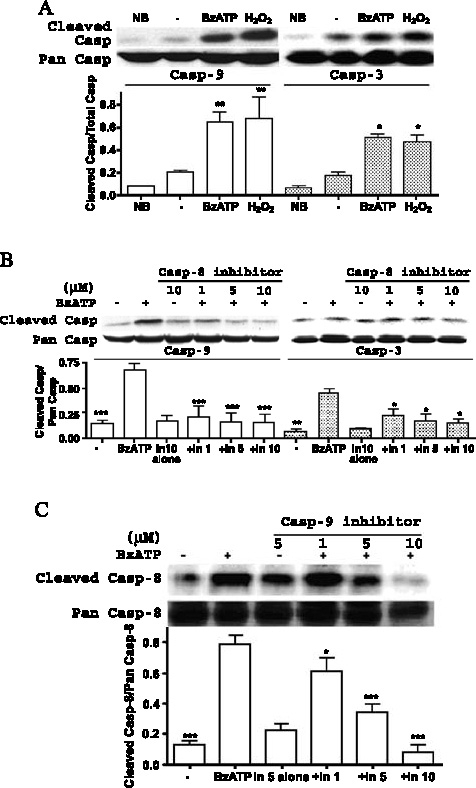
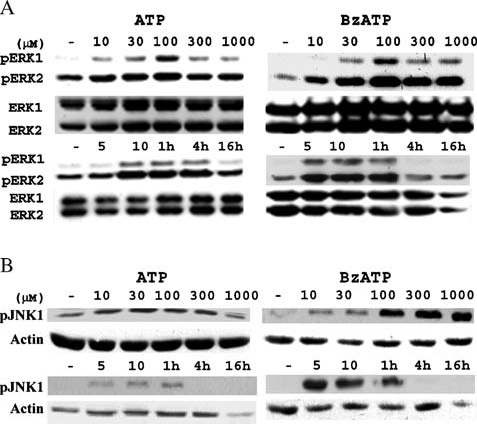
Apoptosis is a major cause of cell death in the nervous system. It plays a role in embryonic and early postnatal brain development and contributes to the pathology of neurodegenerative diseases. Here, we report that activation of the P2X(7) nucleotide receptor (P2X(7)R) in rat primary cortical neurons (rPCNs) causes biochemical (i.e., caspase activation) and morphological (i.e., nuclear condensation and DNA fragmentation) changes characteristic of apoptotic cell death. Caspase-3 activation and DNA fragmentation in rPCNs induced by the P2X(7)R agonist BzATP were inhibited by the P2X(7)R antagonist oxidized ATP (oATP) or by pre-treatment of cells with P2X(7)R antisense oligonucleotide indicating a direct involvement of the P2X(7)R in nucleotide-induced neuronal cell death. Moreover, Z-DEVD-FMK, a specific and irreversible cell permeable inhibitor of caspase-3, prevented BzATP-induced apoptosis in rPCNs. In addition, a specific caspase-8 inhibitor, Ac-IETD-CHO, significantly attenuated BzATP-induced caspase-9 and caspase-3 activation, suggesting that P2X(7)R-mediated apoptosis in rPCNs occurs primarily through an intrinsic caspase-8/9/3 activation pathway. BzATP also induced the activation of C-jun N-terminal kinase 1 (JNK1) and extracellular signal-regulated kinases (ERK1/2) in rPCNs, and pharmacological inhibition of either JNK1 or ERK1/2 significantly reduced caspase activation by BzATP. Taken together, these data indicate that extracellular nucleotides mediate neuronal apoptosis through activation of P2X(7)Rs and their downstream signaling pathways involving JNK1, ERK and caspases 8/9/3.
细胞凋亡是神经系统中细胞死亡的主要原因。它在胚胎和出生后早期大脑发育中起作用,并导致神经退行性疾病的病理学变化。在这里,我们报告说,在大鼠原代皮质神经元(rPCNs)中激活嘌呤能 P2X(7)受体(P2X(7)R)会引起生化变化(即 caspase 激活)和形态变化(即核浓缩和 DNA 片段化),这些变化是典型的凋亡细胞死亡特征。P2X(7)R 激动剂 BzATP 诱导的 rPCNs 中的 caspase-3 激活和 DNA 片段化被 P2X(7)R 拮抗剂氧化型 ATP(oATP)或细胞预先用 P2X(7)R 反义寡核苷酸处理所抑制,这表明 P2X(7)R 直接参与了核苷酸诱导的神经元细胞死亡。此外,特异性和不可逆的 caspase-3 细胞通透性抑制剂 Z-DEVD-FMK 可防止 BzATP 诱导的 rPCNs 凋亡。此外,特异性 caspase-8 抑制剂 Ac-IETD-CHO 显著减弱了 BzATP 诱导的 caspase-9 和 caspase-3 激活,表明 rPCNs 中 P2X(7)R 介导的凋亡主要通过内在的 caspase-8/9/3 激活途径发生。BzATP 还诱导 rPCNs 中 c-Jun N 末端激酶 1(JNK1)和细胞外信号调节激酶(ERK1/2)的激活,并且 JNK1 或 ERK1/2 的药理学抑制均可显著降低 BzATP 引起的 caspase 激活。综上所述,这些数据表明,细胞外核苷酸通过激活 P2X(7)Rs 及其下游信号通路(涉及 JNK1、ERK 和 caspase 8/9/3)介导神经元凋亡。