Ramachandra Raghuveer K, Salem Mohamed, Gahr Scott, Rexroad Caird E, Yao Jianbo
Laboratory of Animal Biotechnology and Genomics, Division of Animal and Nutritional Sciences, West Virginia University, Morgantown, WV 26506, USA.
BMC Dev Biol. 2008 Apr 15;8:41. doi: 10.1186/1471-213X-8-41.
Current literature and our previous results on expression patterns of oocyte-specific genes and transcription factors suggest a global but highly regulated maternal mRNA degradation at the time of embryonic genome activation (EGA). MicroRNAs (miRNAs) are small, non-coding regulatory RNAs (19-23 nucleotides) that regulate gene expression by guiding target mRNA cleavage or translational inhibition. These regulatory RNAs are potentially involved in the degradation of maternally inherited mRNAs during early embryogenesis.
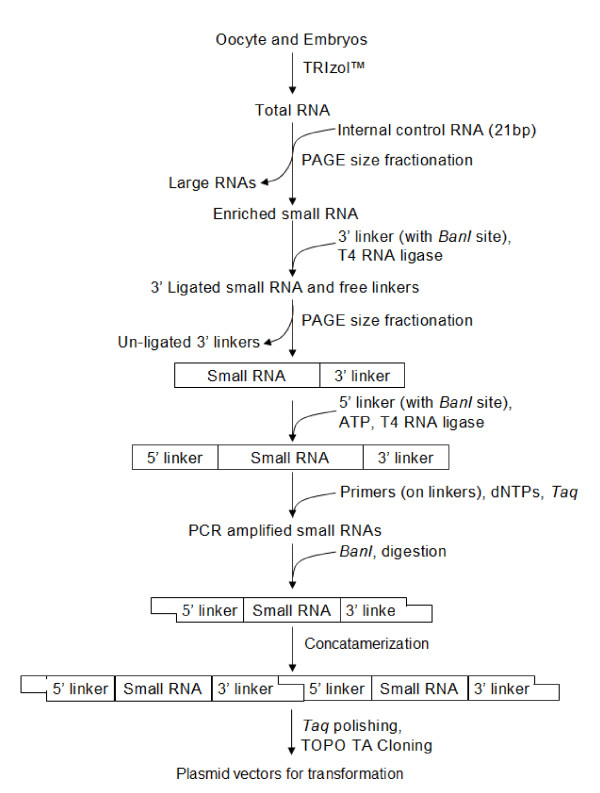
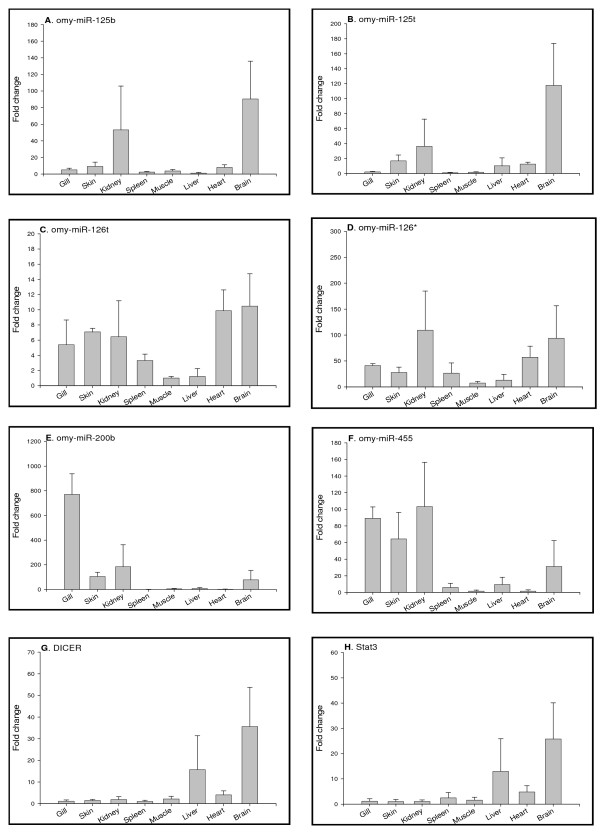
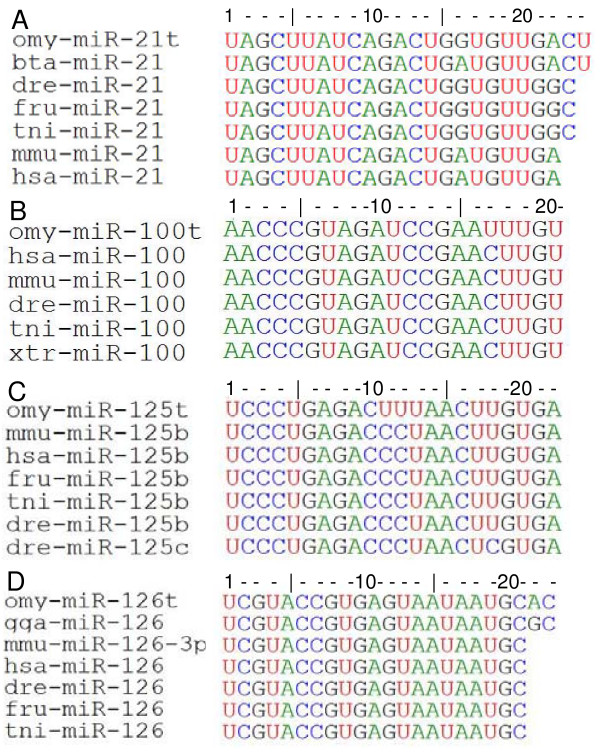
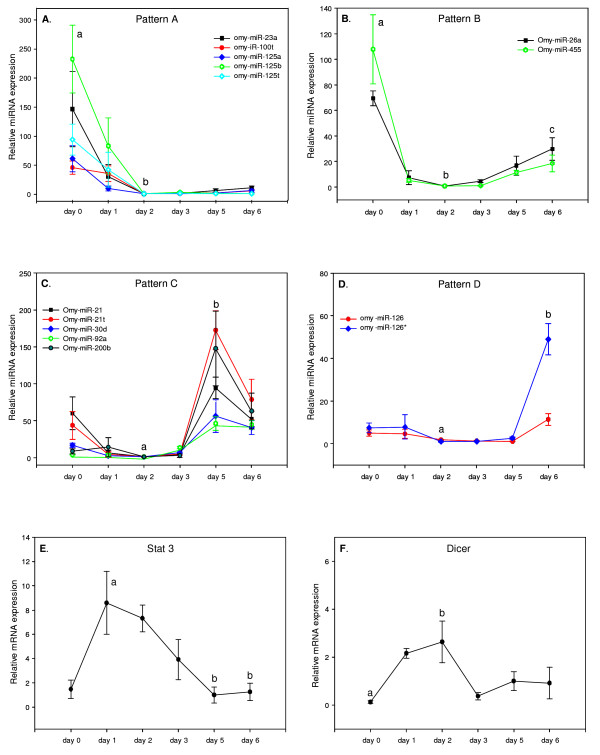
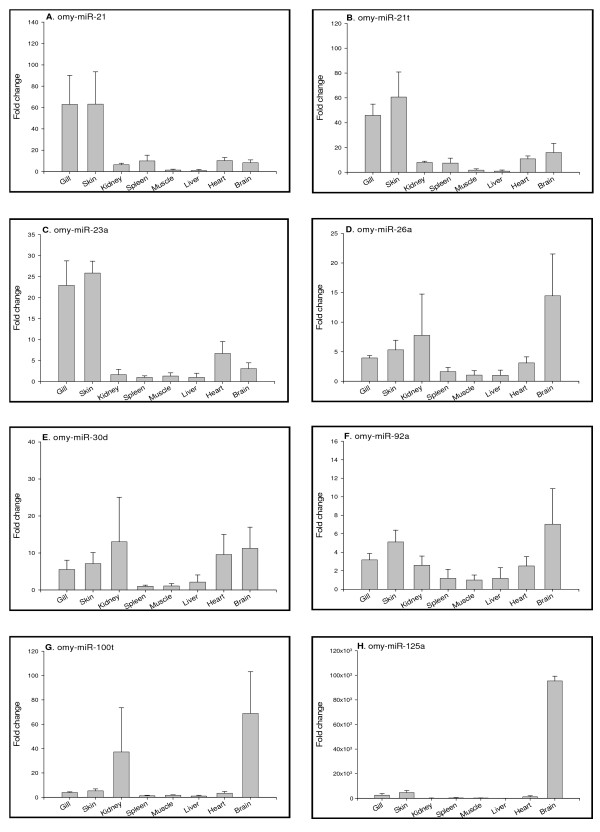
To identify miRNAs that might be important for early embryogenesis in rainbow trout, we constructed a miRNA library from a pool of unfertilized eggs and early stage embryos. Sequence analysis of random clones from the library identified 14 miRNAs, 4 of which are novel to rainbow trout. Real-time PCR was used to measure the expression of all cloned miRNAs during embryonic development. Four distinct expression patterns were observed and some miRNAs showed up-regulated expression during EGA. Analysis of tissue distribution of these miRNAs showed that some are present ubiquitously, while others are differentially expressed among different tissues. We also analyzed the expression patterns of Dicer, the enzyme required for the processing of miRNAs and Stat3, a transcription factor involved in activating the transcription of miR-21. Dicer is abundantly expressed during EGA and Stat3 is up-regulated before the onset of EGA.
This study led to the discovery of 14 rainbow trout miRNAs. Our data support the notion that Dicer processes miRNAs and Stat3 induces expression of miR-21 and possibly other miRNAs during EGA. These miRNAs in turn guide maternal mRNAs for degradation, which is required for normal embryonic development.
当前的文献以及我们之前关于卵母细胞特异性基因和转录因子表达模式的研究结果表明,在胚胎基因组激活(EGA)时,母体mRNA会发生全面但高度调控的降解。微小RNA(miRNA)是小的非编码调节RNA(19 - 23个核苷酸),通过引导靶mRNA切割或翻译抑制来调节基因表达。这些调节性RNA可能参与早期胚胎发育过程中母体遗传mRNA的降解。
为了鉴定可能对虹鳟早期胚胎发育重要的miRNA,我们从未受精卵和早期胚胎池中构建了一个miRNA文库。对文库中随机克隆的序列分析鉴定出14种miRNA,其中4种是虹鳟新发现的。实时PCR用于测量所有克隆的miRNA在胚胎发育过程中的表达。观察到四种不同的表达模式,一些miRNA在EGA期间表达上调。对这些miRNA的组织分布分析表明,一些miRNA普遍存在,而另一些在不同组织中差异表达。我们还分析了Dicer(miRNA加工所需的酶)和Stat3(参与激活miR - 21转录的转录因子)的表达模式。Dicer在EGA期间大量表达,Stat3在EGA开始前上调。
本研究发现了14种虹鳟miRNA。我们的数据支持这样的观点,即Dicer加工miRNA,Stat3在EGA期间诱导miR - 21以及可能其他miRNA的表达。这些miRNA反过来引导母体mRNA降解,这是正常胚胎发育所必需的。