Satish Latha, LaFramboise William A, O'Gorman David B, Johnson Sandra, Janto Benjamin, Gan Bing Siang, Baratz Mark E, Hu Fen Z, Post J Christopher, Ehrlich Garth D, Kathju Sandeep
Center for Genomic Sciences, Allegheny-Singer Research Institute, Allegheny General Hospital, Pittsburgh, PA, USA.
BMC Med Genomics. 2008 Apr 23;1:10. doi: 10.1186/1755-8794-1-10.
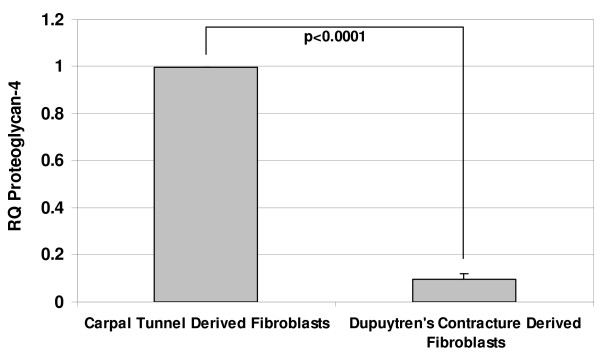
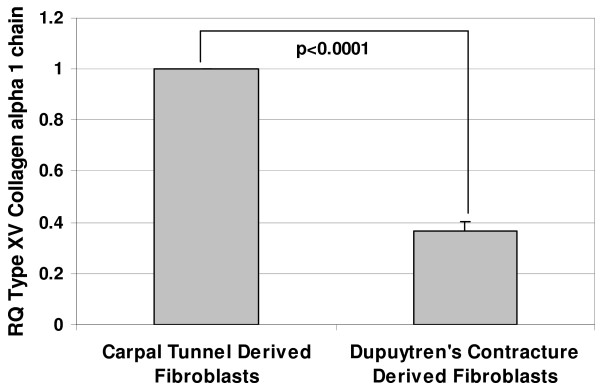
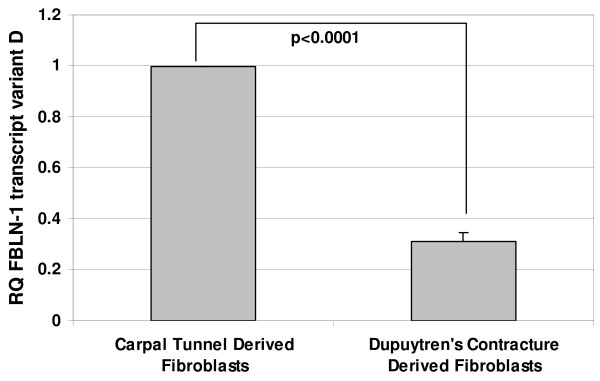
Dupuytren's contracture (DC) is the most common inherited connective tissue disease of humans and is hypothesized to be associated with aberrant wound healing of the palmar fascia. Fibroblasts and myofibroblasts are believed to play an important role in the genesis of DC and the fibroproliferation and contraction that are hallmarks of this disease. This study compares the gene expression profiles of fibroblasts isolated from DC patients and controls in an attempt to identify key genes whose regulation might be significantly altered in fibroblasts found within the palmar fascia of Dupuytren's patients. Total RNA isolated from diseased palmar fascia (DC) and normal palmar fascia (obtained during carpal tunnel release; 6 samples per group) was subjected to quantitative analyses using two different microarray platforms (GE Code Linktrade mark and Illuminatrade mark) to identify and validate differentially expressed genes. The data obtained was analyzed using The Significance Analysis of Microarrays (SAM) software through which we identified 69 and 40 differentially regulated gene transcripts using the CodeLinktrade mark and Illuminatrade mark platforms, respectively. The CodeLinktrade mark platform identified 18 upregulated and 51 downregulated genes. Using the Illuminatrade mark platform, 40 genes were identified as downregulated, eleven of which were identified by both platforms. Quantitative RT-PCR confirmed the downregulation of three high-interest candidate genes which are all components of the extracellular matrix: proteoglycan 4 (PRG4), fibulin-1 (FBLN-1) transcript variant D, and type XV collagen alpha 1 chain. Overall, our study has identified a variety of candidate genes that may be involved in the pathophysiology of Dupuytren's contracture and may ultimately serve as attractive molecular targets for alternative therapies.
掌腱膜挛缩症(DC)是人类最常见的遗传性结缔组织疾病,据推测与掌腱膜异常伤口愈合有关。成纤维细胞和平滑肌肌动蛋白阳性成纤维细胞被认为在DC的发生以及该疾病的标志性纤维增殖和收缩过程中起重要作用。本研究比较了从DC患者和对照组分离出的成纤维细胞的基因表达谱,试图确定在掌腱膜挛缩症患者掌腱膜内发现的成纤维细胞中其调控可能发生显著改变的关键基因。从患病掌腱膜(DC)和正常掌腱膜(在腕管松解术中获取;每组6个样本)中分离出的总RNA,使用两种不同的微阵列平台(GE Code Link商标和Illumina商标)进行定量分析,以鉴定和验证差异表达基因。使用微阵列显著性分析(SAM)软件对获得的数据进行分析,通过该软件我们分别使用CodeLink商标和Illumina商标平台鉴定出69个和40个差异调节的基因转录本。CodeLink商标平台鉴定出18个上调基因和51个下调基因。使用Illumina商标平台,40个基因被鉴定为下调,其中11个基因在两个平台上均被鉴定出。定量逆转录聚合酶链反应(RT-PCR)证实了三个高关注度候选基因的下调,这三个基因均为细胞外基质的组成成分:蛋白聚糖4(PRG4)、纤连蛋白-1(FBLN-1)转录变体D和XV型胶原α1链。总体而言,我们的研究鉴定出了多种可能参与掌腱膜挛缩症病理生理学过程的候选基因,这些基因最终可能成为替代疗法有吸引力的分子靶点。