Wolfe A, Divall S, Singh S P, Nikrodhanond A A, Baria A T, Le W W, Hoffman G E, Radovick S
Department of Pediatrics, Johns Hopkins School of Medicine, Baltimore, MD 21287, USA.
J Neuroendocrinol. 2008 Jul;20(7):909-16. doi: 10.1111/j.1365-2826.2008.01746.x. Epub 2008 Apr 28.
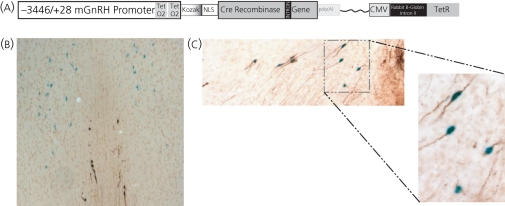
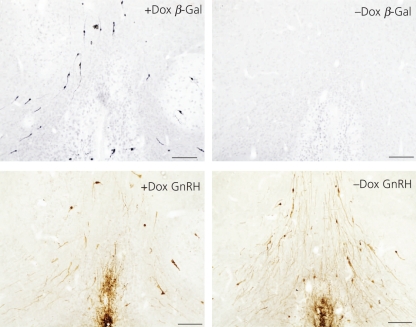
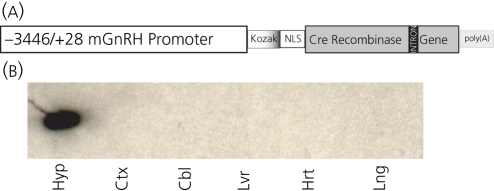
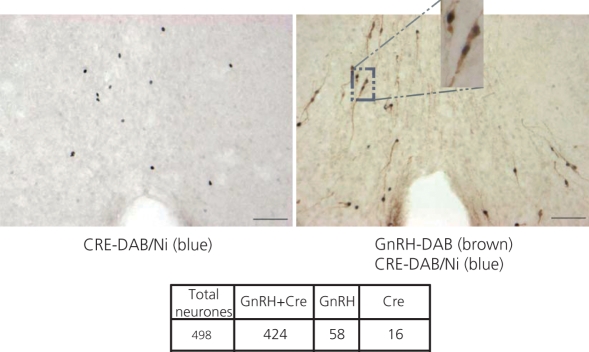
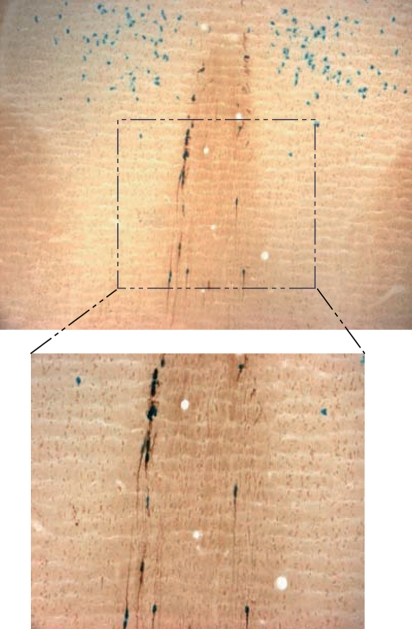
Gonadotrophin-releasing hormone (GnRH) neurones located within the brain are the final neuroendocrine output regulating the reproductive hormone axis. Their small number and scattered distribution in the hypothalamus make them particularly difficult to study in vivo. The Cre/loxP system is a valuable tool to delete genes in specific cells and tissues. We report the production of two mouse lines that express the CRE bacteriophage recombinase in a GnRH-specific manner. The first line, the GnRH-CRE mouse, contains a transgene in which CRE is under the control of the murine GnRH promoter and targets CRE expression specifically to GnRH neurones in the hypothalamus. The second line, the GnRH-CRETeR mouse, uses the same murine GnRH promoter to target CRE expression to GnRH neurones, but is modified to be constitutively repressed by a tetracycline repressor (TetR) expressed from a downstream tetracycline repressor gene engineered within the transgene. GnRH neurone-specific CRE expression can therefore be induced by treatment with doxycycline which relieves repression by TetR. These GnRH-CRE and GnRH-CRETeR mice can be used to study the function of genes expressed specifically in GnRH neurones. The GnRH-CRETeR mouse can be used to study genes that may have distinct roles in reproductive physiology during the various developmental stages.
位于大脑内的促性腺激素释放激素(GnRH)神经元是调节生殖激素轴的最终神经内分泌输出。它们数量少且分散分布于下丘脑,这使得在体内研究它们特别困难。Cre/loxP系统是在特定细胞和组织中删除基因的宝贵工具。我们报告了两种以GnRH特异性方式表达CRE噬菌体重组酶的小鼠品系的产生。第一个品系,即GnRH-CRE小鼠,含有一个转基因,其中CRE受小鼠GnRH启动子的控制,并将CRE表达特异性靶向到下丘脑的GnRH神经元。第二个品系,即GnRH-CRETeR小鼠,使用相同的小鼠GnRH启动子将CRE表达靶向到GnRH神经元,但经过修饰,可被转基因内工程化的下游四环素阻遏物(TetR)基因表达的四环素阻遏物组成性抑制。因此,GnRH神经元特异性CRE表达可以通过强力霉素处理来诱导,强力霉素可解除TetR的抑制作用。这些GnRH-CRE和GnRH-CRETeR小鼠可用于研究在GnRH神经元中特异性表达基因的功能。GnRH-CRETeR小鼠可用于研究在不同发育阶段可能在生殖生理学中具有不同作用的基因。