Williams Bryony A P, Lee Renny C H, Becnel James J, Weiss Louis M, Fast Naomi M, Keeling Patrick J
Canadian Institute for Advanced Research, Department of Botany, University of British Columbia, 3529-6270 University Boulevard, Vancouver, BC, V6T 1Z4, Canada.
BMC Genomics. 2008 Apr 29;9:200. doi: 10.1186/1471-2164-9-200.
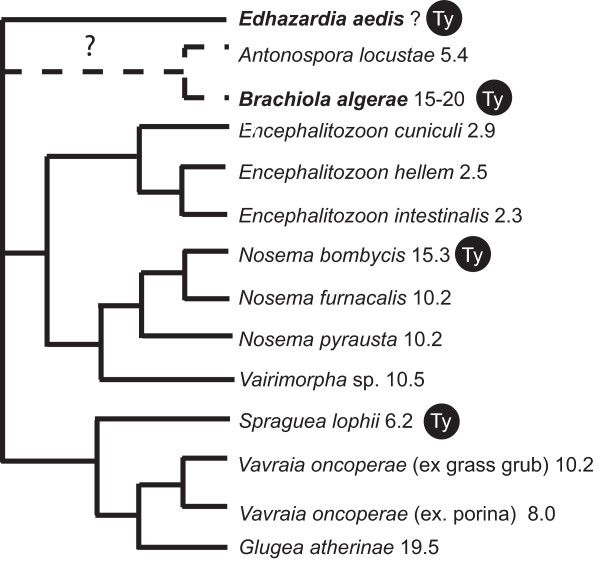
Microsporidia are well known models of extreme nuclear genome reduction and compaction. The smallest microsporidian genomes have received the most attention, but genomes of different species range in size from 2.3 Mb to 19.5 Mb and the nature of the larger genomes remains unknown.
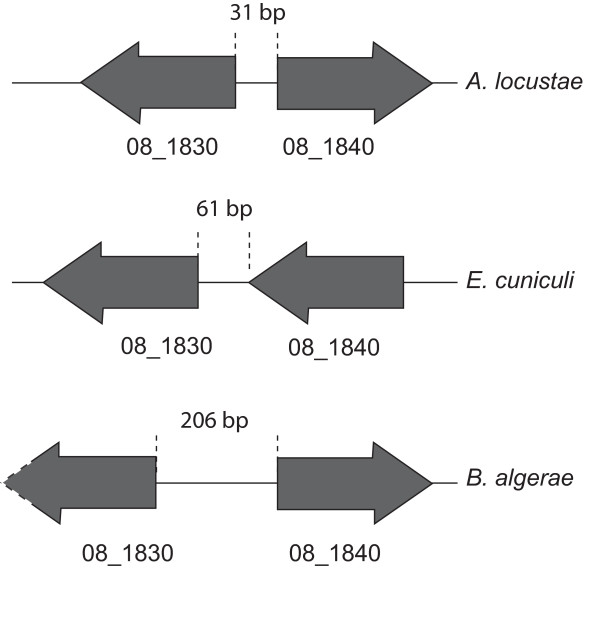
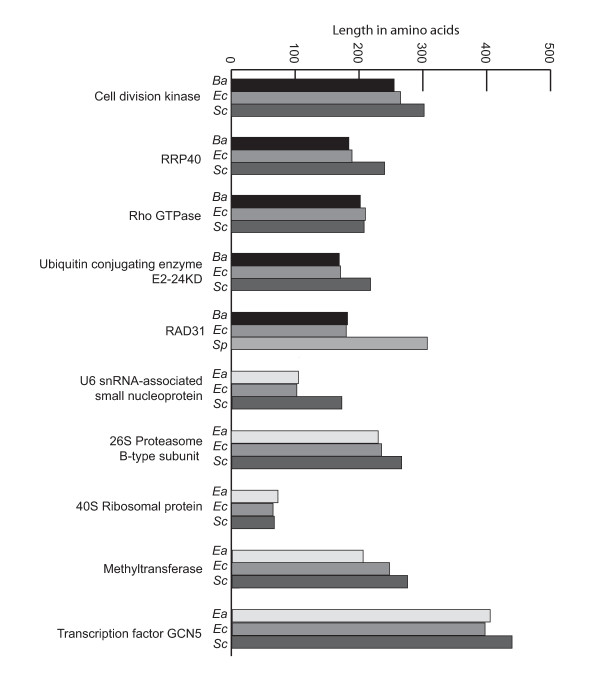
Here we have undertaken genome sequence surveys of two diverse microsporidia, Brachiola algerae and Edhazardia aedis. In both species we find very large intergenic regions, many transposable elements, and a low gene-density, all in contrast to the small, model microsporidian genomes. We also find no recognizable genes that are not also found in other surveyed or sequenced microsporidian genomes.
Our results demonstrate that microsporidian genome architecture varies greatly between microsporidia. Much of the genome size difference could be accounted for by non-coding material, such as intergenic spaces and retrotransposons, and this suggests that the forces dictating genome size may vary across the phylum.
微孢子虫是极端核基因组缩减和压缩的著名模型。最小的微孢子虫基因组受到了最多关注,但不同物种的基因组大小从2.3兆碱基对到19.5兆碱基对不等,较大基因组的性质仍然未知。
在此,我们对两种不同的微孢子虫——阿尔及利亚短膜虫和埃及伊蚊埃氏微孢子虫进行了基因组序列调查。在这两个物种中,我们都发现了非常大的基因间隔区、许多转座元件和低基因密度,所有这些都与小型的、作为模型的微孢子虫基因组形成对比。我们还发现,在其他已调查或测序的微孢子虫基因组中未发现的、无法识别的基因。
我们的结果表明,微孢子虫之间的基因组结构差异很大。基因组大小差异的很大一部分可能由非编码物质,如基因间隔区和逆转座子来解释,这表明决定基因组大小的因素可能在整个门中有所不同。