He Qiang, Ma Zhenggang, Dang Xiaoqun, Xu Jinshan, Zhou Zeyang
College of Life Sciences, Chongqing Normal University, Chongqing, China.
College of Life Sciences, Chongqing Normal University, Chongqing, China; State Key Laboratory of Silkworm Genome Biology, Southwest University, Chongqing, China.
PLoS One. 2015 Apr 21;10(4):e0123170. doi: 10.1371/journal.pone.0123170. eCollection 2015.
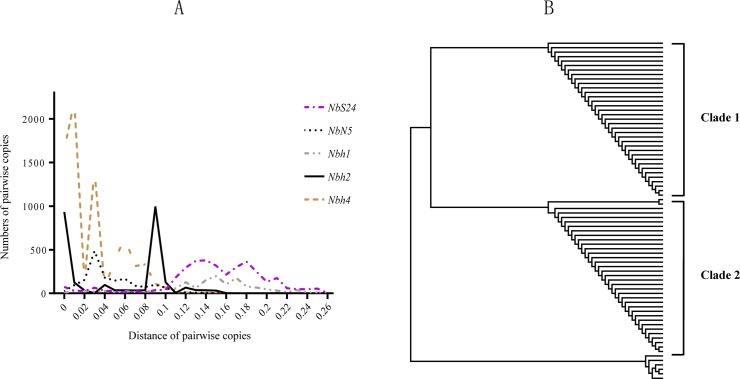
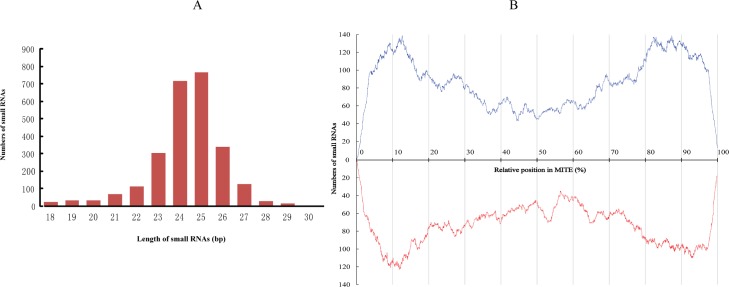
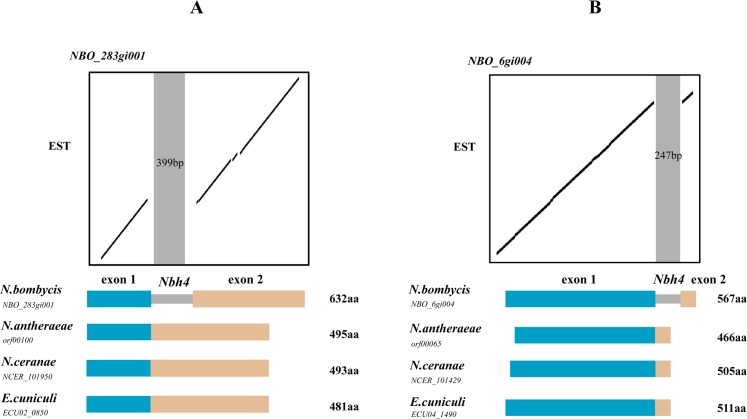
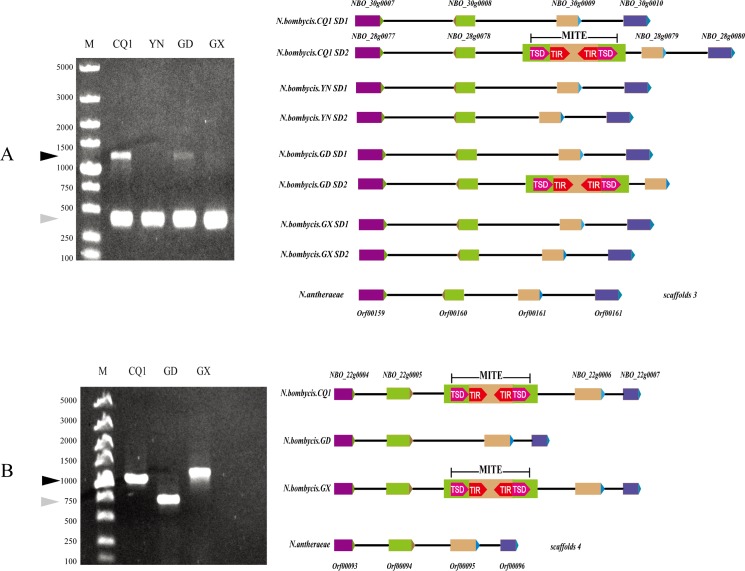
Miniature inverted-repeat transposable elements (MITEs) are short, non-autonomous DNA transposons, which are widespread in most eukaryotic genomes. However, genome-wide identification, origin and evolution of MITEs remain largely obscure in microsporidia. In this study, we investigated structural features for de novo identification of MITEs in genomes of silkworm microsporidia Nosema bombycis and Nosema antheraeae, as well as a honeybee microsporidia Nosema ceranae. A total of 1490, 149 and 83 MITE-related sequences from 89, 17 and five families, respectively, were found in the genomes of the above-mentioned species. Species-specific MITEs are predominant in each genome of microsporidian Nosema, with the exception of three MITE families that were shared by N. bombycis and N. antheraeae. One or multiple rounds of amplification occurred for MITEs in N. bombycis after divergence between N. bombycis and the other two species, suggesting that the more abundant families in N. bombycis could be attributed to the recent amplification of new MITEs. Significantly, some MITEs that inserted into the homologous protein-coding region of N. bombycis were recruited as introns, indicating that gene expansion occurred during the evolution of microsporidia. NbS31 and NbS24 had polymorphisms in different geographical strains of N. bombycis, indicating that they could still be active. In addition, several small RNAs in the MITEs in N. bombycis are mainly produced from both ends of the MITEs sequence.
微型反向重复转座元件(MITEs)是短的非自主DNA转座子,广泛存在于大多数真核生物基因组中。然而,微孢子虫中MITEs的全基因组鉴定、起源和进化在很大程度上仍不清楚。在本研究中,我们调查了家蚕微孢子虫、柞蚕微孢子虫和蜜蜂微孢子虫基因组中从头鉴定MITEs的结构特征。在上述物种的基因组中,分别发现了来自89个、17个和5个家族的总共1490个、149个和83个与MITE相关的序列。除了家蚕微孢子虫和柞蚕微孢子虫共有的三个MITE家族外,物种特异性MITEs在微孢子虫的每个基因组中占主导地位。在家蚕微孢子虫与其他两个物种分化后,家蚕微孢子虫中的MITEs发生了一轮或多轮扩增,这表明家蚕微孢子虫中更丰富的家族可能归因于新MITEs的近期扩增。值得注意的是,一些插入到家蚕微孢子虫同源蛋白质编码区的MITEs被招募为内含子,这表明微孢子虫进化过程中发生了基因扩增。NbS31和NbS24在家蚕微孢子虫的不同地理菌株中存在多态性,这表明它们仍然具有活性。此外,家蚕微孢子虫中MITEs的几个小RNA主要从MITEs序列的两端产生。