Biosciences, College of Life and Environmental Sciences, University of Exeter, Devon, United Kingdom.
PLoS Genet. 2013;9(8):e1003676. doi: 10.1371/journal.pgen.1003676. Epub 2013 Aug 22.
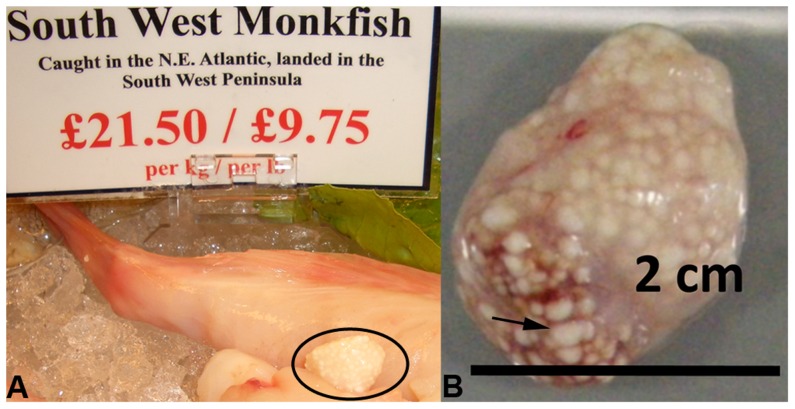
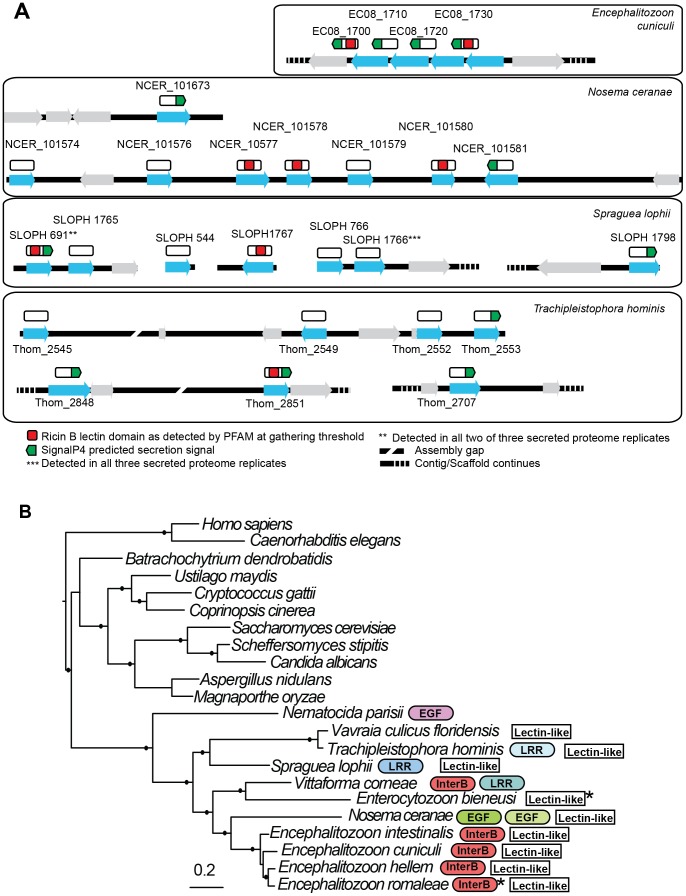
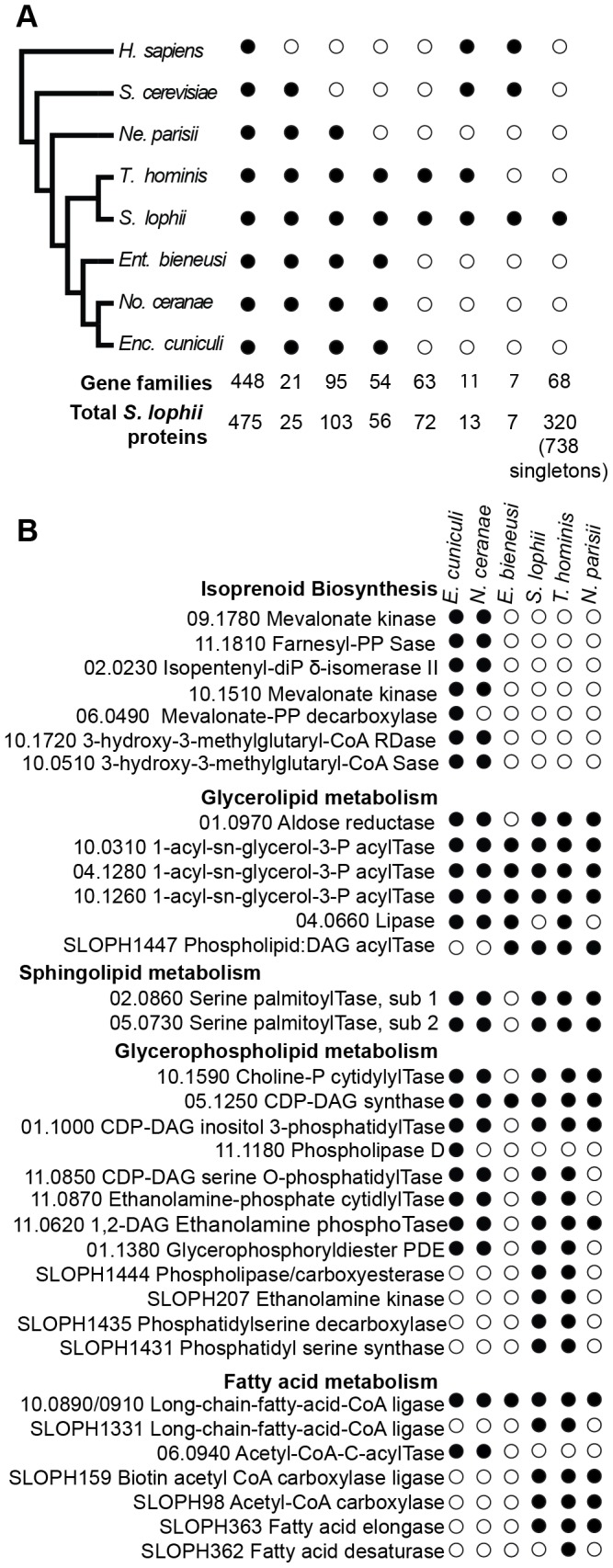
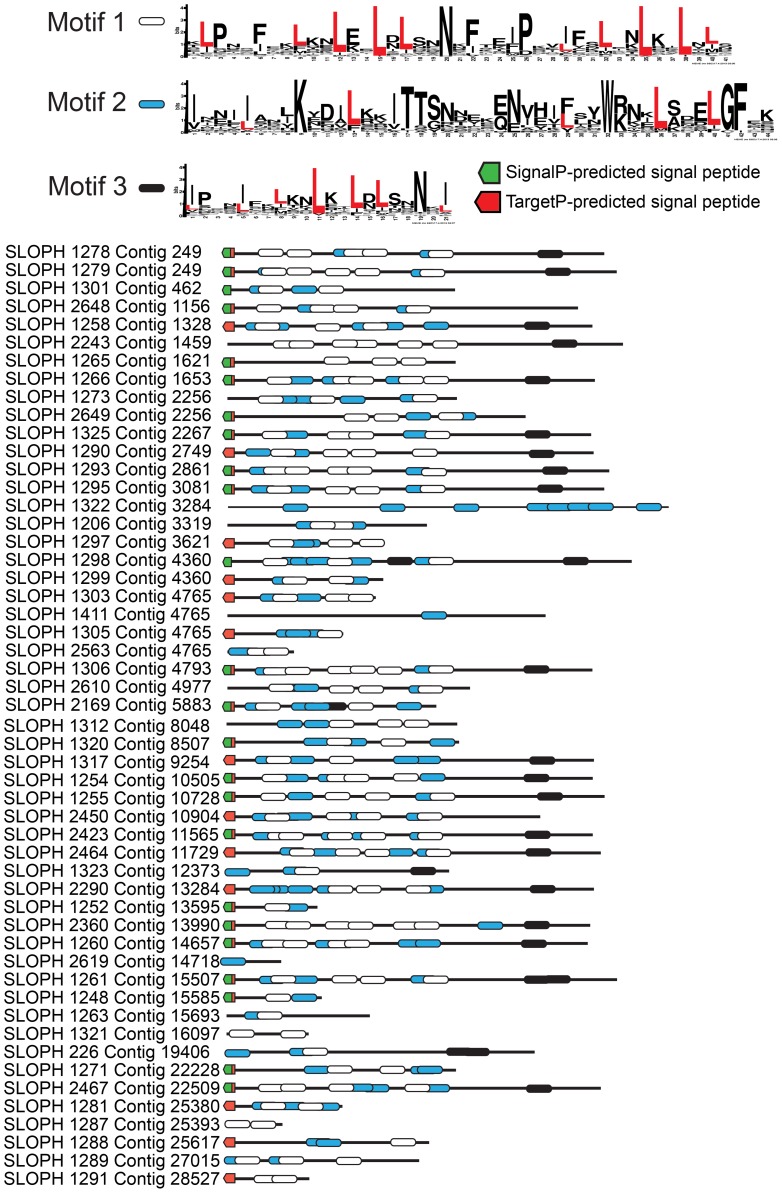
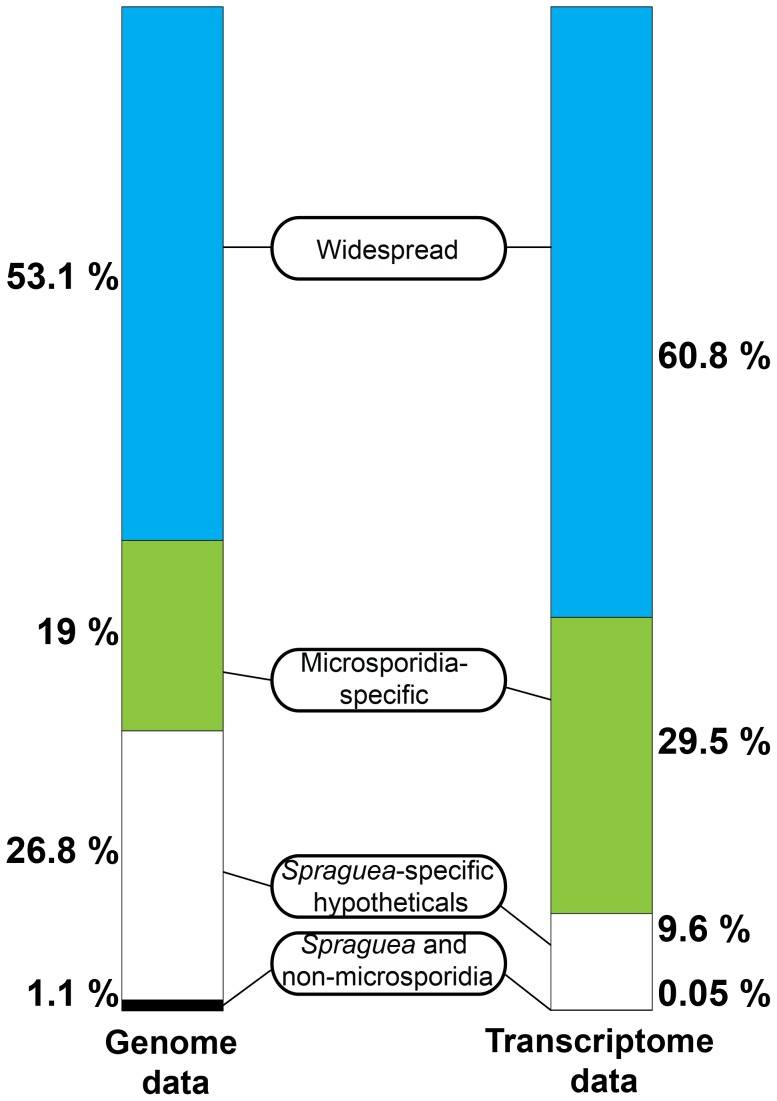
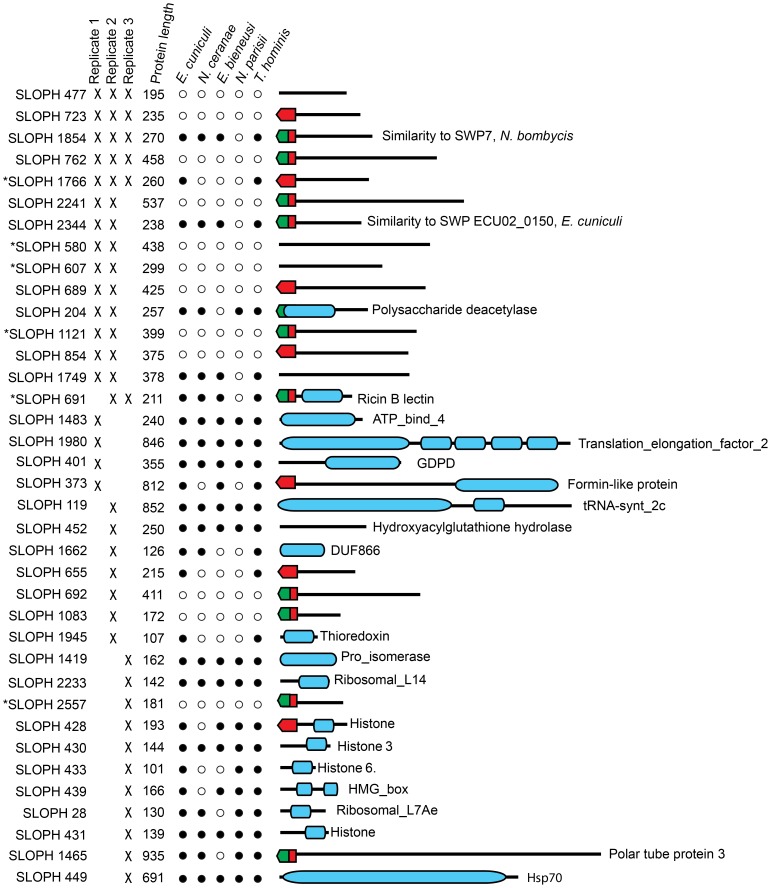
Microsporidia are obligate intracellular parasites with the smallest known eukaryotic genomes. Although they are increasingly recognized as economically and medically important parasites, the molecular basis of microsporidian pathogenicity is almost completely unknown and no genetic manipulation system is currently available. The fish-infecting microsporidian Spraguea lophii shows one of the most striking host cell manipulations known for these parasites, converting host nervous tissue into swollen spore factories known as xenomas. In order to investigate the basis of these interactions between microsporidian and host, we sequenced and analyzed the S. lophii genome. Although, like other microsporidia, S. lophii has lost many of the protein families typical of model eukaryotes, we identified a number of gene family expansions including a family of leucine-rich repeat proteins that may represent pathogenicity factors. Building on our comparative genomic analyses, we exploited the large numbers of spores that can be obtained from xenomas to identify potential effector proteins experimentally. We used complex-mix proteomics to identify proteins released by the parasite upon germination, resulting in the first experimental isolation of putative secreted effector proteins in a microsporidian. Many of these proteins are not related to characterized pathogenicity factors or indeed any other sequences from outside the Microsporidia. However, two of the secreted proteins are members of a family of RICIN B-lectin-like proteins broadly conserved across the phylum. These proteins form syntenic clusters arising from tandem duplications in several microsporidian genomes and may represent a novel family of conserved effector proteins. These computational and experimental analyses establish S. lophii as an attractive model system for understanding the evolution of host-parasite interactions in microsporidia and suggest an important role for lineage-specific innovations and fast evolving proteins in the evolution of the parasitic microsporidian lifecycle.
微孢子虫是一种专性细胞内寄生虫,具有已知最小的真核生物基因组。尽管它们越来越被认为是具有经济和医学重要性的寄生虫,但微孢子虫致病性的分子基础几乎完全未知,目前也没有遗传操作系统。感染鱼类的微孢子虫 Spraguea lophii 表现出这些寄生虫中最引人注目的宿主细胞操纵之一,将宿主神经组织转化为称为 xenomas 的肿胀孢子工厂。为了研究微孢子虫与宿主之间这些相互作用的基础,我们对 S. lophii 基因组进行了测序和分析。尽管与其他微孢子虫一样,S. lophii 失去了许多典型的真核生物蛋白家族,但我们鉴定了一些基因家族的扩张,包括富含亮氨酸重复蛋白家族,这些家族可能代表致病因素。基于我们的比较基因组分析,我们利用可以从 xenomas 中获得的大量孢子来从实验上鉴定潜在的效应蛋白。我们使用复杂混合物蛋白质组学来鉴定寄生虫在萌发时释放的蛋白质,从而首次实验分离出微孢子虫中的潜在分泌效应蛋白。这些蛋白质中许多与已知的致病性因素或实际上与微孢子虫以外的任何其他序列无关。然而,两种分泌蛋白是 RICIN B-lectin 样蛋白家族的成员,该家族在整个门中广泛保守。这些蛋白形成由几个微孢子虫基因组中的串联重复产生的基因座簇,可能代表一类新的保守效应蛋白家族。这些计算和实验分析确立了 S. lophii 作为理解微孢子虫中宿主-寄生虫相互作用进化的有吸引力的模型系统,并表明谱系特异性创新和快速进化的蛋白质在寄生虫微孢子虫生命周期的进化中起着重要作用。