Amar Keren-Or, Chadwick Nanette E, Rinkevich Baruch
Israel Oceanographic and Limnological Research, Tel-Shikmona, P,O, Box 8030, Haifa 31080, Israel.
BMC Evol Biol. 2008 Apr 30;8:126. doi: 10.1186/1471-2148-8-126.
Aggregated settlement of kin larvae in sessile marine invertebrates may result in a complex array of compatible and incompatible allogeneic responses within each assemblage. Each such aggregate can, therefore, be considered as a distinct self-organizing biological entity representing adaptations that have evolved to maximize the potential benefits of gregarious settlement. However, only sparse information exists on the selective forces and ecological consequences of allogeneic coalescence.
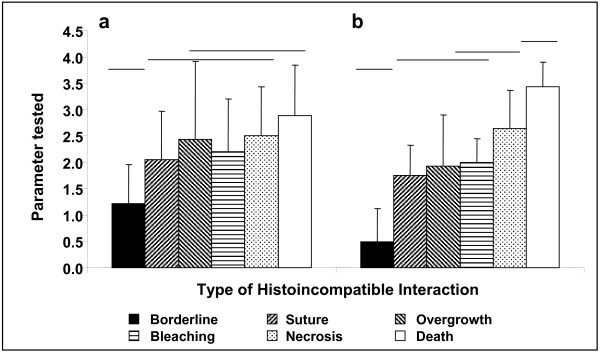
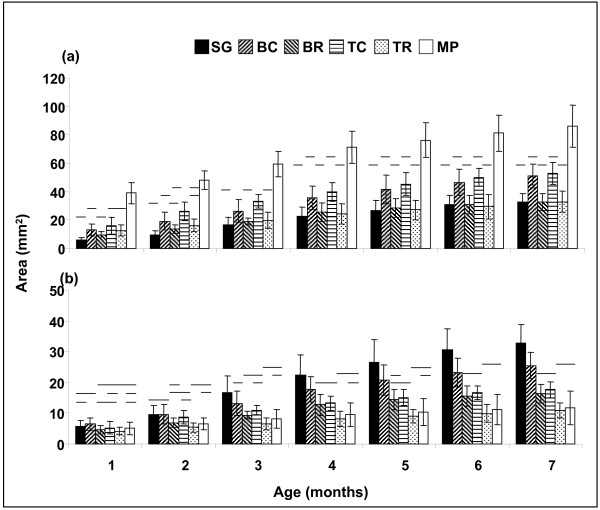
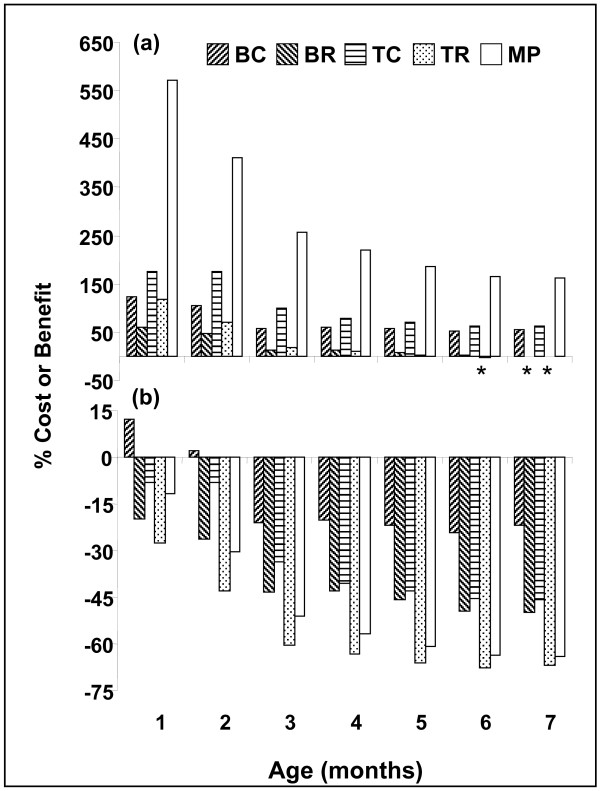
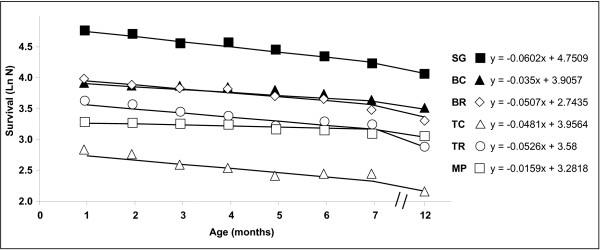
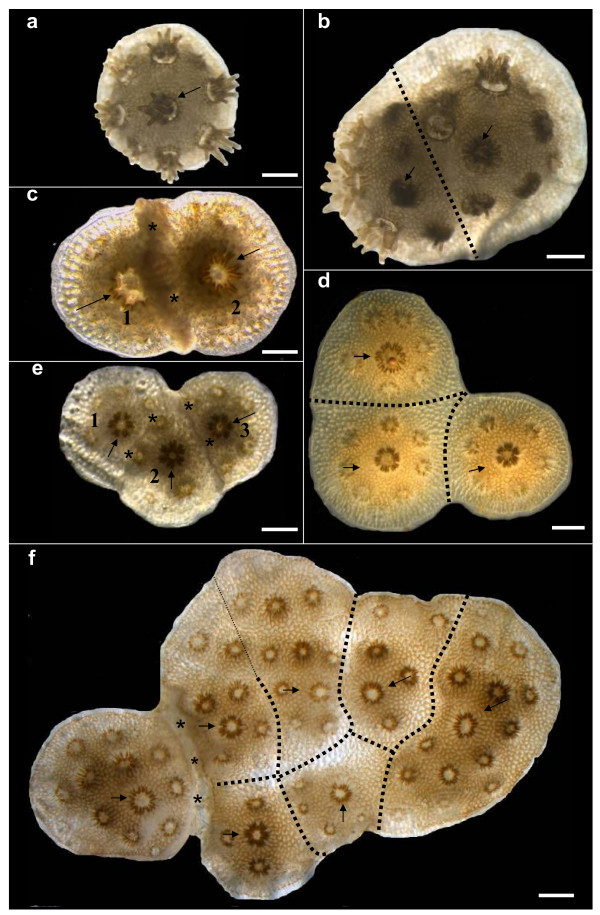
We studied the consequences of aggregated settlement of kin larvae of Stylophora pistillata (a Red Sea stony coral), under controlled laboratory settings. When spat came into contact, they either fused, establishing a chimera, or rejected one another. A one-year study on growth and survivorship of 544 settled S. pistillata genotypes revealed six types of biological entities: (1) Single genotypes (SG); (2) Bi-chimeras (BC); (3) Bi-rejecting genotypes (BR); (4) Tri-chimera entities (TC); (5) Three-rejecting genotypes (TR); and (6) Multi-partner entities (MP; consisting of 7.5 +/- 2.6 partners). Analysis of allorecognition responses revealed an array of effector mechanisms: real tissue fusions, transitory fusions and six other histoincompatible reactions (borderline formation, sutures, overgrowth, bleaching, rejection, and partner death), disclosing unalike onsets of ontogeny and complex modes of appearance within each aggregate. Evaluations at the entity level revealed that MP entities were the largest, especially in the first two months (compared with SG: 571% in the first month and 162% in the seventh month). However, at the genotype level, the SG entities were the largest and the colonies with the highest-cost-per-genotype were the TR and the MP colonies. The cost was calculated as reduced average genotype size, from 27% and 12% in the first month to 67% and 64% in the seventh month, respectively. In general, MP exhibited the highest survivorship rate (85%, after one year) and SG the lowest (54%).
In view of the above, we suggest that the driving force behind gregarious kin settlements in Stylophora pistillata stems from gained benefits associated with the immediate and long-term increase in total size of the MP entity, whereas survivorship rates did not draw a parallel link. Furthermore, the biological organization of MP entity exhibits, simultaneously, an intricate network of rejecting and fusible interactions in a single allogeneic intimate arena, where proposed benefits surpass costs incurred by discord among founders. Above results and documentations on gregarious settlement in other marine taxa bring us to suggest that the 'group level' of kin aggregates may serve as a ubiquitous legitimate selection entity in the evolution of a sessile mode of life in marine organisms.
固着性海洋无脊椎动物中亲缘幼虫的聚集沉降可能导致每个群体内出现一系列复杂的相容和不相容的异体反应。因此,每个这样的聚集体都可被视为一个独特的自组织生物实体,代表着为使群居沉降的潜在益处最大化而进化出的适应性。然而,关于异体融合的选择力和生态后果的信息却很稀少。
我们在可控的实验室环境下研究了红海石珊瑚细指鹿角珊瑚亲缘幼虫聚集沉降的后果。当幼体接触时,它们要么融合形成嵌合体,要么相互排斥。一项对544个已沉降的细指鹿角珊瑚基因型的生长和存活情况进行的为期一年的研究揭示了六种生物实体类型:(1)单基因型(SG);(2)双嵌合体(BC);(3)双排斥基因型(BR);(4)三嵌合体实体(TC);(5)三排斥基因型(TR);以及(6)多伙伴实体(MP;由7.5±2.6个伙伴组成)。对异体识别反应的分析揭示了一系列效应机制:实际组织融合、短暂融合以及其他六种组织不相容反应(边界形成、缝合、过度生长、白化、排斥和伙伴死亡),揭示了每个聚集体内个体发育的不同起始和复杂的出现模式。在实体层面的评估表明,MP实体最大,尤其是在最初两个月(与SG相比:第一个月为571%,第七个月为162%)。然而,在基因型层面,SG实体最大,而每个基因型成本最高的群体是TR和MP群体。成本计算为平均基因型大小的降低,分别从第一个月的27%和12%降至第七个月的67%和64%。总体而言,MP表现出最高的存活率(一年后为85%),而SG最低(54%)。
鉴于上述情况,我们认为细指鹿角珊瑚群居亲缘沉降背后的驱动力源于与MP实体总大小的即时和长期增加相关的益处,而存活率并未呈现平行关系。此外,MP实体的生物组织在单一异体亲密环境中同时展现出一个由排斥和可融合相互作用构成的复杂网络,其中所提出的益处超过了创建者之间不一致所带来的成本。上述结果以及关于其他海洋类群群居沉降的文献资料使我们提出,亲缘聚集体的“群体层面”可能是海洋生物固着生活方式进化中一个普遍存在的合理选择实体。