Camelo S, Lajavardi L, Bochot A, Goldenberg B, Naud M C, Fattal E, Behar-Cohen F, de Kozak Y
Center de Recherche des Cordeliers, Université Pierre et Marie Curie - Paris, Paris, France.
Mol Vis. 2007 Dec 7;13:2263-74.
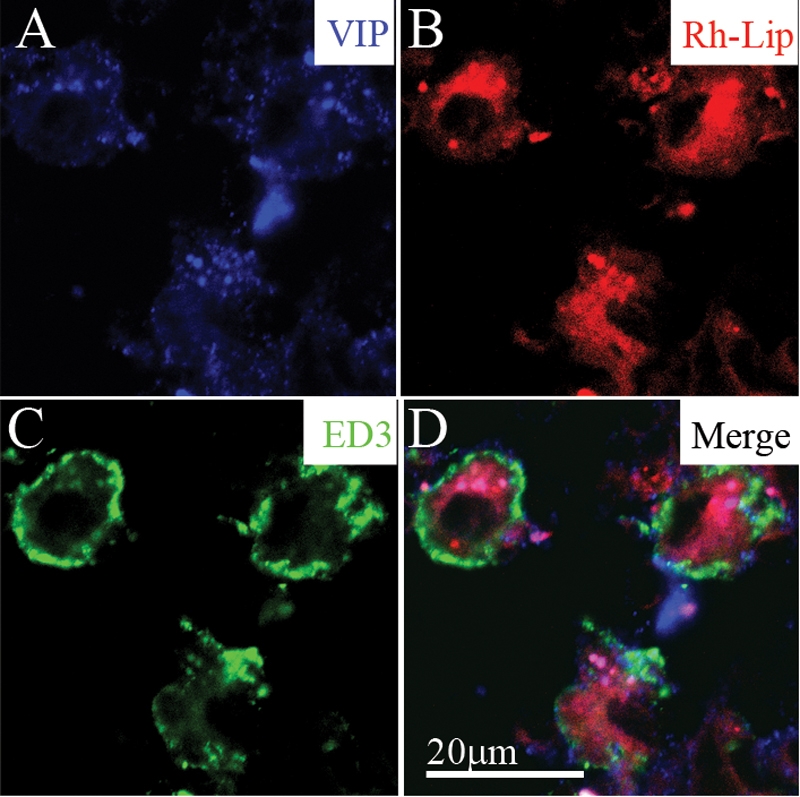
Local delivery of therapeutic molecules encapsulated within liposomes is a promising method to treat ocular inflammation. The purpose of the present study was to define the biodistribution of rhodamine-conjugated liposomes loaded with vasoactive intestinal peptide (VIP), an immunosuppressive neuropeptide, following their intravitreal (IVT) injection in normal rats.
Healthy seven- to eight-week-old Lewis male rats were injected into the vitreous with empty rhodamine-conjugated liposomes (Rh-Lip) or with VIP-loaded Rh-Lip (VIP-Rh-Lip; 50 mM of lipids with an encapsulation efficiency of 3.0+/-0.4 mmol VIP/mol lipids). Twenty-four h after IVT injection, the eyes, the cervical, mesenteric, and inguinal lymph nodes (LN), and spleen were collected. The phenotype and distribution of cells internalizing Rh-Lip and VIP-Rh-Lip were studied. Determination of VIP expression in ocular tissues and lymphoid organs and interactions with T cells in cervical LN was performed on whole mounted tissues and frozen tissue sections by immunofluorescence and confocal microscopy.
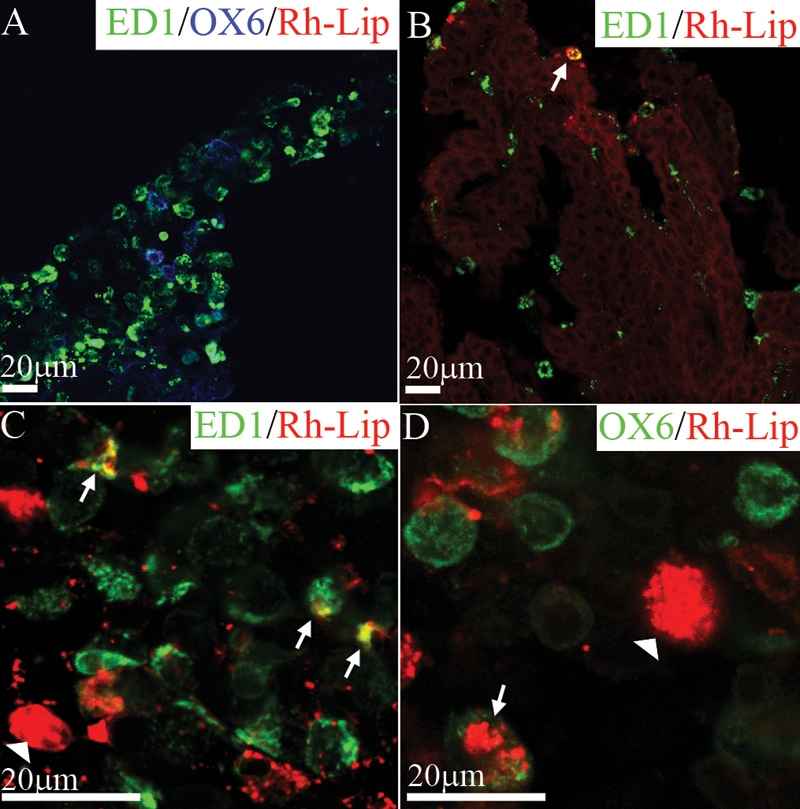
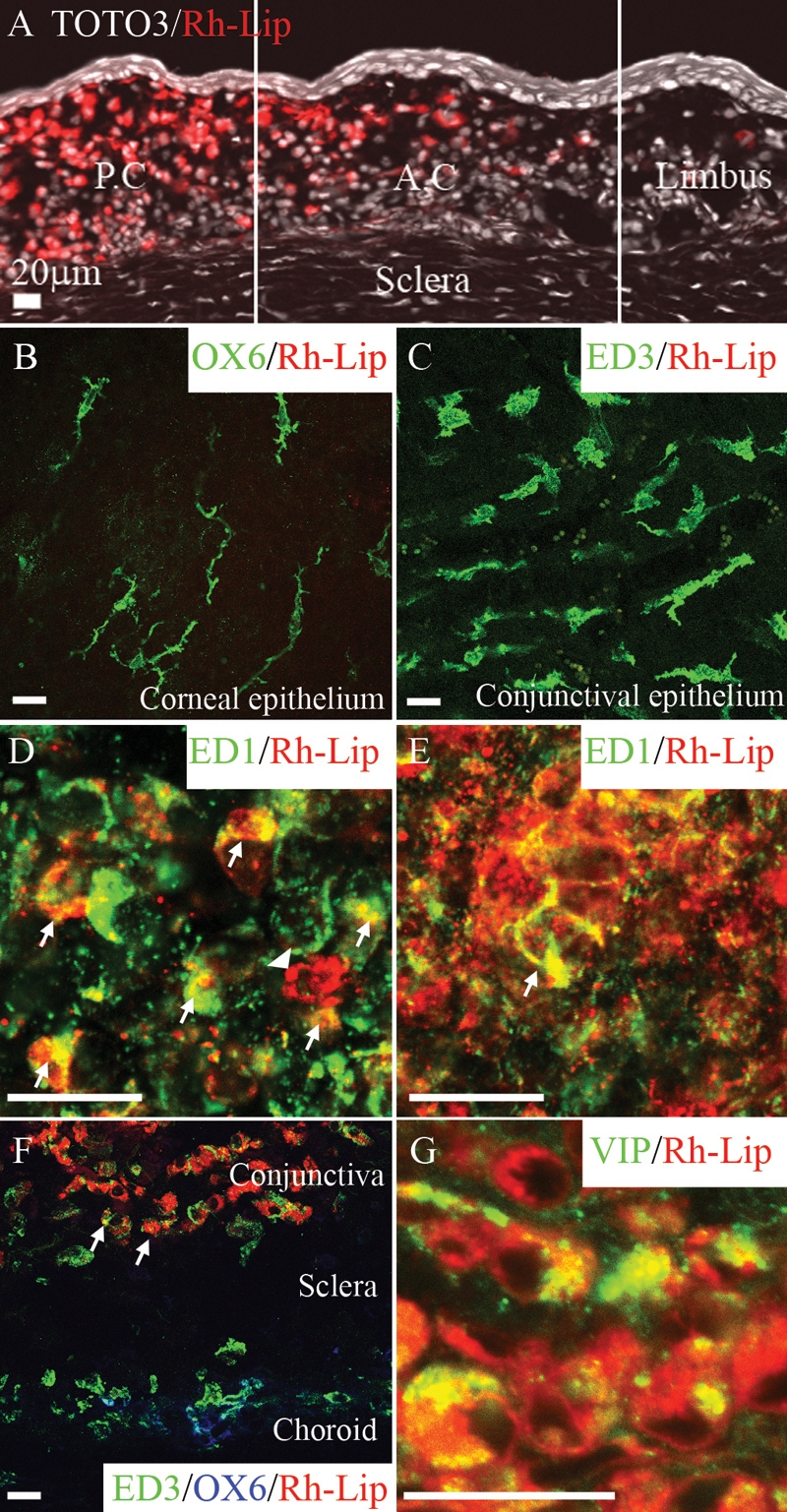
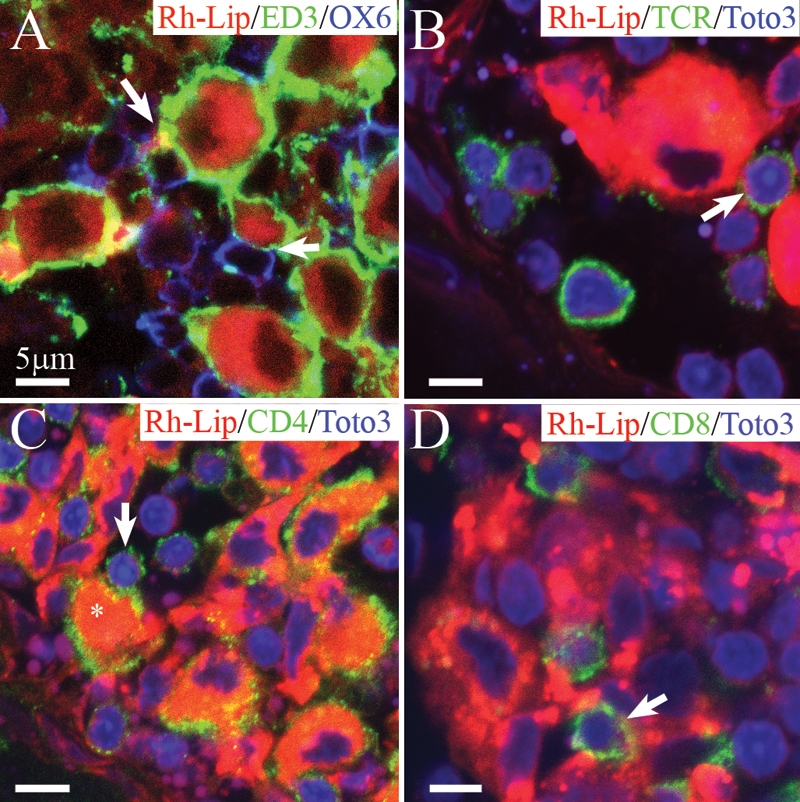
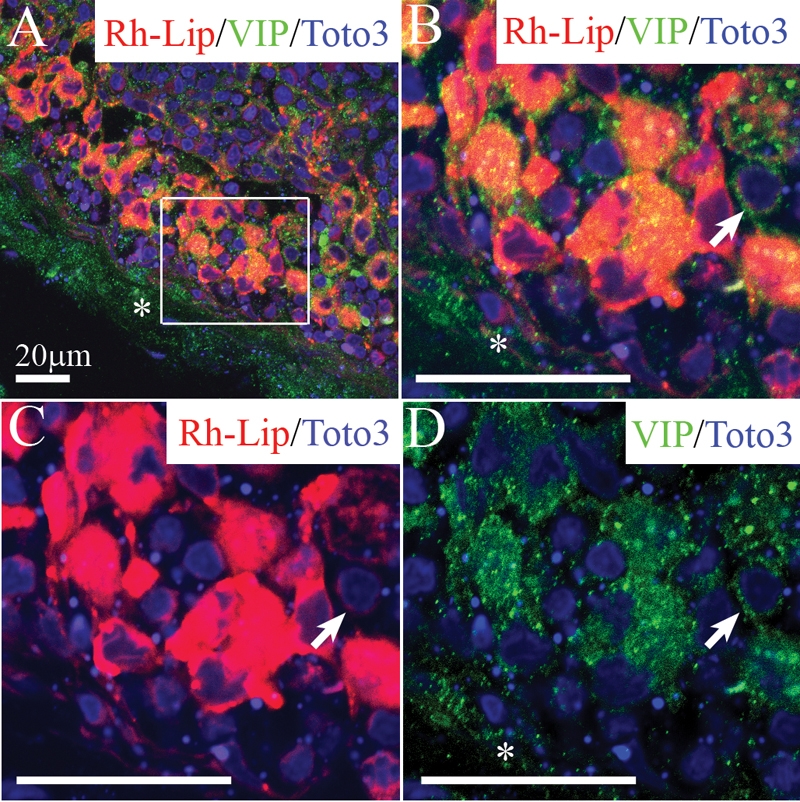
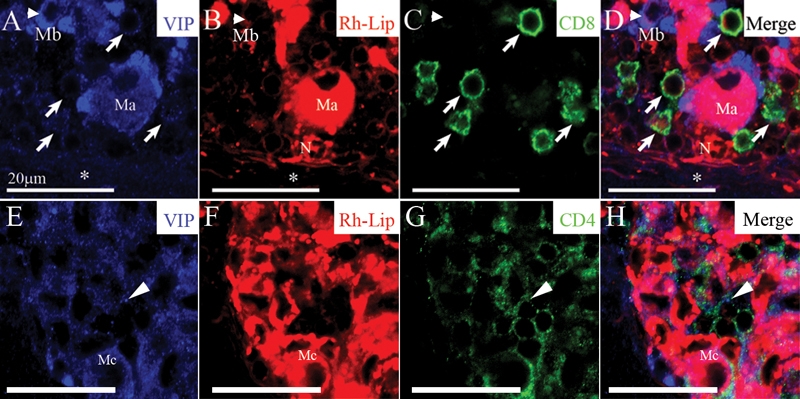
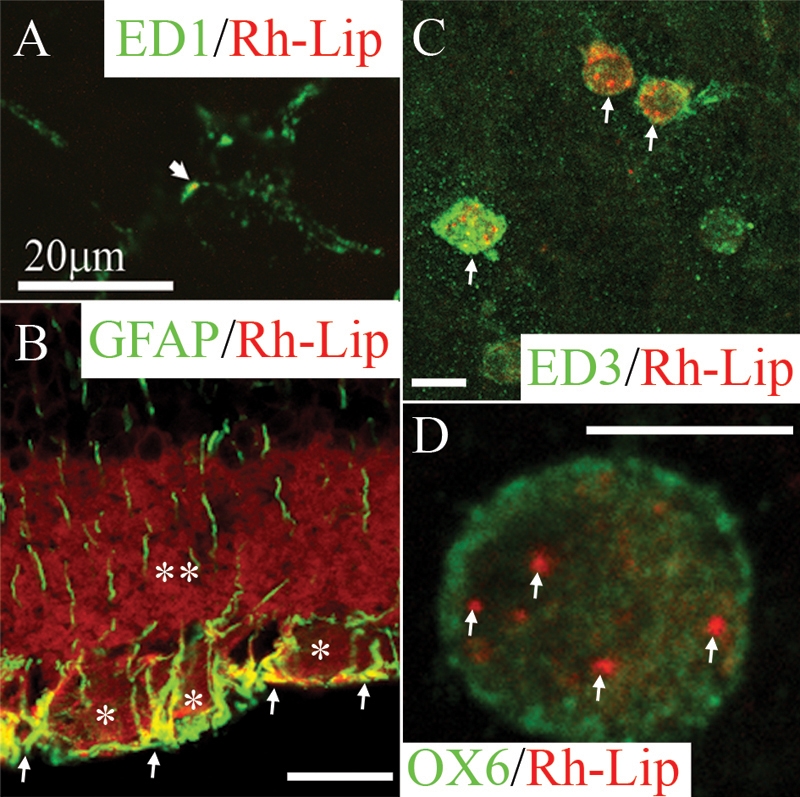
In the eye, 24 h following IVT injection, fluorescent liposomes (Rh-Lip and VIP-Rh-Lip) were detected mainly in the posterior segment of the eye (vitreous, inner layer of the retina) and to a lesser extent at the level of the iris root and ciliary body. Liposomes were internalized by activated retinal Müller glial cells, ocular tissue resident macrophages, and rare infiltrating activated macrophages. In addition, fluorescent liposomes were found in the episclera and conjunctiva where free VIP expression was also detected. In lymphoid organs, Rh-Lip and VIP-Rh-Lip were distributed almost exclusively in the cervical lymph nodes (LN) with only a few Rh-Lip-positive cells detected in the spleen and mesenteric LN and none in the inguinal LN. In the cervical LN, Rh-Lip were internalized by resident ED3-positive macrophages adjacent to CD4 and CD8-positive T lymphocytes. Some of these T lymphocytes in close contact with macrophages containing VIP-Rh-Lip expressed VIP.
Liposomes are specifically internalized by retinal Müller glial cells and resident macrophages in the eye. A limited passage of fluorescent liposomes from the vitreous to the spleen via the conventional outflow pathway and the venous circulation was detected. The majority of fluorescent liposomes deposited in the conjunctiva following IVT injection reached the subcapsular sinus of the cervical LN via conjuntival lymphatics. In the cervical LN, Rh-Lip were internalized by resident subcapsular sinus macrophages adjacent to T lymphocytes. Detection of VIP in both macrophages and T cells in cervical LN suggests that IVT injection of VIP-Rh-Lip may increase ocular immune privilege by modulating the loco-regional immune environment. In conclusion, our observations suggest that IVT injection of VIP-loaded liposomes is a promising therapeutic strategy to dampen ocular inflammation by modulating macrophage and T cell activation mainly in the loco-regional immune system.
局部递送包裹在脂质体内的治疗性分子是一种治疗眼部炎症的有前景的方法。本研究的目的是确定负载血管活性肠肽(VIP,一种免疫抑制性神经肽)的罗丹明共轭脂质体在正常大鼠玻璃体内注射后的生物分布。
将健康的7至8周龄雄性Lewis大鼠玻璃体内注射空的罗丹明共轭脂质体(Rh-Lip)或负载VIP的Rh-Lip(VIP-Rh-Lip;50 mM脂质,包封效率为3.0±0.4 mmol VIP/mol脂质)。玻璃体内注射24小时后,收集眼睛、颈部、肠系膜和腹股沟淋巴结(LN)以及脾脏。研究内化Rh-Lip和VIP-Rh-Lip的细胞的表型和分布。通过免疫荧光和共聚焦显微镜对整个固定组织和冷冻组织切片进行眼部组织和淋巴器官中VIP表达的测定以及与颈部LN中T细胞的相互作用。
在眼睛中,玻璃体内注射24小时后,荧光脂质体(Rh-Lip和VIP-Rh-Lip)主要在眼后段(玻璃体、视网膜内层)被检测到,在虹膜根部和睫状体水平检测到的较少。脂质体被活化的视网膜Müller神经胶质细胞、眼部组织驻留巨噬细胞和罕见的浸润活化巨噬细胞内化。此外,在巩膜上层和结膜中发现了荧光脂质体,在那里也检测到了游离VIP表达。在淋巴器官中,Rh-Lip和VIP-Rh-Lip几乎仅分布在颈部淋巴结(LN)中,在脾脏和肠系膜LN中仅检测到少数Rh-Lip阳性细胞,在腹股沟LN中未检测到。在颈部LN中,Rh-Lip被与CD4和CD8阳性T淋巴细胞相邻的驻留ED3阳性巨噬细胞内化。一些与含有VIP-Rh-Lip的巨噬细胞密切接触的T淋巴细胞表达VIP。
脂质体被眼睛中的视网膜Müller神经胶质细胞和驻留巨噬细胞特异性内化。检测到荧光脂质体通过传统流出途径和静脉循环从玻璃体到脾脏的有限通路。玻璃体内注射后沉积在结膜中的大多数荧光脂质体通过结膜淋巴管到达颈部LN的被膜下窦。在颈部LN中,Rh-Lip被与T淋巴细胞相邻的驻留被膜下窦巨噬细胞内化。在颈部LN的巨噬细胞和T细胞中均检测到VIP,这表明玻璃体内注射VIP-Rh-Lip可能通过调节局部免疫环境来增加眼部免疫赦免。总之,我们的观察结果表明,玻璃体内注射负载VIP的脂质体是一种有前景的治疗策略,可通过主要调节局部免疫系统中的巨噬细胞和T细胞活化来减轻眼部炎症。