Dediego Marta L, Pewe Lecia, Alvarez Enrique, Rejas Maria Teresa, Perlman Stanley, Enjuanes Luis
Department of Molecular and Cell Biology, Centro Nacional de Biotecnología (CSIC), Campus Universidad Autónoma, Darwin 3, Cantoblanco, 28049 Madrid, Spain.
Virology. 2008 Jul 5;376(2):379-89. doi: 10.1016/j.virol.2008.03.005. Epub 2008 May 2.
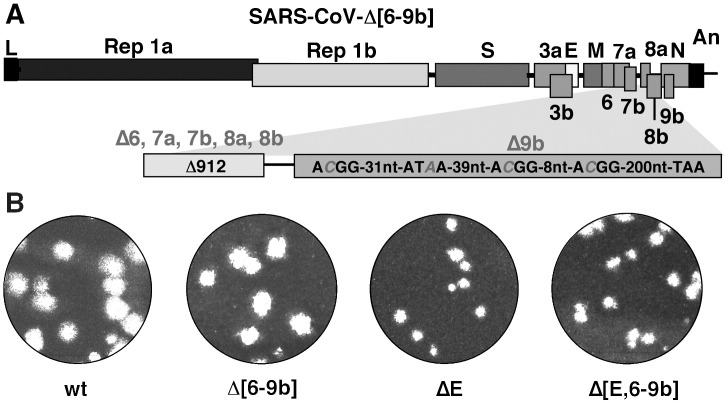
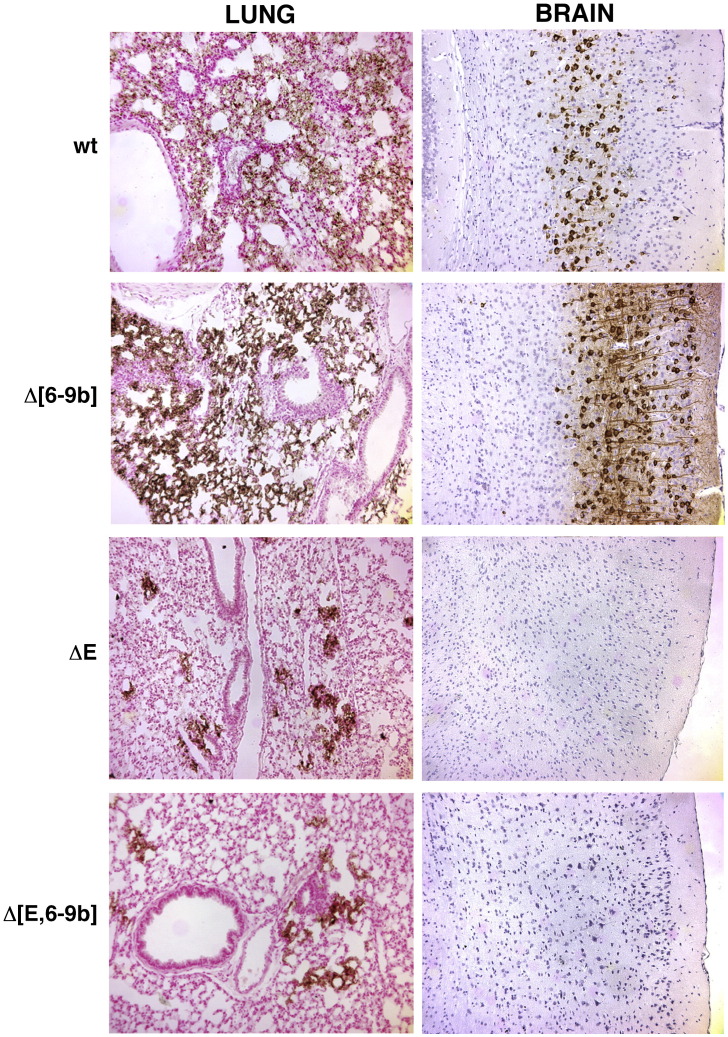
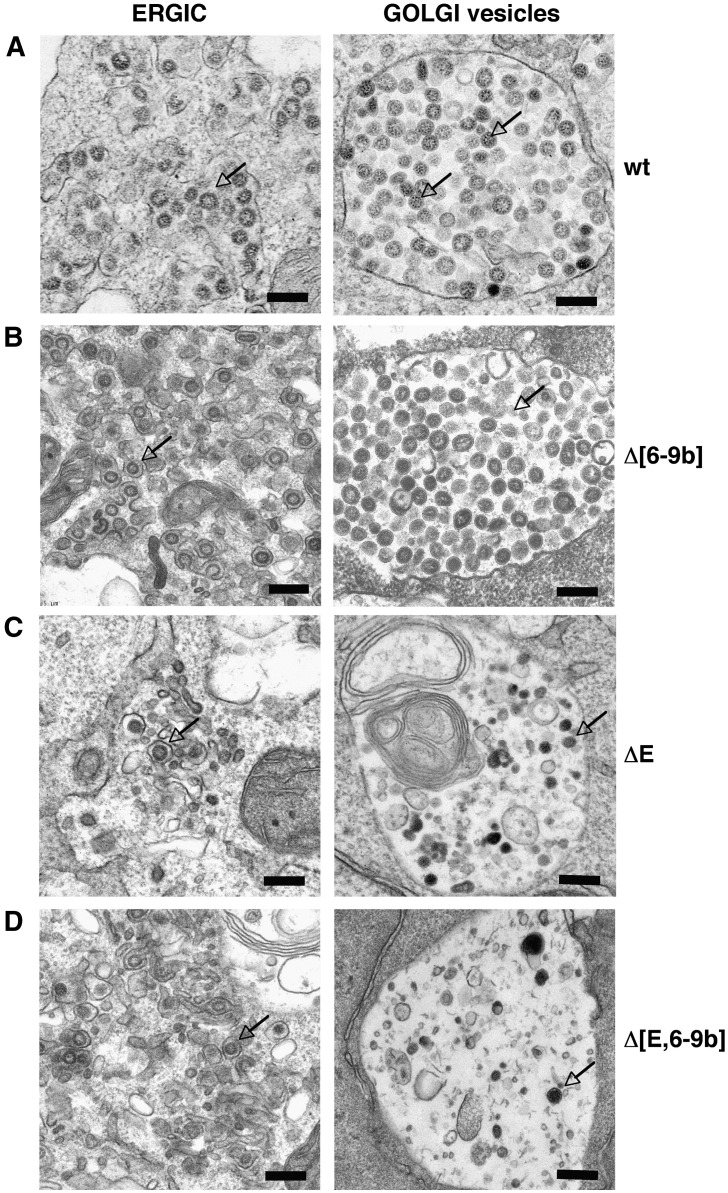
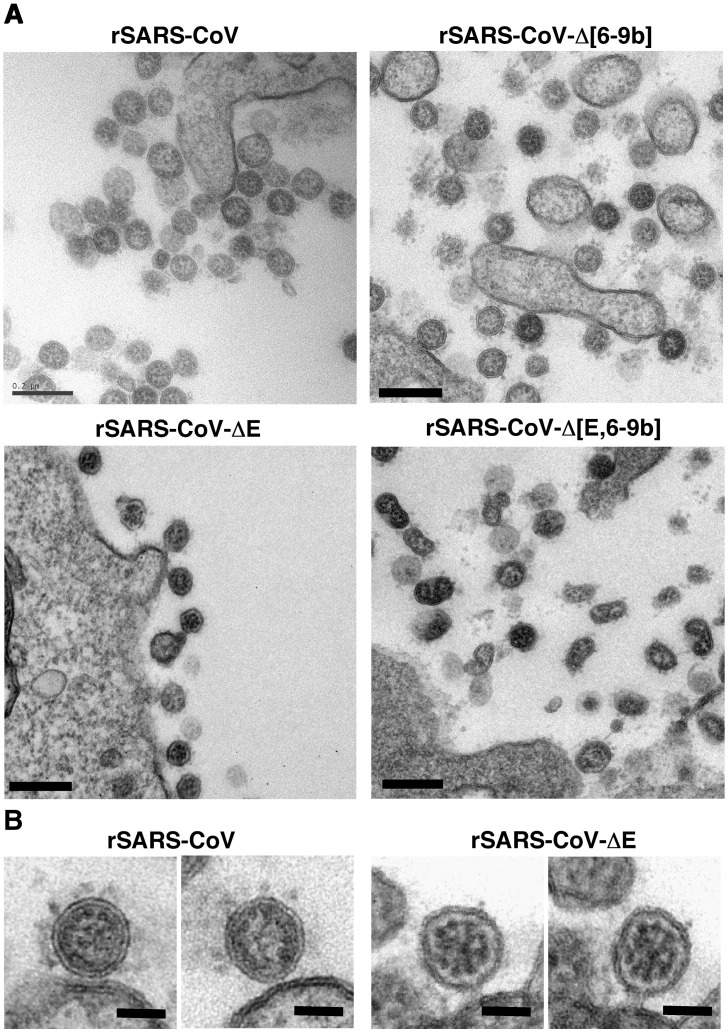
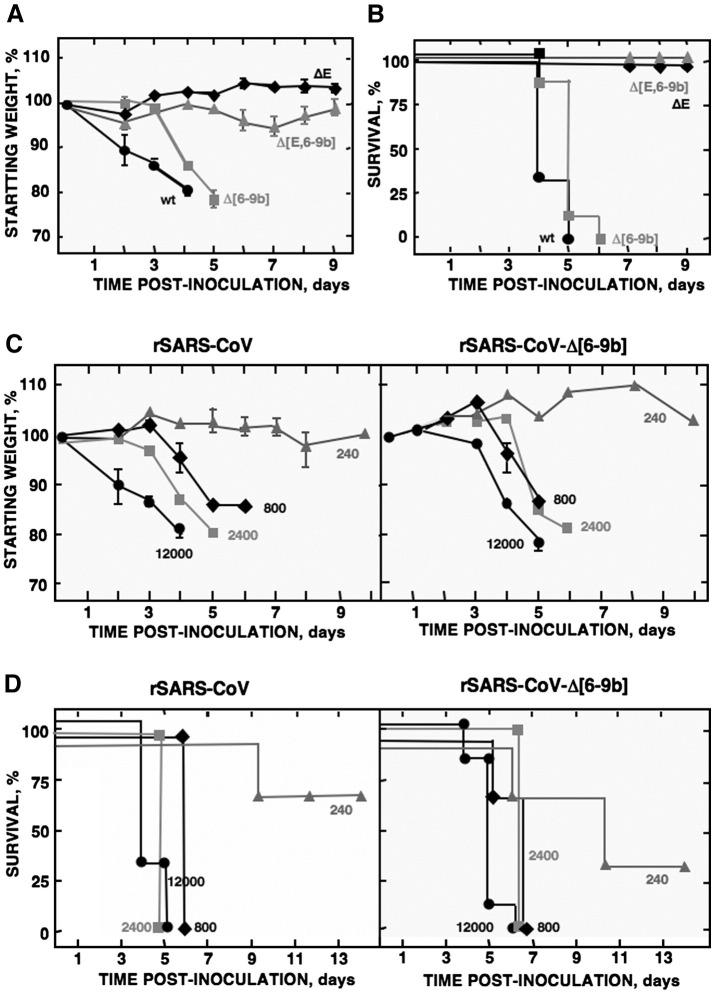
Recombinant severe acute respiratory virus (SARS-CoV) variants lacking the group specific genes 6, 7a, 7b, 8a, 8b and 9b (rSARS-CoV-Delta[6-9b]), the structural gene E (rSARS-CoV-DeltaE), and a combination of both sets of genes (rSARS-CoV-Delta[E,6-9b]) have been generated. All these viruses were rescued in monkey (Vero E6) cells and were also infectious for human (Huh-7, Huh7.5.1 and CaCo-2) cell lines and for transgenic (Tg) mice expressing the SARS-CoV receptor human angiotensin converting enzyme-2 (hACE-2), indicating that none of these proteins is essential for the viral cycle. Furthermore, in Vero E6 cells, all the viruses showed the formation of particles with the same morphology as the wt virus, indicating that these proteins do not have a high impact in the final morphology of the virions. Nevertheless, in the absence of E protein, release of virus particles efficacy was reduced. Viruses lacking E protein grew about 100-fold lower than the wt virus in lungs of Tg infected mice but did not grow in the brains of the same animals, in contrast to the rSARS-CoV-Delta[6-9b] virus, which grew almost as well as the wt in both tissues. Viruses lacking E protein were highly attenuated in the highly sensitive hACE-2 Tg mice, in contrast to the minimal rSARS-CoV-Delta[6-9b] and wt viruses. These data indicate that E gene might be a virulence factor influencing replication level, tissue tropism and pathogenicity of SARS-CoV, suggesting that DeltaE attenuated viruses are promising vaccine candidates.
已构建出缺失组特异性基因6、7a、7b、8a、8b和9b的重组严重急性呼吸综合征病毒(SARS-CoV)变体(rSARS-CoV-Delta[6-9b])、结构基因E(rSARS-CoV-DeltaE)以及这两组基因的组合(rSARS-CoV-Delta[E,6-9b])。所有这些病毒均在猴(Vero E6)细胞中拯救成功,并且对人(Huh-7、Huh7.5.1和CaCo-2)细胞系以及表达SARS-CoV受体人血管紧张素转换酶2(hACE-2)的转基因(Tg)小鼠具有感染性,这表明这些蛋白质对于病毒复制周期均非必需。此外,在Vero E6细胞中,所有病毒均显示形成了与野生型病毒形态相同的颗粒,这表明这些蛋白质对病毒粒子的最终形态影响不大。然而,在缺乏E蛋白的情况下,病毒粒子的释放效率降低。与rSARS-CoV-Delta[6-9b]病毒不同,缺乏E蛋白的病毒在感染的Tg小鼠肺中的生长比野生型病毒低约100倍,但在相同动物的脑中不生长,而rSARS-CoV-Delta[6-9b]病毒在这两种组织中的生长情况几乎与野生型病毒相同。与最小程度缺失的rSARS-CoV-Delta[6-9b]和野生型病毒相比,缺乏E蛋白的病毒在高度敏感的hACE-2 Tg小鼠中高度减毒。这些数据表明,E基因可能是影响SARS-CoV复制水平、组织嗜性和致病性的毒力因子,这表明DeltaE减毒病毒是有前景的疫苗候选物。